




Christmas remains one of the most important retail periods in the United States, shaping consumer behavior and driving significant economic activity each year. Retailers rely on the holiday season to boost annual sales, while industries such as travel, e-commerce, and food services see major demand spikes during December. From gift purchases to festive travel plans, holiday spending patterns reveal how consumers prioritize celebrations and manage budgets. Below, we explore the latest Christmas spending statistics, including recent trends, historical growth, and key insights shaping holiday shopping.
Editor’s Choice
- U.S. holiday retail sales during November–December 2025 are expected to reach between $1.01 trillion and $1.02 trillion, marking the first time Christmas-season spending crosses the $1 trillion milestone.
- The previous year recorded $976.1 billion in holiday retail sales, representing a 4.3% increase from 2023.
- Holiday retail spending in 2025 grew about 4.1% year over year, according to Retail Monitor data.
- The average American planned to spend about $890.49 per person on gifts, decorations, food, and other seasonal items in 2025.
- In 2024, the average consumer holiday spending reached around $901.99, the highest recorded in the NRF survey’s 23-year history.
- Online holiday sales reached about $257.8 billion in 2025, reflecting 6.8% annual growth.
- Approximately 159 million consumers were expected to shop on Super Saturday in 2025, highlighting strong last-minute Christmas purchasing behavior.
Recent Developments
- The 2025 Christmas shopping season became the first to surpass $1 trillion in retail sales, indicating sustained consumer demand despite economic pressures.
- Holiday sales growth for 2025 was projected to increase between 3.7% and 4.2% compared with 2024.
- According to analysts, overall holiday retail growth for 2025 may reach around 3.1% after adjusting for inflation, indicating moderate but stable demand.
- Online shopping activity increased significantly, with 134.9 million shoppers purchasing online during the Thanksgiving weekend in 2025, up from 124.3 million in 2024.
- In-store shopping also remained strong, reaching 129.5 million consumers over the Thanksgiving weekend in 2025.
- Mobile commerce accounted for 56.4% of total online holiday revenue in 2025, reflecting the continued growth of smartphone-based shopping.
- Consumers spent about $20 billion through Buy Now, Pay Later services during the 2025 holiday season, up nearly 9.8% year over year.
- Gift cards remained the most popular gift category, with consumers expected to spend around $29 billion on gift cards in 2025.
Overall Christmas Spending Overview
- Christmas-related retail spending in the U.S. accounts for nearly 19% of annual retail sales, making it the most significant shopping period of the year.
- Total holiday spending reached $976 billion in 2024, continuing a decade-long upward trend.
- Retail forecasts estimate Christmas spending will exceed $1 trillion for the first time in 2025, signaling strong consumer resilience.
- Online holiday spending alone surpassed $250 billion in 2025, driven by e-commerce growth and mobile shopping.
- Average holiday budgets can reach $1,595 per household, according to consumer surveys on seasonal spending plans.
- Some projections estimate Americans may spend around $2,800 in total holiday expenses, including travel, entertainment, and gifts.
- Millennials are expected to increase their holiday budgets by about 22% compared with previous years, highlighting generational spending growth.
- About 26% of shoppers plan to increase their holiday budgets, showing continued consumer confidence despite inflation concerns.
Average Holiday Spending Trends Over the Years
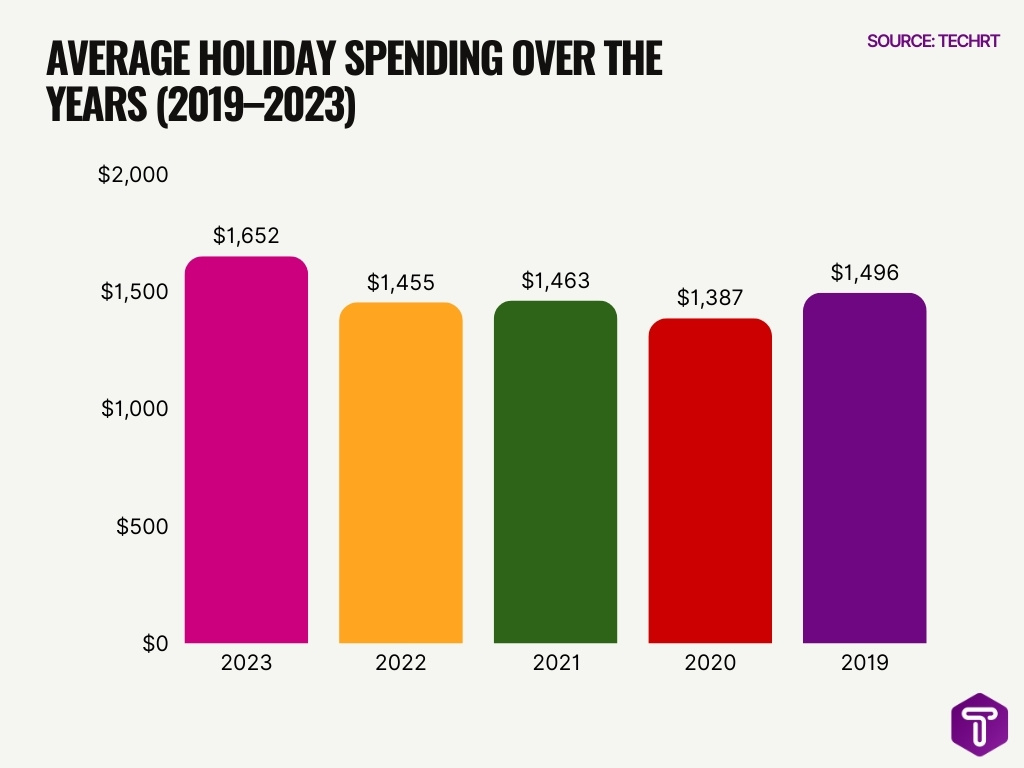
- Holiday spending reached its highest level in 2023, with consumers spending an average of $1,652 per person, marking a significant 14% year-over-year increase compared to 2022.
- In 2022, the average holiday spending was $1,455, showing no change year-over-year, indicating a period of stabilization in consumer holiday budgets.
- 2021 recorded average holiday spending of $1,463, reflecting a 5% increase YoY, as consumer confidence and retail activity rebounded after the pandemic slowdown.
- During 2020, holiday spending dropped to $1,387 per person, representing a 7% decline YoY, largely influenced by pandemic-related economic uncertainty and reduced retail activity.
- In 2019, consumers spent an average of $1,496 during the holiday season, which served as a pre-pandemic baseline before spending fluctuations began.
- Comparing the entire period, holiday spending grew by $156 per person from 2020 to 2023, highlighting a strong recovery and rising consumer spending trends.
- Overall, the data shows holiday spending volatility during the pandemic years, followed by a strong rebound and record spending in 2023.
Historical Christmas Spending Trends
- U.S. holiday retail sales have grown steadily from $626 billion in 2013 to over $976 billion by 2024, showing long-term expansion.
- Between 2023 and 2024, holiday sales increased 4.3% year over year, reflecting strong consumer demand.
- Holiday sales in 2025 are projected to grow 3.7%–4.2% compared with 2024.
- Analysts estimate long-term holiday spending growth averages around 3–5% annually in the U.S. retail sector.
- In the early 2000s, average holiday spending per consumer was below $700, compared with nearly $900 today.
- Holiday retail spending recovered rapidly after the 2020 pandemic downturn, returning to record growth by 2022–2024.
- The 2025 season marks the largest recorded holiday spending period in U.S. history.
- Inflation-adjusted spending growth slowed slightly after 2023, even as total spending increased.
Average Christmas Spending per Person
- In 2025, the average American planned to spend $890.49 during the holiday season.
- In 2024, the average holiday spending per person was $901.99, slightly higher than the 2025 estimates.
- Other estimates suggest Americans spend around $902 per person on Christmas each year on average.
- The average spending amount roughly equals a full week of pre-tax salary for many U.S. households.
- Gift purchases account for the largest portion of individual holiday budgets, followed by decorations and food.
- Some global estimates suggest consumers spend around $1,638 on gifts, travel, and entertainment combined during the Christmas season.
- About 26% of consumers plan to increase their holiday spending, while others maintain similar budgets each year.
- Surveys indicate 77% of shoppers expect holiday prices to increase, influencing how much individuals allocate to Christmas budgets.
Christmas Spending by Category
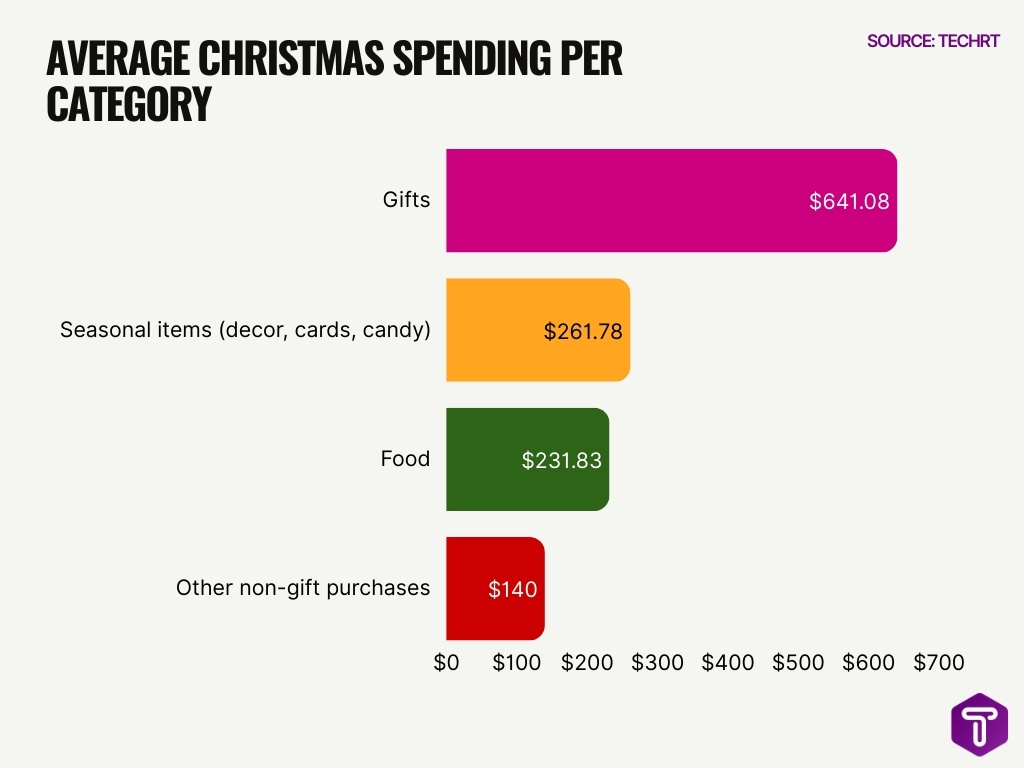
- In 2025, U.S. consumers planned to spend about $641.08 on Christmas gifts, taking the largest share of their holiday budgets.
- Average spending on seasonal items like decorations, cards, and candy reached roughly $261.78 per person in the U.S. in 2025.
- Holiday food purchases during the Christmas season averaged about $231.83 per U.S. consumer in 2025.
- Americans allocated around $140 per person for other non-gift Christmas purchases, such as party supplies and personal treats, in 2025.
- Surveys show electronics and clothing rank among the top Christmas gift categories, with clothing or accessories planned by roughly 46–80% of holiday shoppers, depending on channel.
- Gift cards remain the most requested Christmas present, preferred by about 50% of consumers and topping wish lists for many consecutive years.
- Around 55% of shoppers buy clothing or accessories during the holiday period, making apparel one of the most common Christmas gift categories.
- Toys represent a major holiday spend, contributing to U.S. toy sales that exceed $40 billion annually, with a large share occurring over Christmas.
- About 48% of Christmas shoppers say they purchase home décor or seasonal decorations such as lights and ornaments each year.
Total Christmas Retail Sales
- U.S. holiday retail sales reached $976.1 billion in 2024, reflecting a 4.3% increase from the previous year.
- Forecasts estimate $1.01–$1.02 trillion in retail sales during the 2025 holiday season, the highest ever recorded.
- Holiday sales between Nov. 1 and Dec. 31 account for the majority of seasonal retail revenue in the United States.
- Retail data indicates holiday spending grew around 4.1% year over year in 2025, according to industry reports.
- E-commerce accounted for over $257 billion of total holiday retail sales in 2025.
- Online holiday revenue grew 6.8% year over year in 2025, outpacing in-store growth.
- Analysts project steady retail expansion as holiday spending continues to grow at roughly 3–5% annually.
- Strong consumer demand keeps the Christmas season the most profitable period for many U.S. retailers each year.
Online vs In-Store Christmas Spending
- U.S. online holiday sales reached $257.8 billion in 2025, growing 6.8% year over year as consumers increasingly rely on digital shopping.
- E-commerce accounted for roughly 25% of total U.S. holiday retail sales in 2025, reflecting steady growth in digital retail channels.
- During the 2024 holiday season, online sales totaled about $241.4 billion, representing a 9% increase from the previous year.
- Mobile devices generated more than 56% of online holiday purchases in 2025, highlighting the importance of smartphone commerce.
- Despite digital growth, over 68% of U.S. shoppers still visited physical stores during the holiday season, showing strong demand for in-person shopping experiences.
- Approximately 134.9 million consumers shopped online during the Thanksgiving weekend in 2025, compared with 124.3 million the year before.
- Meanwhile, 129.5 million shoppers visited brick-and-mortar stores during the same weekend, illustrating a balanced multichannel shopping environment.
- Nearly 60% of holiday shoppers research products online before buying in-store, reflecting the growing influence of omnichannel retail strategies.
- Around 37% of holiday shoppers choose curbside pickup or buy-online-pickup-in-store options, combining convenience with physical retail access.
Online Christmas Gift Shopping Behavior Among Shoppers
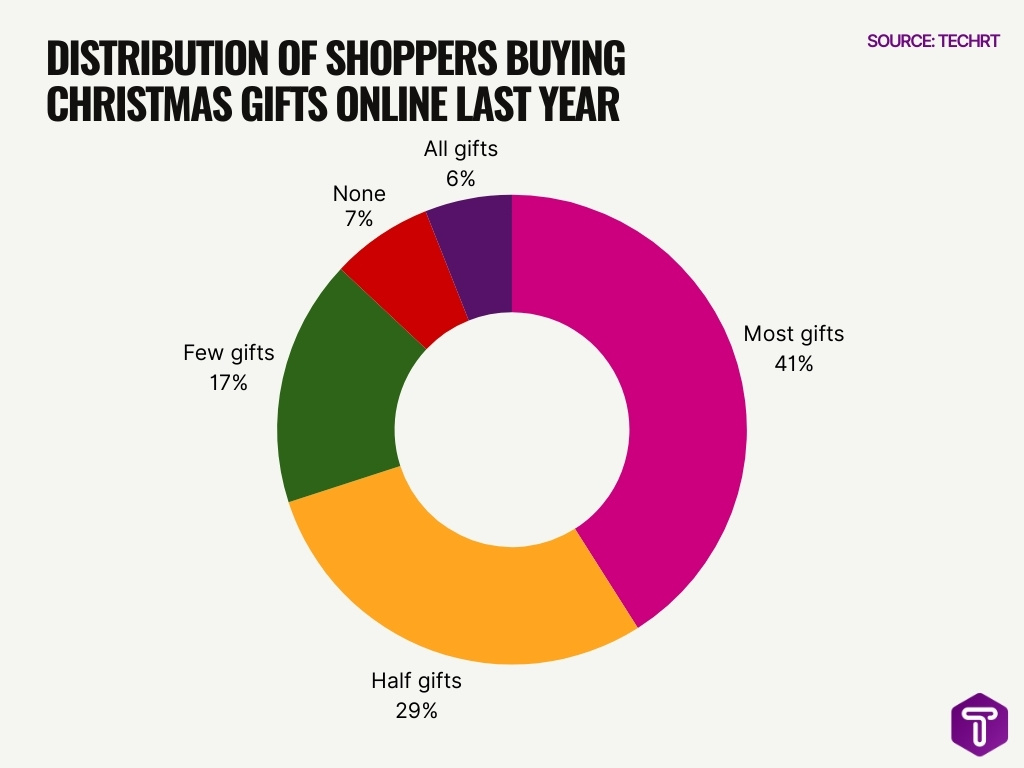
- 41% of shoppers purchased most of their Christmas gifts online, making it the largest segment and highlighting the strong preference for online shopping during the holiday season.
- Around 29% of consumers bought about half of their Christmas gifts online, showing that many shoppers still combine both online and in-store purchasing.
- Approximately 17% of shoppers purchased only a few gifts online, indicating that a smaller portion of consumers still rely primarily on physical retail stores.
- About 7% of shoppers did not buy any Christmas gifts online, representing a small group that fully prefers traditional in-store shopping.
- Only 6% of shoppers purchased all of their Christmas gifts online, suggesting that while online shopping is popular, fully digital holiday shopping remains relatively uncommon.
- Overall, 70% of shoppers bought at least half of their Christmas gifts online (41% most + 29% half), emphasizing the major role of e-commerce during the holiday season.
Christmas Gift Spending Statistics
- Americans spent approximately $641 per person on gifts in 2025, the largest component of holiday budgets.
- In 2024, gift spending averaged $641.58 per consumer, maintaining a similar level to 2025 estimates.
- Gift cards accounted for over $29 billion in holiday spending in 2025, maintaining their position as the most popular gift option.
- Around 52% of Americans purchase gifts for friends during the Christmas season, expanding spending beyond immediate family.
- Approximately 85% of shoppers buy gifts for family members, making it the most common holiday shopping activity.
- Nearly 57% of consumers start holiday gift shopping before December, reflecting earlier seasonal purchasing trends.
- The average shopper purchases around 15 gifts during the holiday season.
- Roughly 43% of shoppers look for discounts or promotions before buying holiday gifts, indicating strong price sensitivity.
- Online marketplaces capture a significant portion of gift purchases, with over 60% of consumers using major e-commerce platforms for holiday gifts.
Christmas Food and Drink Spending
- U.S. households spend an average of $231.83 on holiday food during the Christmas season.
- Nearly 95% of Americans celebrate Christmas with a special meal, making food spending a key seasonal expense.
- Turkey and ham remain the most popular holiday meals, with over 70% of households serving one of these dishes during Christmas.
- Americans spend more than $6 billion on Christmas dinner ingredients each year, including meat, desserts, and beverages.
- Holiday baking ingredients such as sugar, flour, and chocolate see sales increases of over 30% in December compared with other months.
- About 55% of Americans attend or host a holiday party, contributing to increased spending on food and beverages.
- Wine and spirits sales increase by more than 20% during the Christmas season compared with average months.
- Nearly 37% of households purchase specialty desserts or bakery items for Christmas gatherings.
Christmas Gift Budget Per Child Statistics
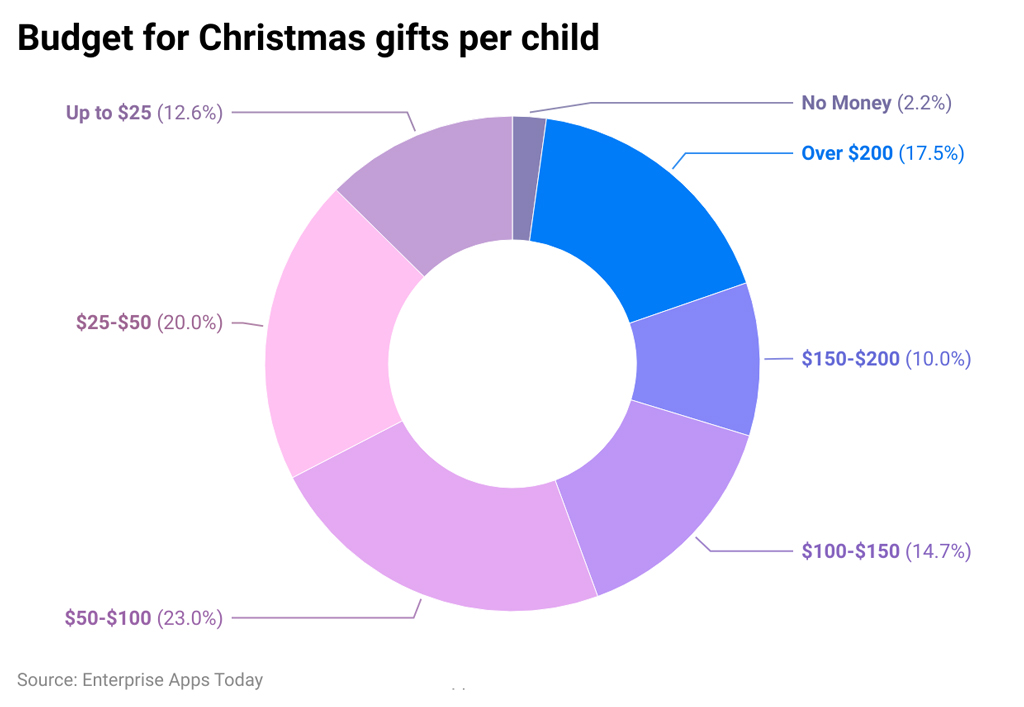
- The largest share of parents (23.0%) plan to spend $50–$100 per child, making it the most common Christmas gift budget range.
- Around 20.0% of shoppers allocate $25–$50 per child, highlighting that a significant portion of families prefer moderate holiday spending.
- A notable 17.5% of parents spend over $200 per child, indicating that premium gift spending remains strong during the holiday season.
- Approximately 14.7% of consumers budget $100–$150 per child, showing that mid-to-high range spending is also common among holiday shoppers.
- Only 10.0% of parents plan to spend $150–$200 per child, making it one of the less common spending brackets compared to other ranges.
- About 12.6% of respondents spend up to $25 per child, reflecting a group of budget-conscious shoppers during Christmas.
- A small portion of families (2.2%) report spending no money on Christmas gifts for children, indicating that nearly all households participate in holiday gift-giving.
- Overall, nearly 43% of parents spend between $25 and $100 per child, showing that mid-range budgets dominate Christmas gift spending trends.
Spending on Decorations and Seasonal Items
- Americans spend about $261.78 per person on decorations and seasonal items during the holiday season.
- Approximately 48% of consumers purchase Christmas decorations each year, including lights, ornaments, and trees.
- The U.S. Christmas decoration market generates more than $6 billion annually.
- Around 94 million U.S. households display a Christmas tree during the holiday season.
- Of those households, about 21 million choose real Christmas trees each year.
- Americans spend over $2 billion annually on Christmas lights alone.
- Approximately 80% of households decorate the inside of their homes for Christmas, while 44% decorate outdoor spaces.
- Seasonal greeting cards generate around $1 billion in annual holiday spending.
Holiday Travel and Christmas Vacation Spending
- Roughly 115 million Americans travel during the Christmas and New Year holiday period each year.
- Americans spent over $109 billion on holiday travel in 2024, including transportation, lodging, and activities.
- About 90% of holiday travelers visit friends or family during Christmas, making it the most common travel reason.
- Average holiday travel spending per household exceeds $1,300 during the Christmas season.
- Air travel demand increases sharply, with more than 7 million passengers flying on peak Christmas travel days.
- Around 85% of holiday travelers drive to their destinations, making road travel the most common option.
- Hotel occupancy rates often exceed 65–70% during Christmas week in many tourist destinations.
- Nearly 30% of Americans extend their holiday travel into vacation trips lasting several days or more.
Christmas Spending by Age Group
- Consumers aged 35–44 spend the most during Christmas, averaging over $1,000 per person.
- Millennials typically spend about $900–$1,000 during the holiday season, reflecting strong purchasing power.
- Gen Z shoppers spend around $600–$700 on average during Christmas, lower than older age groups.
- Consumers aged 45–54 average about $1,050 in holiday spending, among the highest of any demographic group.
- Seniors aged 65 and older spend about $700–$800 during the Christmas season.
- Around 60% of Gen Z shoppers rely on online channels for holiday purchases, reflecting strong digital preferences.
- Millennials account for roughly 40% of total holiday spending in the U.S., making them a dominant consumer group.
- About 65% of Baby Boomers prefer shopping in physical stores during Christmas, compared with younger generations.
Christmas Spending by Income Level
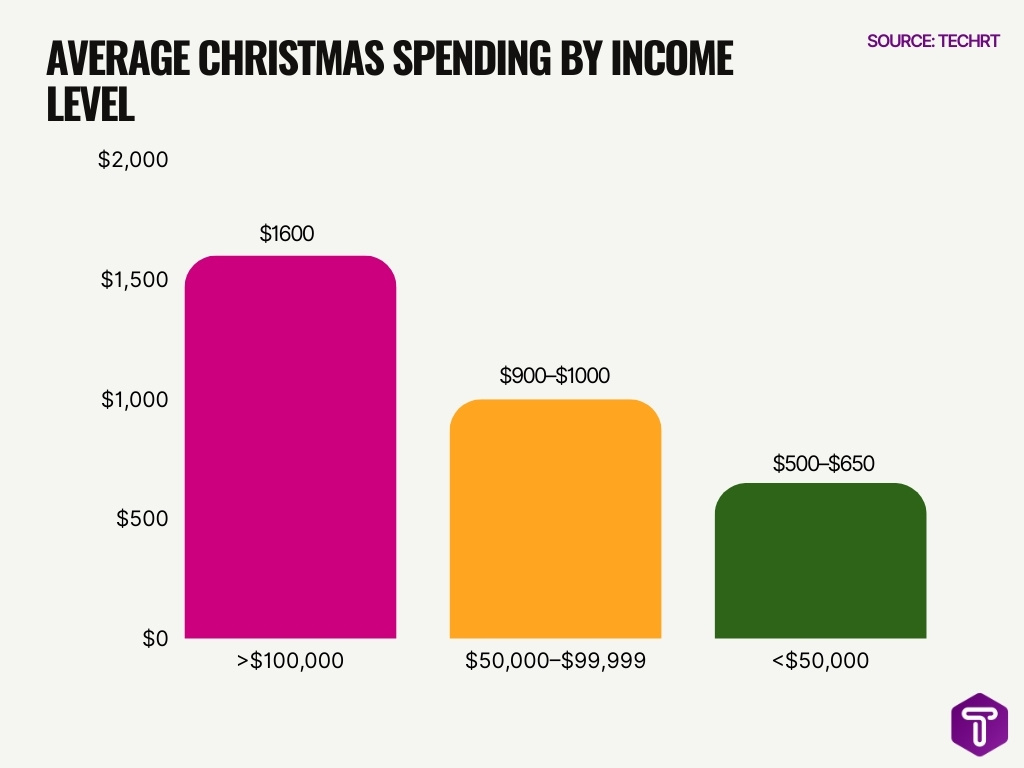
- Households earning over $100,000 annually spend an average of about $1,600 during the holiday season, significantly higher than lower-income groups.
- Middle-income households earning $50,000–$99,999 spend roughly $900–$1,000 on Christmas, covering gifts, decorations, and travel.
- Lower-income households earning below $50,000 typically spend around $500–$650 during the holiday season.
- High-income consumers account for nearly 40% of total holiday retail spending in the United States.
- Around 28% of high-income shoppers plan to increase holiday spending in 2026, compared with 18% of lower-income households.
- Nearly 44% of lower-income households rely on discounts or promotional sales to manage Christmas spending.
- About 35% of consumers earning under $50,000 plan to reduce holiday spending due to rising living costs.
- High-income shoppers are more likely to spend on luxury gifts and travel, which increases their overall holiday budget.
- Around 52% of affluent consumers purchase premium electronics during Christmas, one of the most expensive gift categories.
Black Friday and Cyber Monday Christmas Spending
- U.S. shoppers spent $9.8 billion online on Black Friday 2024, setting a new record for the shopping holiday.
- Cyber Monday 2024 generated $12.4 billion in online sales, making it the largest online shopping day in U.S. history.
- Over 200 million Americans shopped during the Thanksgiving holiday weekend in 2025, including Black Friday and Cyber Monday.
- Around 73% of consumers begin their Christmas shopping during Black Friday promotions.
- Mobile devices accounted for 54% of Black Friday online purchases, reflecting growing smartphone commerce.
- Electronics remain the most popular Black Friday category, generating over $8 billion in sales during the event.
- Nearly 70% of shoppers say Black Friday discounts influence their Christmas gift purchases.
- Cyber Week (Thanksgiving through Cyber Monday) generates over $38 billion in total online sales in the U.S.
Buy Now, Pay Later Use for Christmas Shopping
- Consumers spent about $20 billion using Buy Now, Pay Later services during the 2025 holiday season.
- BNPL usage grew nearly 10% year over year in 2025, reflecting increased adoption during Christmas shopping.
- Around 37% of Gen Z shoppers use BNPL services for holiday purchases, the highest adoption among all generations.
- Millennials represent about 34% of BNPL holiday users, making them the second-largest group using installment payments.
- The average BNPL holiday purchase is around $142 per transaction.
- Approximately 15% of holiday shoppers used BNPL at least once during Christmas 2024, up from 10% in 2022.
- Retailers offering BNPL options often see conversion rates increase by up to 30% during holiday promotions.
- Electronics, apparel, and home goods account for over 60% of BNPL holiday purchases.
Key Insights from Average Total Christmas Spending by Country
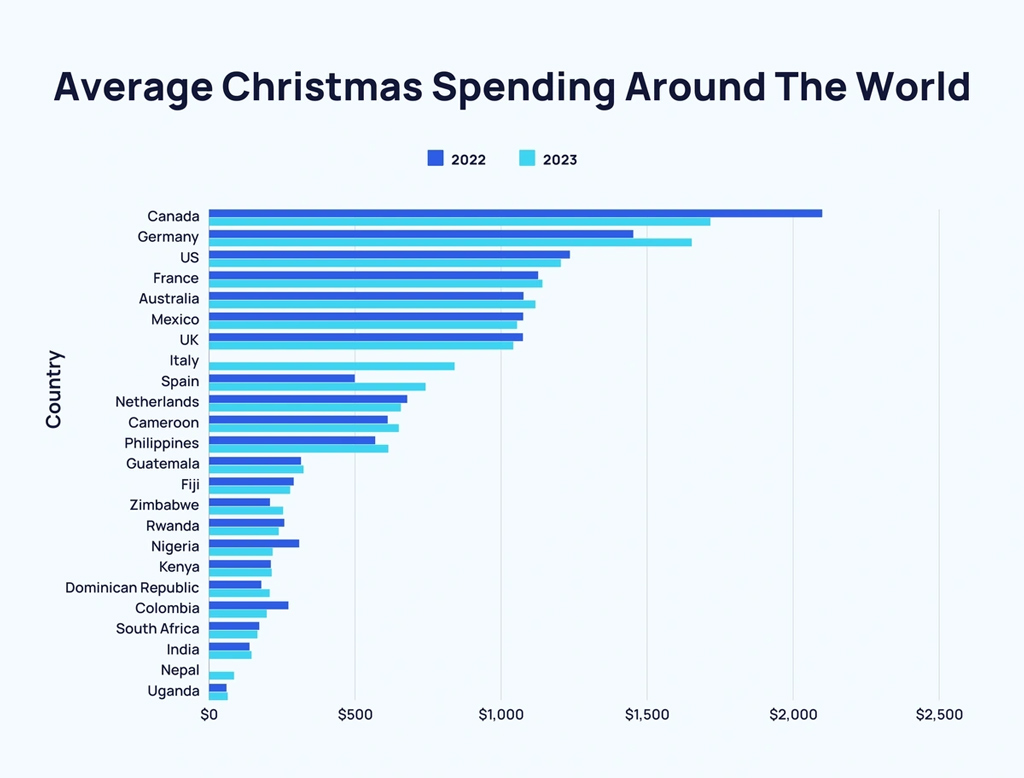
- Canada recorded the highest spending in 2023, with an average total spend of $1,717, though it declined from $2,100 in 2022.
- Germany saw notable growth, increasing from $1,453 in 2022 to $1,653 in 2023, making it one of the top-performing countries.
- The United States maintained consistently high spending, with $1,205 in 2023, slightly lower than $1,236 in 2022.
- France and Australia showed moderate growth, rising to $1,142 and $1,118, respectively, in 2023.
- Mexico and the UK experienced small declines, dropping to $1,055 and $1,042 in 2023 compared with their 2022 averages.
- Italy reported $841 in 2023, with no available data for 2022, making it a new entrant in the comparison.
- Spain recorded one of the largest increases, jumping from $499 in 2022 to $742 in 2023, a significant growth of over $240.
- The Netherlands showed a slight decline, decreasing from $679 in 2022 to $657 in 2023.
- Cameroon and the Philippines posted steady increases, reaching $650 and $614, respectively, in 2023.
- Guatemala and Zimbabwe also recorded moderate growth, rising to $324 and $254 in 2023.
- Nigeria experienced one of the sharpest declines, falling from $309 in 2022 to $218 in 2023.
- Kenya remained relatively stable, with spending increasing slightly from $212 to $215.
- Dominican Republic saw steady improvement, climbing from $179 in 2022 to $208 in 2023.
- Colombia recorded a notable drop, declining from $272 to $198.
- South Africa showed a minor decrease, falling slightly from $172 to $166.
- India experienced modest growth, rising from $139 in 2022 to $146 in 2023.
- Nepal reported $86 in 2023, with no recorded data for 2022.
- Uganda had the lowest spending among the listed countries, increasing slightly from $60 to $64.
Impact of Inflation on Christmas Spending
- Around 77% of U.S. consumers expect higher prices during the holiday season, reflecting inflation concerns.
- Nearly 38% of Americans plan to cut back on holiday spending due to inflation.
- Approximately 42% of shoppers actively search for discounts before making holiday purchases.
- Inflation has increased the average cost of Christmas gifts by about 3–5% annually in recent years.
- Around 25% of consumers plan to switch to lower-cost brands during Christmas shopping.
- Roughly 31% of shoppers expect to rely more heavily on promotions and coupons due to rising prices.
- Despite inflation, 26% of consumers plan to increase their Christmas budgets, indicating strong seasonal demand.
- Analysts estimate holiday spending growth may slow slightly but remain positive at around 3–4% annually.
Frequently Asked Questions (FAQs)
How much do Americans spend on average during the Christmas holiday season?
How much total retail spending occurs during the U.S. Christmas season?
How much did Americans spend on holiday shopping in 2024?
How much was spent online during the 2025 Christmas shopping season?
How much do consumers spend on gift cards during Christmas?
Conclusion
Christmas spending continues to shape the global retail landscape, with the United States leading the world in seasonal consumer spending. Recent data shows that holiday retail sales are approaching $1 trillion annually in the U.S. alone, supported by strong demand for gifts, food, travel, and festive experiences. At the same time, trends such as e-commerce growth, Buy Now Pay Later adoption, and inflation-driven budget adjustments are reshaping how consumers approach holiday shopping.
Despite economic pressures, Christmas remains one of the most resilient spending seasons. Consumers continue to prioritize celebrations, family gatherings, and gift giving, ensuring that the holiday season remains a powerful driver of retail activity worldwide.

Leave a comment
Have something to say about this article? Add your comment and start the discussion.