



Smartphone addiction has evolved from a minor behavioral concern into a measurable global issue with real-world consequences. It now shapes workplace productivity, where constant notifications interrupt deep work, and influences education systems, where excessive screen time affects attention spans and academic performance. At the same time, it impacts daily routines, from sleep quality to social interactions, making it harder for individuals to disconnect.
As smartphone adoption continues to rise across all age groups, the line between normal use and dependency becomes increasingly blurred. Understanding the scale, patterns, and effects of smartphone addiction is essential for individuals, businesses, and policymakers alike. Let’s explore the latest smartphone addiction statistics.
Editor’s Choice
- Over 3.8 billion people globally are estimated to be addicted to smartphones as of 2025–2026.
- The average person spends 4.6 hours daily on their phone in 2025, totaling nearly 1,700 hours annually.
- In the U.S., 56.9% of users report feeling addicted to their smartphones.
- Americans check their phones up to 352 times per day, or roughly every 4 minutes.
- Around 50% of U.S. teens say they feel addicted to their smartphones.
- Teenagers globally spent 7 hours 22 minutes daily on screens in 2026.
- Global smartphone addiction prevalence ranges widely, but pooled estimates sit near 27% worldwide.
Recent Developments
- Governments are increasingly recognizing smartphone addiction as a public health concern, especially among youth.
- Countries like Australia have introduced social media restrictions for users under 16 following new research findings.
- Studies now distinguish between “addictive use” vs. total screen time, with addiction showing stronger mental health links.
- By age 14, 25% of adolescents show addictive mobile phone usage patterns.
- Research links early smartphone exposure to higher risks of poor sleep and obesity in adolescents.
- The global smartphone user base is projected to grow by 1.8 billion users between 2024–2029.
- A 2025 study found smartphone addiction rates among students as high as 57.3% in certain populations.
- Increasing smartphone penetration has triggered policy debates around digital well-being tools and parental controls.
Top Countries with the Highest Smartphone Addiction Rates
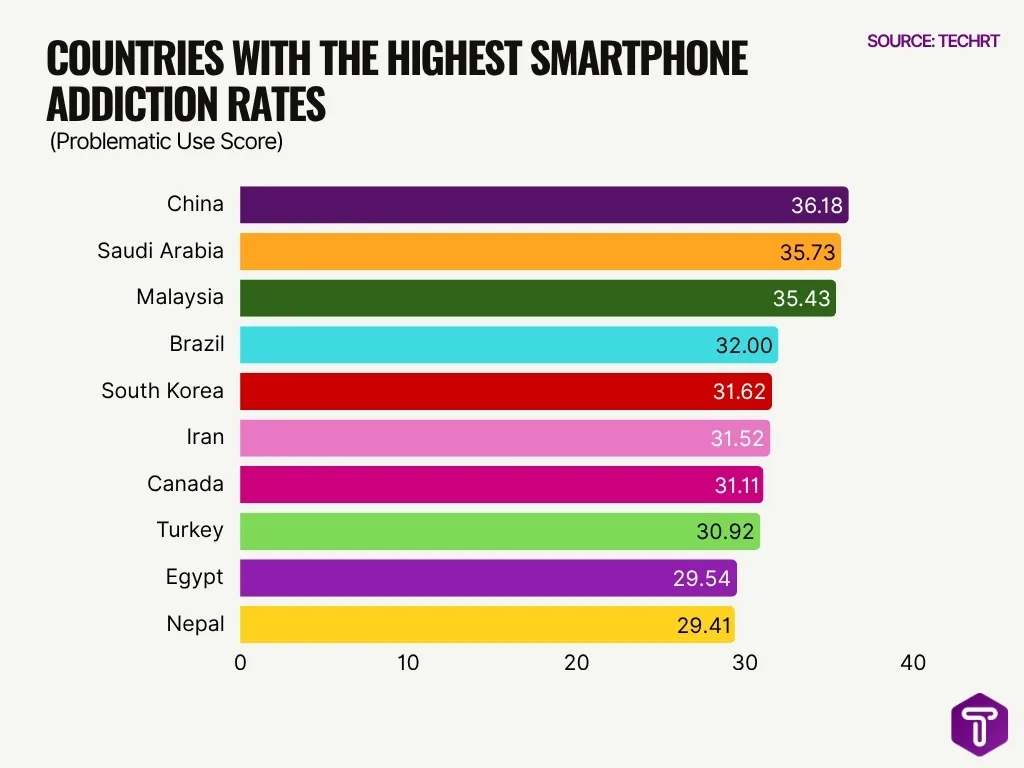
- China ranks #1 globally with a problematic smartphone use score of 36.18, indicating the highest level of digital dependency among all countries listed.
- Saudi Arabia (35.73) and Malaysia (35.43) follow closely, showing that smartphone addiction is particularly high in rapidly digitizing economies.
- Brazil stands at #4 with a score of 32, highlighting strong smartphone reliance in Latin America’s largest market.
- South Korea (31.62), despite being one of the most technologically advanced nations, continues to face significant smartphone overuse challenges.
- Iran (31.52) and Canada (31.11) show similar addiction levels, suggesting that smartphone dependency spans across both developing and developed countries.
- Turkey (30.92) ranks #8, maintaining a consistently high engagement with mobile devices.
- Egypt (29.54) and Nepal (29.41) round out the top 10, indicating that smartphone addiction is a growing issue even in emerging economies.
- The score gap between #1 (36.18) and #10 (29.41) is relatively narrow (~6.77 points), which implies that high smartphone addiction is a widespread global phenomenon, not limited to just a few countries.
- Overall, all top 10 countries have scores above 29, reinforcing that problematic smartphone use is consistently high worldwide.
US Smartphone Addiction Statistics
- 56.9% of Americans report feeling addicted to their smartphones.
- The average American checks their phone 144 times per day.
- Americans spend 5 hours 16 minutes daily on their phones in 2025, up 14% from 2024.
- Around 81.6% of Americans actively use smartphones.
- 40% of U.S. young adults report addiction to social media via smartphones.
- Nearly 77% of Americans own smartphones, reinforcing widespread dependency.
- Among millennials, 36% spend at least two hours daily on phone-based activities during workdays.
- About 22% of young adults check their phones every few minutes.
Teen Smartphone Addiction Statistics
- Around 50% of U.S. teens say they are addicted to their smartphones.
- 95% of teens (ages 13–17) have access to smartphones in the U.S.
- Teenagers spend an average of 7+ hours daily on screens.
- Nearly 47% of teens say they constantly check their phones.
- About 34% of teens report excessive smartphone use.
- 72% of teenagers check their phones immediately after waking up.
- Nearly 41% of teens feel overwhelmed by constant notifications.
- One-third of teens show high addictive behavior patterns by age 14.
Smartphone Addiction Among Children
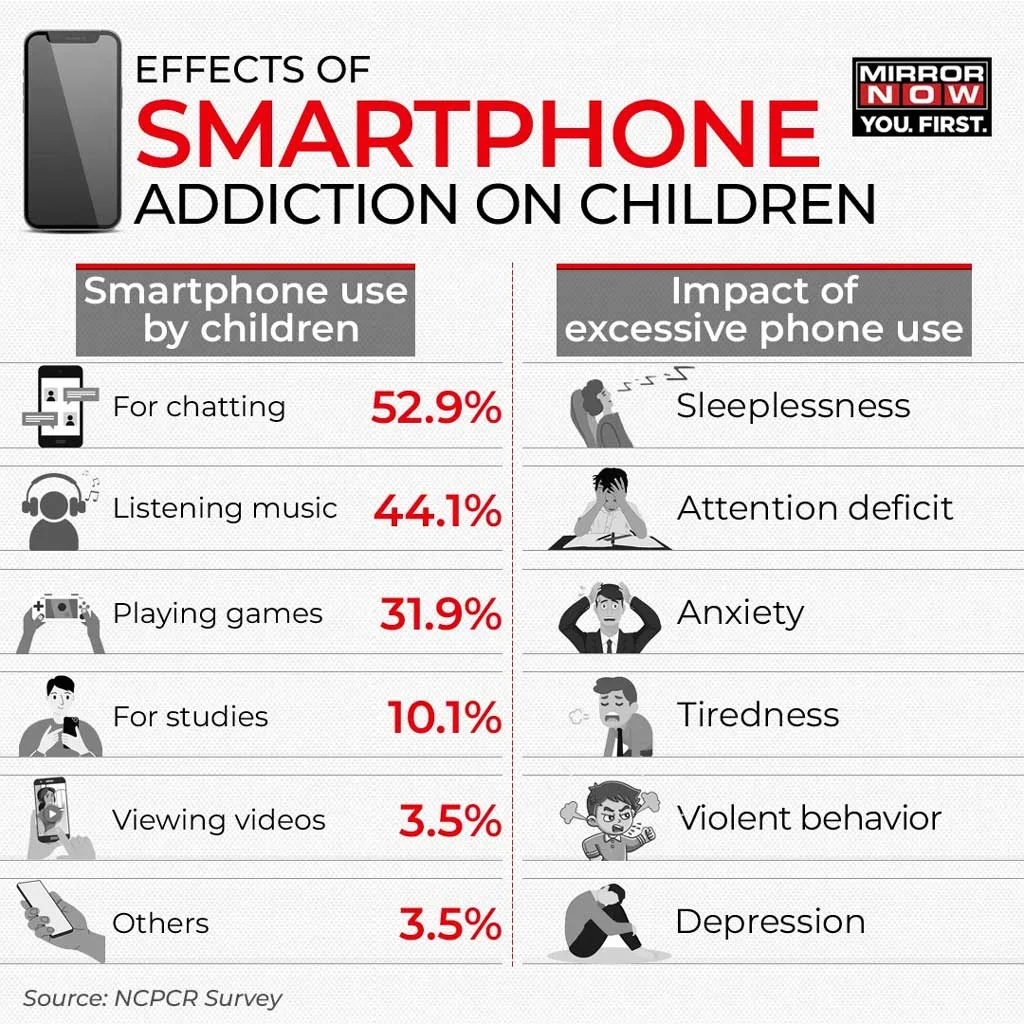
- Chatting dominates usage, with 52.9% of children primarily using smartphones for communication, making it the most common activity.
- Entertainment is a major driver, as 44.1% of children use smartphones for listening to music, highlighting strong media consumption habits.
- Gaming is highly popular, with 31.9% of children engaged in playing games, indicating significant screen-time exposure for leisure.
- Educational use is surprisingly low, with only 10.1% of children using smartphones for studies, suggesting limited academic utilization.
- Video consumption remains minimal, with just 3.5% of children viewing videos, equal to the “others” category (3.5%).
- Sleep disruption is a major consequence, as excessive smartphone use is linked to sleeplessness, impacting overall health.
- Cognitive issues are evident, with attention deficit emerging as a key impact of overuse.
- Mental health concerns are rising, including anxiety and depression, directly associated with excessive phone usage.
- Physical fatigue is common, with children experiencing tiredness due to prolonged screen time.
- Behavioral changes are noticeable, with instances of violent behavior linked to excessive smartphone exposure.
Average Daily Phone Usage Time
- The global average smartphone usage reached 4 hours 37 minutes per day in 2025, up from 4 hours 25 minutes in 2024.
- In the U.S., adults spend about 5 hours 16 minutes daily on smartphones, marking a year-over-year increase of ~14%.
- Gen Z users average 6+ hours per day on mobile devices, the highest among all demographics.
- Millennials spend roughly 5.7 hours daily on smartphones in 2025.
- Users worldwide spend over 90% of their mobile time in apps, not browsers.
- Daily screen time increased by over 30 minutes globally between 2023 and 2025.
- Americans spend approximately 1,800+ hours annually on smartphones.
- Video streaming and social media account for over 50% of total screen time globally.
- Users unlock their phones an average of 58–96 times daily, depending on usage intensity.
Phone Checking Frequency Stats
- The average smartphone user checks their phone 96 times per day, or once every 10 minutes.
- Heavy users can check their phones up to 352 times daily, indicating compulsive behavior.
- About 22% of users check their phones every few minutes throughout the day.
- Nearly 47% of users admit they constantly check notifications even without alerts.
- Around 70% of smartphone users check their phones within 5 minutes of waking up.
- 51% of users check their phones during conversations, contributing to social disengagement.
- The average user performs 2,617 touches per day, rising to 5,400 for heavy users.
- 60% of people feel uneasy when they leave their phone at home.
- Push notifications drive over 70% of phone pickups, reinforcing habitual checking.
Smartphone Checking Behavior After Waking Up
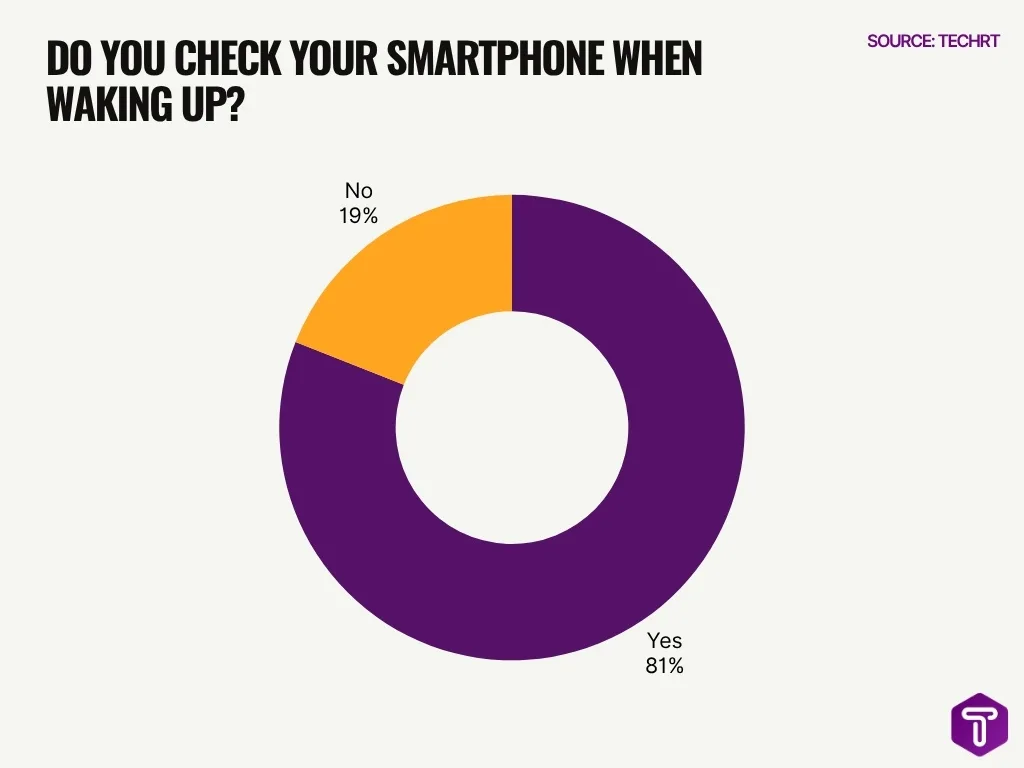
- A significant 81% of users check their smartphones immediately after waking up, highlighting a strong dependency on mobile devices.
- Only 19% of individuals avoid checking their phones in the morning, indicating a small minority with healthier digital habits.
- The data suggests that morning phone usage is a dominant behavioral pattern, with more than 4 out of 5 people engaging in it.
- This trend reflects increasing smartphone addiction and habitual checking behavior, especially during the first moments of the day.
- The high percentage of early usage may contribute to reduced productivity, disrupted morning routines, and mental fatigue.
Nomophobia and Phone Anxiety
- Around 66% of people globally experience nomophobia, the fear of being without their phone.
- In the U.S., 58% of men and 47% of women report anxiety when separated from their phones.
- Nearly 71% of people sleep with or next to their phones, reflecting dependency.
- About 40% of users feel stressed if they cannot access their phone.
- 44% of smartphone users say they feel uneasy when their phone battery drops below 20%.
- Nomophobia rates are highest among young adults aged 18–29, exceeding 75% in some studies.
- Around 50% of users panic when they misplace their phone, even temporarily.
- Increased smartphone dependency correlates with higher cortisol levels, indicating stress.
- Workplace studies show that over 60% of employees feel anxious without immediate phone access.
Mental Health Effects Statistics
- Smartphone addiction is linked to a 2–3x higher risk of depression among heavy users.
- Adolescents with high screen addiction show significantly higher suicide-related behaviors.
- Around 41% of teens report feeling overwhelmed by digital interactions.
- Heavy smartphone users are twice as likely to report anxiety disorders.
- Social media-driven phone use increases loneliness by over 20% in young adults.
- 60% of college students report problematic smartphone use affecting mental health.
- Excessive smartphone use correlates with lower self-esteem scores in adolescents.
- Screen addiction is associated with reduced attention span and cognitive control.
- Frequent multitasking on phones reduces productivity by up to 40%.
Health Effects of Smartphone Addiction
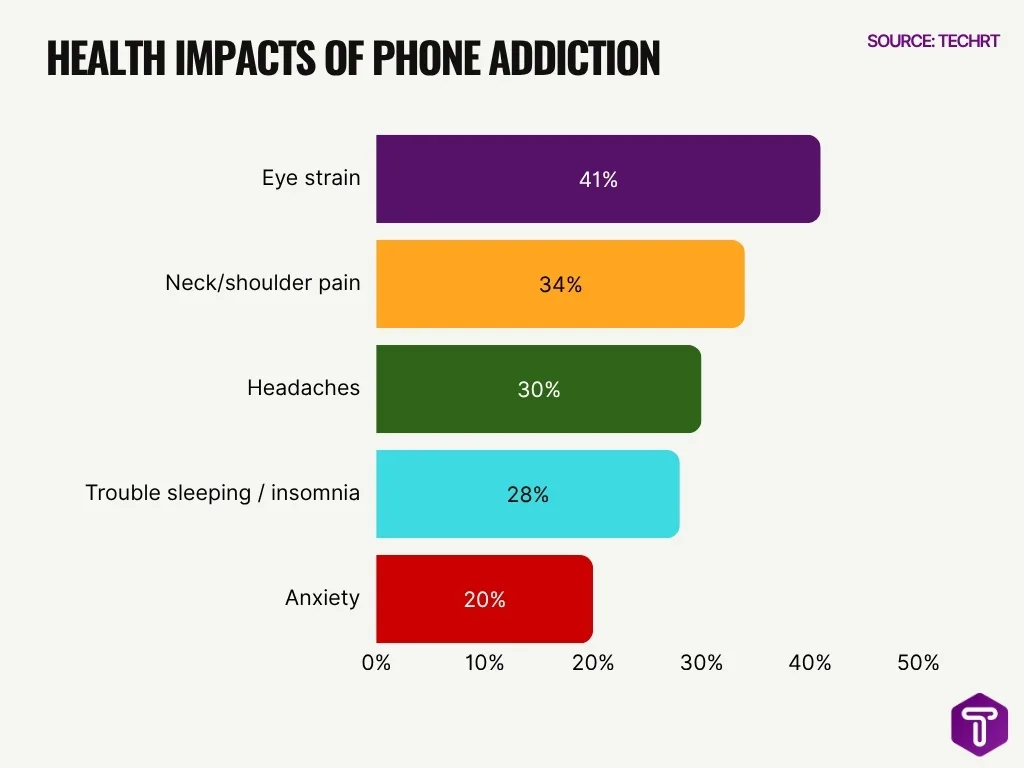
- A significant 69% of users experienced phone-related health issues in the past year, highlighting the widespread impact of excessive smartphone usage.
- Eye strain is the most common issue, affecting 41% of users, making it the leading physical health concern linked to screen time.
- Around 34% of individuals experience neck and shoulder pain, showing the effects of prolonged poor posture.
- Nearly 30% report suffering from frequent headaches, often due to continuous screen exposure.
- Sleep disruption is a major concern, with 28% facing insomnia or trouble sleeping, largely driven by late-night phone use.
- Mental health is also affected, as 20% of users experience anxiety linked to smartphone overuse.
- Overall, the data indicate that smartphone addiction contributes to both physical and psychological health problems, with visual strain, pain, and sleep issues being the most prominent.
Sleep Disruption from Smartphones
- Around 70% of adults use smartphones in bed before sleep.
- Smartphone use before bed reduces sleep quality by up to 30%.
- 90% of people use devices within an hour of bedtime, affecting circadian rhythms.
- Teens who use phones at night are twice as likely to experience sleep deprivation.
- Blue light exposure delays sleep onset by 10–60 minutes.
- Around 36% of adults wake up at night to check their phones.
- Smartphone notifications disrupt sleep cycles, reducing REM sleep duration.
- Poor sleep linked to smartphone use increases the risk of depression and anxiety disorders.
- Children with bedroom smartphone access show higher rates of insomnia symptoms.
Phone Addiction and Relationships
- 51% of people admit to checking phones during conversations, impacting relationship quality.
- Around 40% of partners feel ignored due to smartphone use.
- Smartphone distractions contribute to relationship dissatisfaction in 1 out of 3 couples.
- 70% of individuals say phones interfere with romantic interactions.
- Couples who experience frequent phone interruptions report lower relationship satisfaction scores.
- About 60% of people use phones during meals, reducing face-to-face engagement.
- Excessive phone use is linked to increased conflict in relationships, especially among younger couples.
- Parents distracted by smartphones spend less quality time with children, affecting bonding.
- Workplace relationships also suffer, with over 50% of employees reporting distraction during meetings.
Driving and Phone Distraction Risks
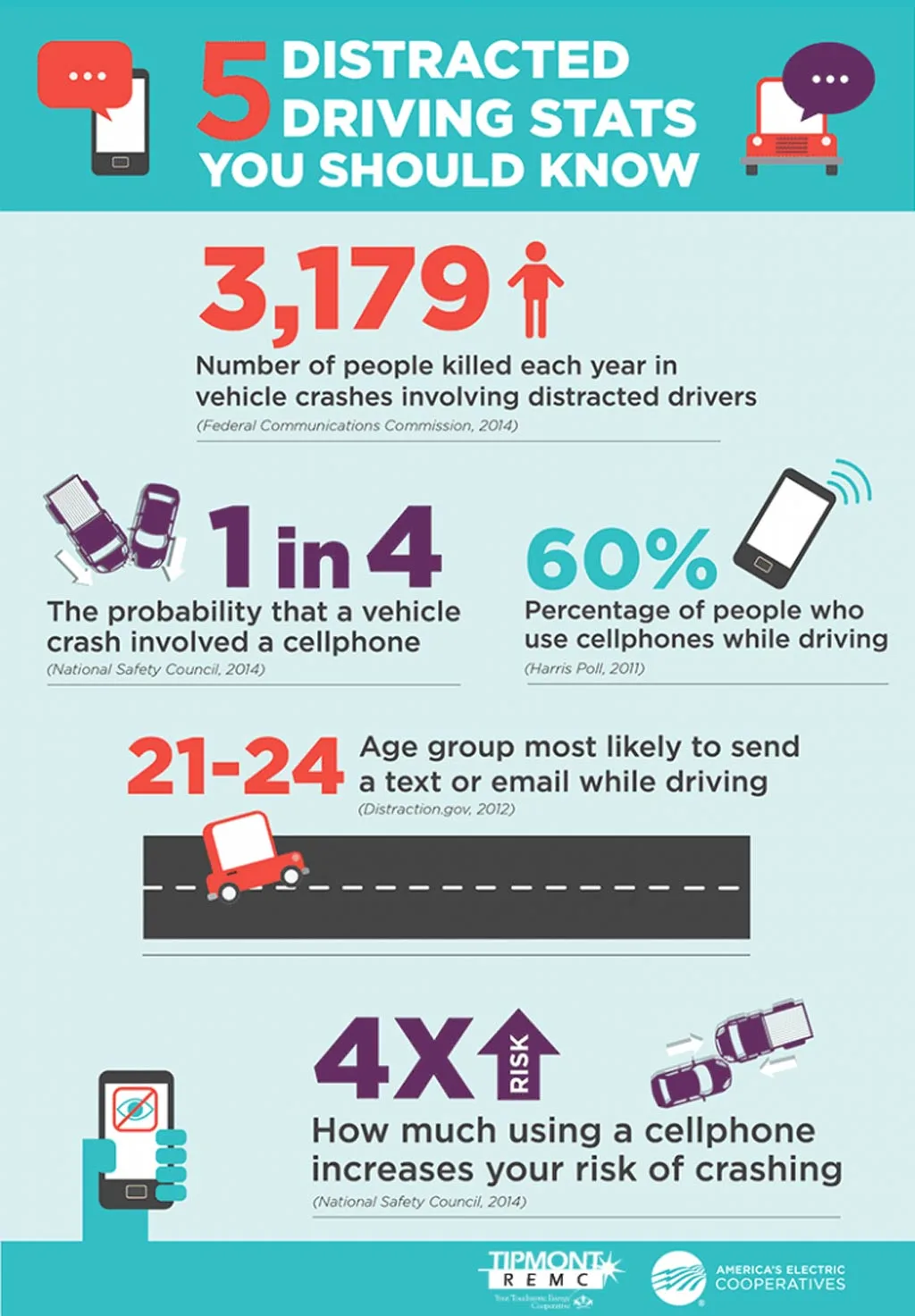
- 3,179 people die annually due to crashes involving distracted driving, highlighting the severe real-world consequences of inattention on the road.
- Nearly 1 in 4 crashes (25%) involve a cellphone, making mobile distraction one of the leading causes of accidents.
- A striking 60% of drivers admit to using cellphones while driving, showing how widespread and normalized this risky behavior has become.
- The 21–24 age group is the most likely to send texts or emails while driving, indicating higher vulnerability among young adult drivers.
- Using a cellphone while driving increases crash risk by 4X, dramatically amplifying the chances of serious accidents and fatalities.
- Overall, distracted driving remains a major public safety issue, driven primarily by mobile phone usage and behavioral habits behind the wheel.
Phubbing in Relationships Stats
- 46% of smartphone users report being “phubbed” by their partner regularly.
- Around 32% of couples say phone use during conversations causes frequent arguments.
- Phubbing is linked to a 20–25% drop in relationship satisfaction scores.
- Nearly 70% of millennials admit to using phones during face-to-face conversations.
- About 50% of partners feel ignored when phones are used during shared time.
- Couples experiencing frequent phubbing report higher levels of depression and conflict.
- Around 60% of people use smartphones during meals with partners or family.
- Phubbing behavior increases the likelihood of emotional disconnection by over 30%.
- Studies show that even brief phone interruptions reduce perceived empathy in conversations.
Gender Differences in Addiction
- Women exhibit a 76.5% smartphone addiction rate compared to 66.6% in men.
- 56% of young women show smartphone addiction versus 33% of young men.
- 34% of women report being somewhat addicted to social media, versus 26% of men.
- 51% of women cannot imagine life without their smartphone, compared to 41% of men.
- 60.8% average nomophobia score for females, 39.2% for males.
- 94% of gaming addicts are male, while females dominate social media addiction.
- 17.9% smartphone addiction prevalence in women, double the 9.4% in men.
- Young women are 1.7x more likely to feel anxious without their phone than men.
Age Group Usage Comparisons
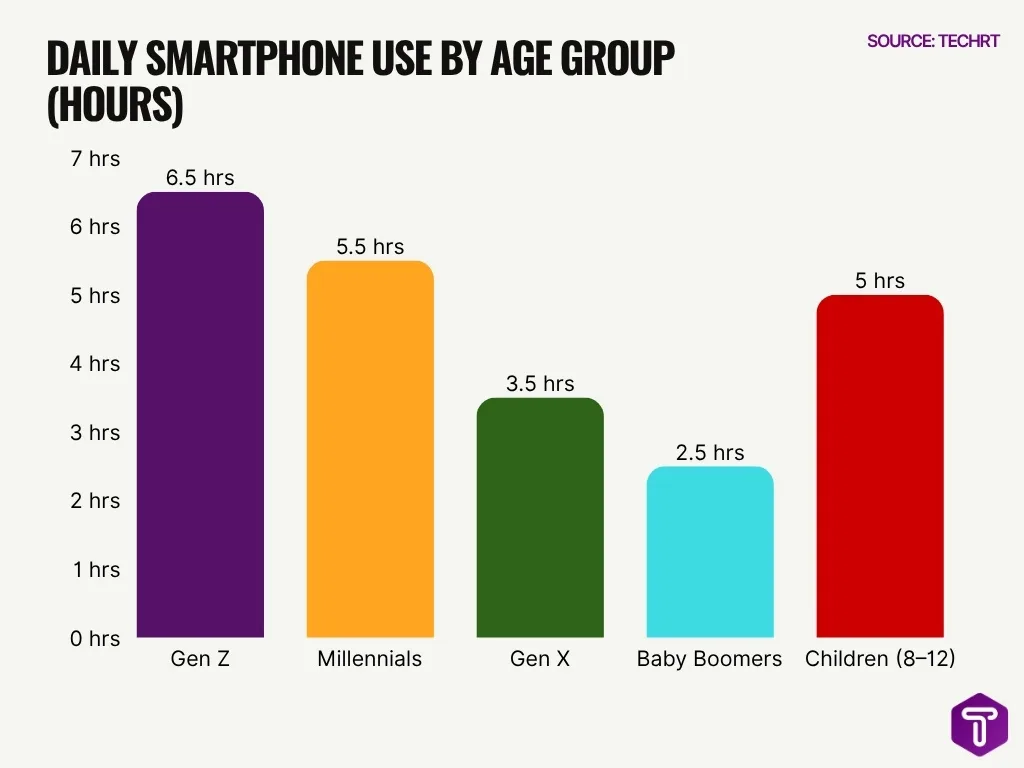
- Gen Z spends the most time on smartphones, averaging 6–7 hours daily.
- Millennials average around 5–6 hours per day, slightly lower than Gen Z.
- Gen X users spend about 3–4 hours daily on smartphones.
- Baby Boomers average 2–3 hours daily, the lowest among major groups.
- Smartphone addiction prevalence is highest among ages 18–29, exceeding 60% in some studies.
- Teenagers are twice as likely as adults to exhibit addictive phone behaviors.
- Older adults are less addicted but show rapid growth in smartphone dependency since 2023.
- Children aged 8–12 now spend 4–6 hours daily on screens, increasing addiction risk early.
- Across all age groups, smartphone use continues to rise, but addiction intensity declines with age.
Social Media Addiction Link
- Around 40% of smartphone users report addiction tied directly to social media apps.
- Social media accounts for over 50% of total smartphone screen time globally.
- Platforms like TikTok and Instagram drive average session times exceeding 30 minutes per use.
- Users check social media apps up to 20–30 times daily on average.
- About 60% of Gen Z users say social media is their primary reason for smartphone use.
- Heavy social media users are 2x more likely to report poor mental health outcomes.
- Social media addiction contributes to increased dopamine-driven behavior loops, reinforcing phone dependency.
- Around 35% of users report losing track of time due to social media scrolling.
- Notifications from social apps account for a majority of daily phone interruptions.
Frequently Asked Questions (FAQs)
What percentage of people globally are addicted to smartphones?
How many times does the average person check their smartphone daily?
What percentage of Americans say they are addicted to their smartphones?
How many hours per day do people spend on smartphones globally?
What percentage of teenagers show smartphone addiction behaviors?
Conclusion
Smartphone addiction continues to rise across all demographics, driven by constant connectivity, app ecosystems, and behavioral design patterns. The data shows clear links between excessive smartphone use and mental health challenges, disrupted sleep, and strained relationships, especially among younger users.
At the same time, usage patterns differ by age and gender, highlighting that addiction is not just about time spent but how devices are used. As policymakers, educators, and businesses respond with digital well-being tools and awareness campaigns, understanding these statistics becomes essential for informed decisions.
Ultimately, the numbers reveal a simple truth: smartphones are powerful tools, but without mindful use, they can profoundly reshape habits, health, and human connection.

Leave a comment
Have something to say about this article? Add your comment and start the discussion.