



Digital detoxing is no longer a fringe trend. As screen time continues to grow, more people are intentionally unplugging to improve their well-being and productivity. From individual users trying a weekend break to workplaces integrating digital wellness practices, the impact of reduced screen use is measurable across age groups. Recent studies link intentional digital breaks with tangible improvements in mental health and daily functioning, hinting at a broader shift toward mindful technology use. Explore the latest statistics to understand how digital detox is reshaping lives globally.
Editor’s Choice
- 33% of users prioritized reducing screen time over weight loss in a recent wellness survey.
- 80% of U.S. smartphone users set their own screen limits, yet only 12% use built-in limit tools.
- 84% of 18–24-year-olds feel they use their phones too much.
- After a one-week social media detox, depression dropped 25% and anxiety dropped 16% among young adults.
- 64% take breaks from social media for detoxing, but 51% relapse back to usage.
- 23.7% feel lower stress and anxiety post-detox.
- 70+% of participants in screen time studies show improved well-being after intentional reduction.
Recent Developments
- Adoption of digital detox strategies has increased alongside awareness of screen overuse.
- Search interest for “digital detox” has more than tripled since 2023, signaling rising public concern.
- Digital detox retreats and workplace programs increasingly promote unplugged challenges.
- Research frameworks now explore digital detox as a well-being strategy, not just a temporary break.
- Smartphone overuse interventions are shifting from passive tracking to active behavior change techniques.
- Companies are testing screen time limiters and digital well-being apps to support users.
- Schools and colleges are piloting digital wellness curricula tied to detox practices.
- Lifestyle content now routinely features digital detox tips, reflecting mainstream acceptance.
Digital Detox Success Statistics Overview
- Digital detox success rates vary widely but show positive gains across mental and physical metrics.
- Around 80% of young adults successfully reduced social media time during a structured detox.
- One pilot study saw approximately 50% decrease in social media use after four weeks of screen time limits.
- In controlled settings, screen time reduction showed small to medium improvements in stress and sleep scores.
- About 25% complete longer detox challenges without reverting quickly.
- Success is higher when detox is paired with structured planning and goal-setting.
- Relapse remains common, but repeated detox cycles show cumulatively better outcomes.
- Full digital abstinence is more successful in short intervals than extended periods without support.
Digital Detox Success Rate Statistics
- Digital detox programs achieve a 72% success rate in reducing compulsive technology use.
- One-week social media detoxes yield a 24.8% drop in depression symptoms.
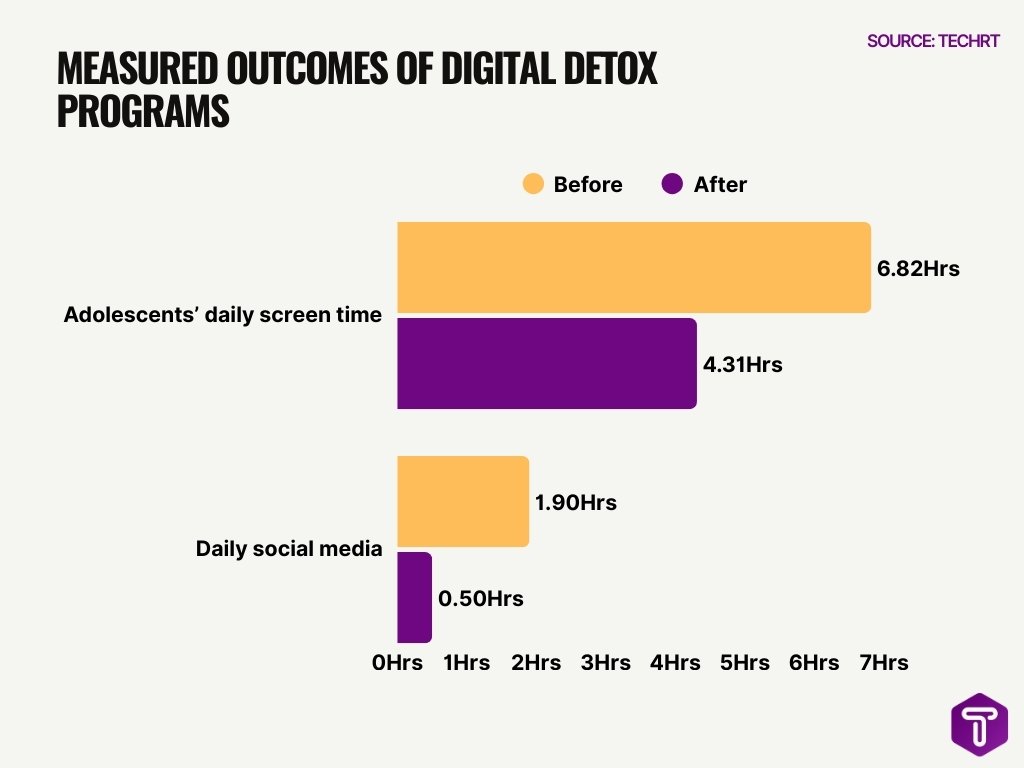
- Adolescents in structured detox cut daily screen time from 6.82 to 4.31 hours.
- Two-week detox participants slash social media use by an average 77.7%.
- Digital detoxes halve screen time to 2.5 hours daily on average.
- Week-long detox reduces daily social media from 1.9 to 0.5 hours.
- A one-week detox lowers anxiety by 16.1% and insomnia by 14.5%.
- Digital detox apps market surges at 18.2% CAGR to $19.44 billion by 2032.
- 80% of detoxers report the experience as liberating.
Global Digital Detox Adoption Statistics
- More than 40% of people globally report trying to cut down screen time.
- In some regions, just over 10% have actively practiced daily digital detox activities.
- 1 in 5 adults in several European countries want to reduce digital usage due to health concerns.
- An estimated over 50% of younger adults express concern that they spend too much time on devices.
- The global digital detox app market grew rapidly from 2024 to 2025.
- Nearly 35% of UK adults attempted some form of detox or screen time reduction.
- Teen screen time usage can reach around 9 hours per day, prompting more detox efforts.
- Adults aged 18–35 show the highest engagement in detox trends.
Social Media Detox Success Statistics
- A one-week social media detox reduced anxiety by 16.1%, depression by 24.8%, and insomnia by 14.5%.
- Average daily social media use dropped from around 2 hours to 30 minutes during detox periods.
- Structured detox programs significantly lower weekly social media usage among students.
- Some studies show mixed effects on life satisfaction, highlighting variability.
- Youth engagement in digital breaks rose to 40% in 2025, up sharply from 2022.
- Nearly 210 million people worldwide are considered addicted to social media.
- 73% of parents believe children would benefit from technology detoxes.
- Detox success depends on commitment and environment rather than one universal method.
Digital Detox Strategies Americans Use to Reduce Screen Time
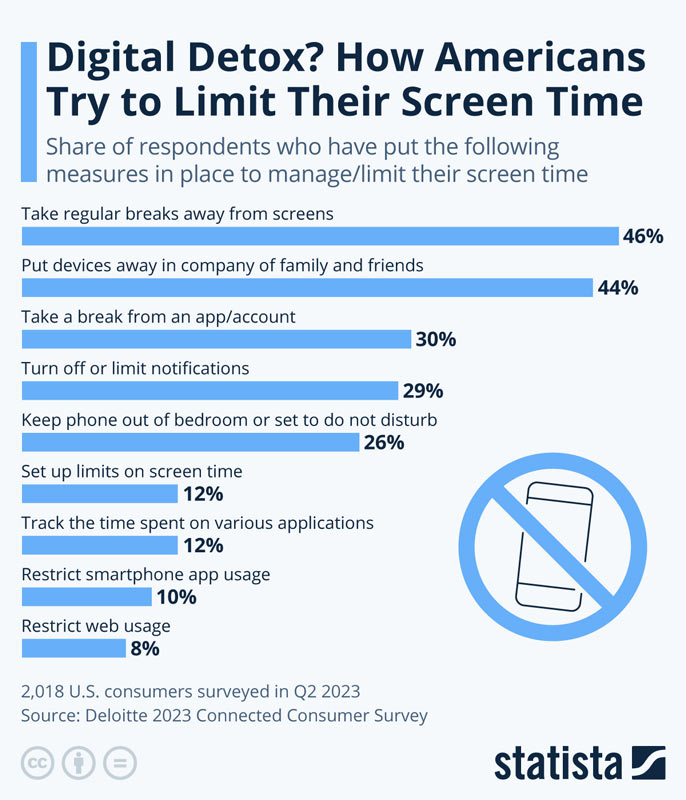
- 46% of Americans report taking regular breaks away from screens, making it the most widely adopted digital detox habit.
- 44% of respondents intentionally put devices away when spending time with family and friends, highlighting a strong focus on offline social interaction.
- 30% of users say they take breaks from specific apps or accounts, reflecting growing awareness of app-level digital fatigue.
- 29% of Americans manage screen exposure by turning off or limiting notifications, reducing constant digital interruptions.
- 26% of respondents improve digital well-being by keeping phones out of the bedroom or using Do Not Disturb mode, particularly to protect sleep quality.
- Only 12% of consumers actively set formal screen-time limits, indicating low adoption of built-in digital wellbeing controls.
- Another 12% regularly track time spent on different applications, showing limited use of screen-time monitoring tools.
- Just 10% of Americans restrict smartphone app usage, suggesting resistance to strict digital controls.
- The least common approach is restricting web usage, practiced by only 8% of respondents, underscoring a preference for behavioral over technical limits.
Smartphone and Internet Addiction Reduction Outcomes
- The average person spends 4 hours 37 minutes per day on smartphones.
- Detox programs can halve overall screen time in short-term interventions.
- Behavioral planning approaches show more consistent results than passive limits.
- Excessive smartphone use is strongly to anxiety and sleep problems.
- Three-week screen reductions show improved mental health indicators.
- Minimalist phone strategies reduce habitual checking behavior.
- Long-term addiction reduction often requires repeated detox efforts.
- Internet addiction correlates with higher perceived stress levels.
Stress, Anxiety, and Depression Reduction Statistics
- Detox adherence correlates with lower stress and anxiety symptoms.
- Systematic reviews link detox behavior to reduced depression scores.
- Short social media abstinence produces measurable anxiety reductions.
- Some studies find no major changes in overall life satisfaction.
- Excessive internet use is associated with higher stress levels.
- Behavioral interventions outperform simple screen bans.
- Daily detox routines build resilience against burnout.
- Replacing screen time with restorative activities improves outcomes.
Sleep Quality and Insomnia Improvement Statistics
- Insomnia symptoms decreased by about 14.5% after a one-week detox.
- Screen time reduction improves sleep latency and duration.
- Consistent detox periods enhance sleep hygiene across age groups.
- Reducing screens before bed leads to faster sleep onset.
- Blue-light reduction improves circadian rhythm alignment.
- Detox combined with bedtime routines yields stronger sleep benefits.
- Sleep quality gains improve daytime focus and energy.
- Screen-free evenings increase sleep satisfaction in youth.
Mental Health Improvements After Digital Detox
- A one-week social media detox reduced anxiety symptoms by 16.1% in young adults.
- Depression symptoms dropped by 24.8% after a one-week detox among Gen Z participants.
- Insomnia symptoms decreased by 14.5% following a week-long digital break in a cohort study.
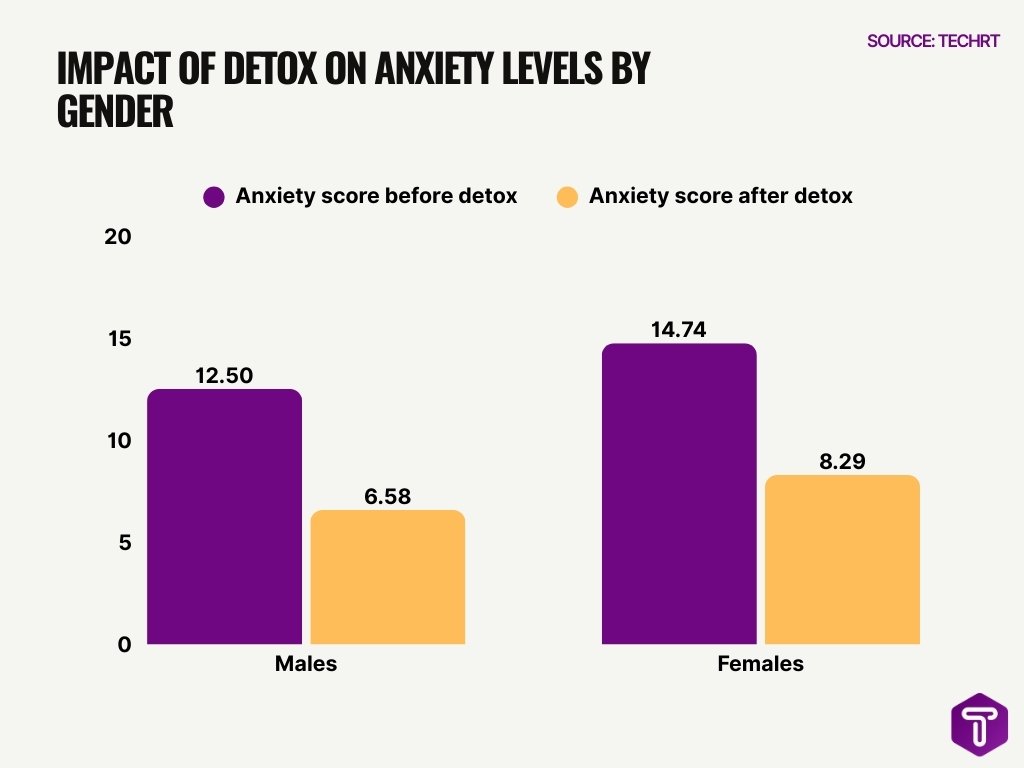
- In a two-week detox, males’ anxiety scores fell from 12.50 to 6.58 with p < .0001.
- Females’ anxiety reduced from 14.74 to 8.29 post-detox intervention across demographics.
- Two-week detox with activities lowered cortisol by 32% and CRP by 33% in stress markers.
- Depression scores shifted from moderate (13.54) to mild (6.78) in males after detox.
- Short-term detoxes improved sleep quality by 9.41% in 54% of studies reviewed.
- Digital detox benefits were higher for those with severe baseline depression symptoms.
- Youth cutting social media from 1.9 hours to 0.5 hours daily saw significant mental health gains.
Productivity and Focus Gains from Digital Detox
- Reduced smartphone use improves focus and productivity.
- Students report better attention and academic performance after detox.
- Fewer digital interruptions improve task continuity.
- Phone-free periods support deeper cognitive engagement.
- Detox participants reallocate time to learning and hobbies.
- Productivity gains appear in both self-reports and controlled studies.
- Digital minimalism supports sustained focus improvements.
- Ongoing habits matter more than short breaks alone.
Work–Life Balance and Burnout Reduction Statistics
- 83% of studies link work-related smartphone use after hours to higher work-life conflict.
- Office workers average 6.5 hours daily on screens, blurring work-home boundaries.
- 19 studies confirm that after-hours smartphone use significantly boosts work-life conflict.
- 5-minute screen breaks every hour lifts productivity by 40% and cuts fatigue.
- 10-minute micro-breaks reduce fatigue and support work-home recovery.
- Digital sabbaticals yield 34% lower stress levels post-return, lasting 6-12 months.
- Digital detox cuts burnout symptoms with medium-to-large effect sizes in interventions.
- Screen-free zones lower stress and boost concentration, according to APA research.
- Firms using digital wellbeing tools see 44% higher engagement and satisfaction.
- 66% of Americans report notifications cause stress or fatigue.
- People receive 60-80 notifications daily, fueling chronic stress and anxiety.
- Digital detox slashes stress by 42% and boosts well-being by 34%.
Physical Health and Lifestyle Improvement Outcomes
- Digital detox reduces eye strain and neck discomfort.
- 91% of participants in a two-week offline study felt physically better.
- Detox programs encourage physical activity and outdoor time.
- Reduced screen use lowers sedentary behavior risks.
- Limiting screens before bed improves posture.
- Detox efforts support healthier meal and sleep routines.
- Screen breaks increase social and outdoor engagement.
- Participants report higher satisfaction with exercise habits.
Digital Detox in Adolescents and Students: Statistics
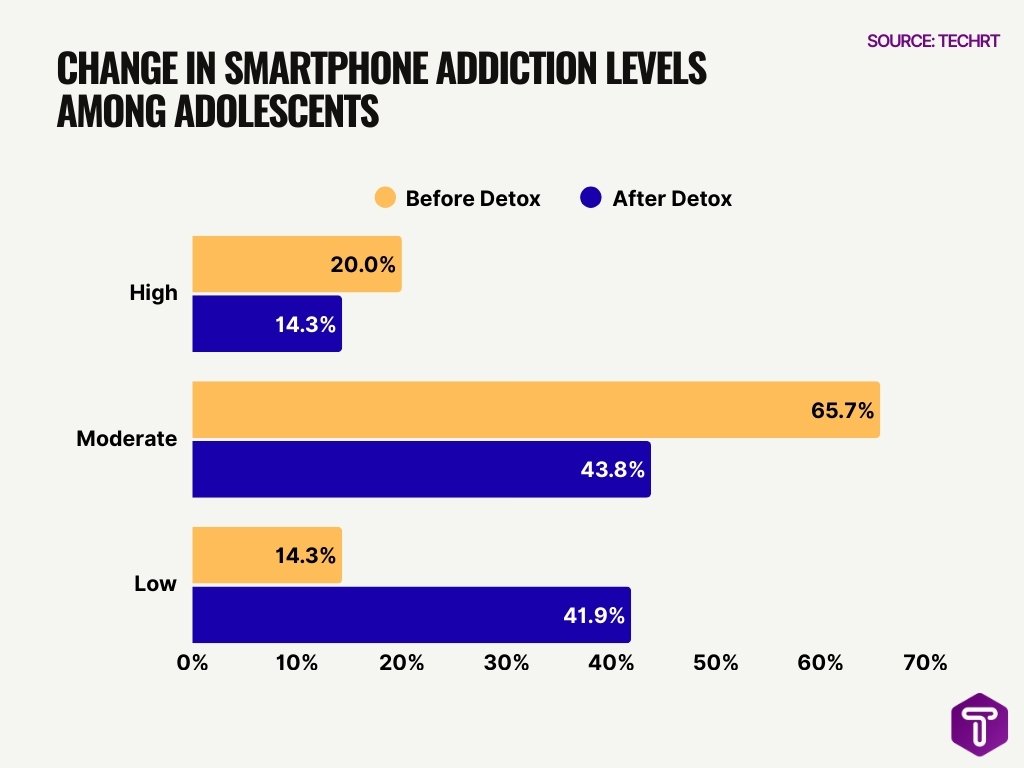
- Smartphone addiction rates dropped from 20% to 14.3% after interventions.
- Moderate addiction declined from 65.7% to 43.8% post-detox.
- Low addiction levels increased from 14.3% to 41.9%.
- Adolescents showed improved sleep hygiene scores.
- Daily screen time fell from 6.8 hours to roughly 4.3 hours.
- Schools adopting detox curricula increased addiction awareness.
- Parental support for digital breaks continues to rise.
- Teens reallocate time to homework and physical activity.
Digital Detox Among Working Professionals Statistics
- 75% of working professionals report high stress from constant digital connectivity.
- 60% of employees experience burnout due to digital overload.
- Digital detox practices reduce stress by 42% among professionals.
- Planned breaks boost productivity and focus by 28%.
- Screen limits lead to 20–23% higher productivity in workplaces.
- Digital wellbeing initiatives improve employee satisfaction by 30%.
- No after-hours notifications support 25% effectiveness in reducing overload.
- Digital detox days cut employee turnover by 25%.
- 85% of professionals agree that digital detox enhances mental health.
Digital Detox Retreats and Programs Outcomes
- The digital detox retreat market reached approximately $0.9 billion in 2024.
- Retreats emphasize mindfulness, nature, and movement.
- 27% of adults seek technology-free vacations.
- 17% of travelers prefer trips requiring device disconnection.
- Many retreat guests hesitate to reconnect digitally afterward.
- Participants report stronger engagement with their surroundings.
- Multi-day programs show higher habit retention.
- Group activities strengthen social connections.
Digital Wellbeing and Screen-Limiting Apps Effectiveness
- The digital detox app market reached around USD 0.98 billion in 2025.
- Market growth is projected strongly through the next decade.
- 41.7% of young adults report using detox apps.
- Apps reduce compulsive smartphone behaviors.
- Screen-limiting tools improve accountability.
- Users show better self-regulation and reduced scrolling.
- Blocking and scheduling features sustain reductions.
- Long-term engagement remains a challenge.
Relapse Rates After Digital Detox Programs
- 72% of Americans fail their digital detox attempts.
- 51% relapse due to social media checking post-detox.
- 78% find digital detox difficult, with 41% extremely so.
- 56% attempt multiple detoxes yearly due to relapse.
- The rebound effect occurs at the two-week follow-up in detox studies.
- 64% detox for social media overuse, mirroring the top relapse trigger.
- Relapse rates exceed 80% without ongoing intervention post-detox.
- Goal-setting with social support cuts relapse by enhancing adherence.
- Gradual limits sustain gains beyond the short breaks’ 77.7% initial drop.
Frequently Asked Questions (FAQs)
What percentage of people intentionally reduced their screen time recently?
About 43% of respondents reported intentionally reducing screen time in the past six months.
How many hours can daily screen time drop after a digital detox program?
Average daily screen time can drop from 6.8 hours to around 4.3 hours after detox interventions.
What is the projected market size for digital detox apps by 2032?
The digital detox apps market is predicted to grow from $0.39 B in 2023 to $19.44 B by 2032 with an ~18.20% CAGR.
What percent of digital detox efforts report easing stress and anxiety afterward?
Approximately 23.7% of people reported reduced stress and anxiety after a digital detox.
What is the forecasted value of the digital detox tourism services market?
The global digital detox tourism market is expected to reach about $466.58 B by 2034 with a ~24.5% CAGR.
Conclusion
Digital detox has evolved into a measurable lifestyle intervention with clear benefits across mental health, physical wellbeing, productivity, and balance. Adoption continues to rise among individuals, schools, workplaces, and wellness programs, supported by growing markets for apps and retreats. However, sustained success depends on structure, accountability, and habit reinforcement, as relapse remains common without follow-through. As digital detox strategies mature, they offer a realistic path toward healthier technology use and improved quality of life, not through total disconnection, but through intentional balance.

Leave a comment
Have something to say about this article? Add your comment and start the discussion.