


The iPhone remains one of the most influential consumer technologies in the world. From mobile payments and content creation to enterprise security and app-driven services, Apple’s smartphone plays a central role in modern digital ecosystems. Businesses rely on iPhones for mobile productivity, while developers generate billions through the App Store economy. The following statistics explore the size, growth, and global reach of the iPhone user base and reveal how Apple continues to shape the smartphone market.
Editor’s Choice
- The global iPhone user base reached about 1.38 billion people worldwide by 2023 and continues to grow steadily.
- Apple’s ecosystem now includes around 2.5 billion active devices globally, including iPhones, Macs, iPads, and wearables.
- iPhones represent nearly one in four active smartphones worldwide based on the global installed base in 2025.
- Apple captured roughly 20% of the global smartphone market in 2025, leading the industry ahead of Samsung.
- The global iOS mobile operating system share reached about 31.48% in early 2026, reflecting strong growth against Android.
- Apple has shipped more than 3 billion iPhones since the product launched in 2007.
- In the United States, iPhone dominates with around 57–58% smartphone market share, making it the leading platform in the country.
Recent Developments
- Apple became the largest smartphone vendor globally in 2025 with about 20% market share, overtaking Samsung for the first time.
- Global smartphone shipments grew around 2% year over year in 2025, indicating a modest recovery in the device market.
- Apple recorded the fastest shipment growth among top smartphone brands at about 10% in 2025, fueled by strong iPhone demand.
- Apple’s App Store now attracts more than 850 million average weekly visitors worldwide, highlighting massive ecosystem engagement.
- The company added roughly 150 million new active devices between 2024 and 2025, showing continued ecosystem expansion.
- India is emerging as a major iPhone manufacturing hub, assembling about 55 million units in 2025, a 53% increase from 2024.
- Apple now produces about 25% of its global iPhone output in India, reducing reliance on Chinese manufacturing.
- The iPhone 17 series recorded about 14% higher initial sales compared to the previous model in major markets like the U.S. and China.
Global iPhone User Overview
- The number of global iPhone users surpassed 1.38 billion in recent estimates, reflecting long-term growth since 2007.
- Apple’s smartphone ecosystem accounts for nearly 25% of the global smartphone installed base, making it the largest single device family.
- The combined installed base of Apple and Samsung smartphones represents around 44% of active devices globally.
- Apple’s total ecosystem surpassed 2.5 billion active devices globally by early 2026.
- The iPhone alone has generated over 3 billion cumulative device shipments since its launch.
- Apple typically ships over 190 million iPhones annually, maintaining one of the highest production volumes among premium smartphones.
- Global smartphone adoption continues to expand, with active smartphone devices growing about 2% in 2025, benefiting major brands like Apple.
- The iPhone remains the most widely used premium smartphone brand worldwide, often commanding higher average selling prices than competitors.
iPhone Market Share in the Smartphone Industry
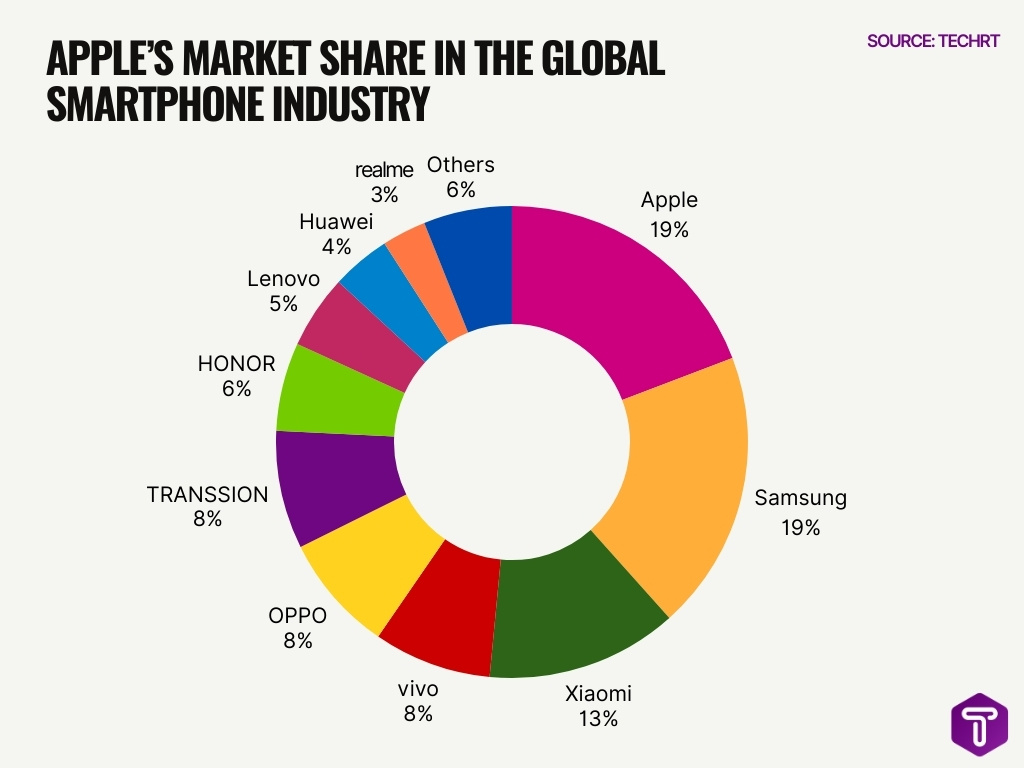
- Apple holds a leading position in the global smartphone market, capturing 19% market share in 2025, making it one of the top smartphone vendors worldwide.
- Apple and Samsung are tied for the top spot, with both companies controlling 19% of global smartphone shipments, highlighting intense competition at the top of the market.
- Apple maintained strong momentum in 2025, recording +7% shipment growth, reflecting continued demand for its premium iPhone lineup.
- Xiaomi ranks third globally with a 13% market share, though the brand experienced a slight decline of -2% in shipment growth.
- Several brands compete closely in the mid-tier of the market, including vivo, OPPO, and TRANSSION, each holding 8% market share globally.
- Among these vendors, vivo saw positive growth of +4%, while OPPO declined by −3% and TRANSSION dropped by −8% in shipment volume.
- HONOR recorded the fastest growth among major vendors, achieving +11% shipment growth while capturing 6% of the global smartphone market.
- Lenovo holds a 5% market share with +6% shipment growth, while Huawei accounts for 4% market share with +2% growth.
- realme represents 3% of global smartphone shipments, but experienced the largest decline among the top vendors at −13%.
- Outside the top brands, other smartphone manufacturers collectively account for 6% of the global market, showing the dominance of leading vendors like Apple and Samsung in the industry.
Year-Over-Year Growth in iPhone Users
- The global iPhone user base expanded from around 948 million users in 2019 to about 1.38 billion in 2023, reflecting strong long-term adoption.
- Apple added about 150 million active devices between 2024 and 2025 across its ecosystem.
- Global smartphone shipments increased 2% year over year in 2025, helping Apple grow its installed base.
- Apple achieved around 10% shipment growth in 2025, outperforming most major competitors.
- The global installed base of smartphones increased about 2% in 2025, signaling steady device replacement cycles.
- Replacement cycles for smartphones are now approaching four years on average, influencing slower but stable user growth.
- Apple has increased its ecosystem by about 300 million active devices over the last two years, reflecting ongoing user expansion.
- Since 2007, the iPhone user base has grown by over one billion users within the last decade alone, highlighting strong platform retention.
Regional Breakdown of iPhone Users
- The United States remains the largest iPhone market, with over 155 million users recorded in 2024.
- iOS market share in the U.S. exceeds 57% of smartphones, significantly higher than the global average.
- Japan is another stronghold, where iPhones consistently hold over 60% of the smartphone market in many recent quarters.
- Europe maintains moderate adoption, with Apple typically capturing 30–35% smartphone share in many Western European countries.
- China remains one of Apple’s largest markets by shipments, contributing tens of millions of iPhone sales annually.
- India shipped around 14 million iPhones in 2025, marking Apple’s strongest year in the country.
- Southeast Asia has become a major growth region due to rising middle-class smartphone demand.
- Apple continues expanding in emerging markets as premium smartphone adoption increases globally.
Countries with the Most iPhone Users
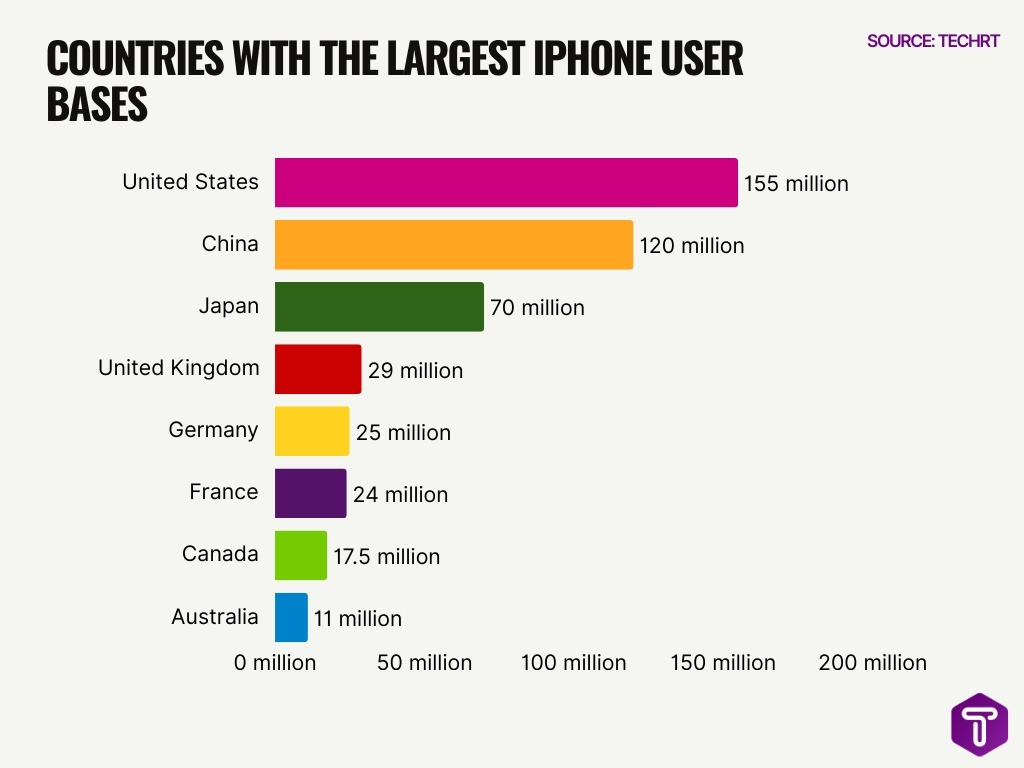
- The United States leads globally with more than 155 million iPhone users as of 2025, representing the largest national user base.
- China follows with over 120 million active iPhone users, making it Apple’s largest market outside the U.S.
- Japan ranks among Apple’s strongest markets with more than 70 million iPhone users, driven by strong brand loyalty and carrier partnerships.
- The United Kingdom has around 28–30 million iPhone users, representing a majority share of smartphones in the country.
- Germany’s iPhone user base exceeds 25 million people, reflecting steady growth in premium smartphone adoption.
- India has emerged as a fast-growing market with over 12 million iPhone shipments in 2024 alone, boosting the total user base significantly.
- Canada maintains high iOS adoption with around 17–18 million iPhone users, representing more than half of the country’s smartphone users.
- Australia also shows strong adoption, with over 11 million iPhone users, giving Apple more than 55% market share in the region.
- France has over 24 million iPhone users, with iOS representing roughly one third of the smartphone market.
iPhone Adoption Among Gen Z and Millennials
- Over 87% of U.S. teenagers own an iPhone, one of the highest brand dominance levels in consumer technology.
- Approximately 88% of teens expect their next phone to also be an iPhone, highlighting strong generational loyalty.
- Millennials represent one of the fastest-growing segments of iPhone buyers, especially in North America and Western Europe.
- More than 60% of smartphone users aged 18–34 prefer iOS devices over Android in the U.S.
- Gen Z users spend over 4.5 hours per day on their smartphones on average, driving engagement across iPhone apps and services.
- Apple’s ecosystem, including Apple Music, FaceTime, and iMessage, plays a key role in attracting younger users.
- Social features such as iMessage group chats contribute to network effects that keep younger users within the iPhone ecosystem.
- Surveys show Gen Z iPhone owners are more likely to upgrade devices frequently compared with older users.
- Apple Pay adoption among younger users continues to grow, with millions of Gen Z consumers using the mobile wallet weekly.
iPhone User Retention and Loyalty Rates
- Apple consistently records customer satisfaction scores above 90% among iPhone users globally.
- iPhone retention rates reached around 90% globally, one of the highest in the smartphone industry.
- In the United States, over 92% of iPhone users say their next smartphone will also be an iPhone.
- Apple has led the smartphone industry in brand loyalty rankings for more than a decade.
- Nearly 80% of Apple users also own at least one additional Apple device, strengthening ecosystem lock-in.
- Apple’s ecosystem integration contributes to lower switching rates compared with Android brands.
- High-income users demonstrate particularly strong brand loyalty toward iPhones, often upgrading within the same brand.
- Enterprise customers frequently remain within Apple’s ecosystem due to security features and consistent software updates.
- Loyalty programs, trade-in offers, and AppleCare services further reinforce retention among existing users.
iPhone User Demographics by Age
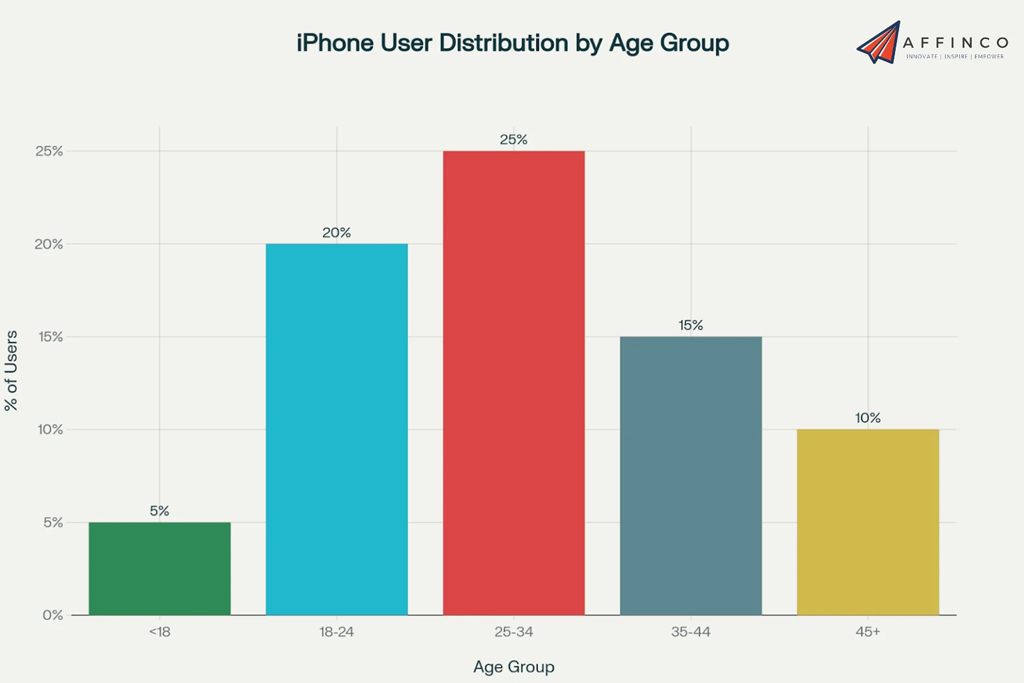
- The 25–34 age group represents the largest share of iPhone users at 25%, indicating that young professionals and millennials form the core user base of Apple devices.
- Users aged 18–24 account for 20% of the iPhone audience, highlighting strong adoption among students and Gen Z consumers who prefer premium smartphones.
- The 35–44 age group contributes 15% of iPhone users, showing steady usage among mid-career professionals and working adults.
- People aged 45 and above make up 10% of iPhone users, reflecting moderate adoption among older demographics compared to younger groups.
- The under-18 segment represents 5% of total iPhone users, making it the smallest user group, likely due to limited purchasing power and parental control over device choices.
- Overall, 45% of iPhone users fall between 18–34 years old, confirming that younger demographics dominate the iPhone ecosystem and drive Apple’s smartphone market engagement.
Average Upgrade Cycle of iPhone Users
- The average iPhone replacement cycle has extended to about 3.5 to 4 years globally.
- Earlier in the decade, the upgrade cycle averaged around 2 to 3 years, showing how consumer behavior has shifted.
- Approximately 30% of iPhone users upgrade every two years, often during new model launches.
- Around 45% of users upgrade every three years, reflecting typical contract and financing plans.
- Apple’s trade-in program has encouraged millions of customers to upgrade devices annually.
- High-income users tend to upgrade more frequently, often within two to three years.
- Longer device durability and extended software support have also contributed to longer upgrade cycles in recent years.
- The introduction of new technologies such as 5G and advanced cameras has periodically accelerated upgrade demand.
- Despite longer cycles, major product launches still generate significant upgrade waves among existing iPhone users.
Installed Base of Active iPhone Devices
- Apple’s installed base of active devices reached about 2.5 billion globally in 2026.
- iPhones account for more than half of Apple’s active devices, making them the core of the ecosystem.
- The global iPhone installed base alone exceeds 1.38 billion active devices.
- Apple added around 150 million new active devices between 2024 and 2025.
- More than one in four smartphones worldwide is now an iPhone, based on installed device share.
- Apple continues to expand its ecosystem through devices like Apple Watch and AirPods, which connect seamlessly with iPhones.
- The App Store ecosystem now reaches over 850 million weekly visitors, many of whom access services through iPhones.
- Apple’s active device base has more than doubled since 2018, when it surpassed one billion devices.
- Continued growth in emerging markets is expected to push the installed base well beyond 1.5 billion iPhone users later this decade.
iPhone Users by Income Level
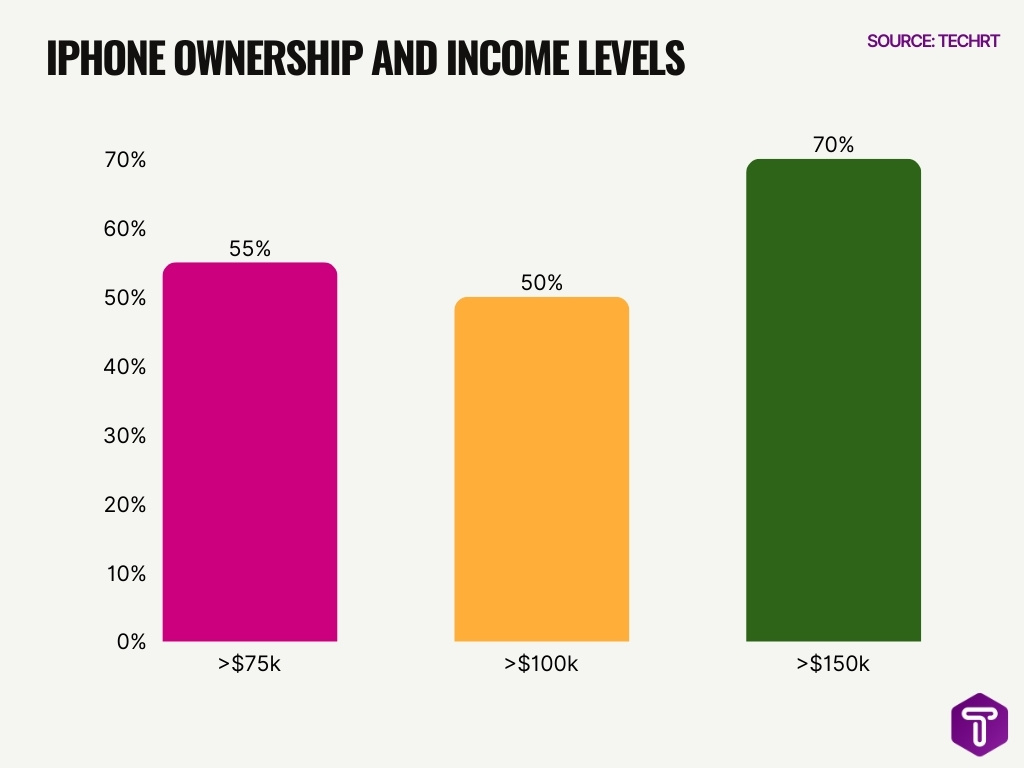
- Households earning over $100,000 annually represent nearly half of all iPhone users in the U.S.
- About 70% of premium smartphone owners with incomes above $150,000 choose iPhones over competing devices.
- iPhone ownership rates rise sharply with income, with 55% adoption among households earning above $75,000.
- In contrast, Android devices dominate among households earning under $30,000 annually, where affordability is a key factor.
- Apple leads the global premium smartphone segment, with devices priced above $600, with more than 70% market share.
- The average selling price of an iPhone reached around $948 in 2024, one of the highest in the industry.
- In emerging markets, higher income levels correlate strongly with iPhone adoption due to pricing and ecosystem value.
- Enterprise users and professionals often choose iPhones due to strong security features and integration with productivity tools.
- Surveys show higher customer satisfaction among higher-income iPhone users, contributing to strong retention rates.
iPhone Sales and Shipments Overview
- Apple shipped about 232 million iPhones globally in 2024, representing roughly 18–19% of total smartphone shipments worldwide.
- In 2025, Apple captured around 20% of global smartphone shipments, ranking as the top smartphone vendor globally.
- Apple shipped approximately 234 million iPhones in 2023, showing steady demand despite global smartphone market fluctuations.
- The iPhone accounted for nearly half of all premium smartphones priced above $600 worldwide in 2024.
- During the fourth quarter of 2024, Apple captured about 23% of the global smartphone shipment market, typically its strongest quarter due to new model launches.
- China, the United States, and Europe collectively represent over 65% of global iPhone shipments, making them Apple’s largest markets.
- Apple has shipped more than 3 billion iPhones cumulatively since 2007, highlighting the product’s massive global reach.
- iPhone shipments accounted for over half of Apple’s total hardware unit shipments in many recent years, reinforcing the device’s central role in Apple’s product lineup.
- Emerging markets such as India and Southeast Asia have shown double-digit growth in iPhone shipments in recent years, expanding Apple’s global footprint.
iPhone Revenue and Share of Apple’s Total Revenue
- The iPhone generated about $200.6 billion in revenue for Apple in fiscal year 2023, accounting for the largest share of Apple’s total income.
- iPhone revenue represented approximately 52% of Apple’s total annual revenue, making it the company’s most important product segment.
- In fiscal year 2024, Apple reported over $201 billion in iPhone revenue, reflecting stable demand for premium devices.
- Apple’s average iPhone selling price reached around $948 per device in 2024, one of the highest in the global smartphone market.
- The company’s total revenue exceeded $383 billion in fiscal year 2023, with iPhones contributing the largest portion.
- Apple’s services segment, including the App Store, Apple Music, and iCloud, generated over $85 billion in annual revenue, much of it driven by iPhone users.
- The iPhone consistently delivers higher profit margins compared with many Android competitors due to Apple’s integrated hardware and software strategy.
- Apple often generates more than 80% of global smartphone industry profits, despite shipping fewer units than Android manufacturers.
- Premium models such as the iPhone Pro series contribute a significant share of total iPhone revenue, reflecting demand for higher-end devices.
Highest-Grossing iPhone Apps by Revenue
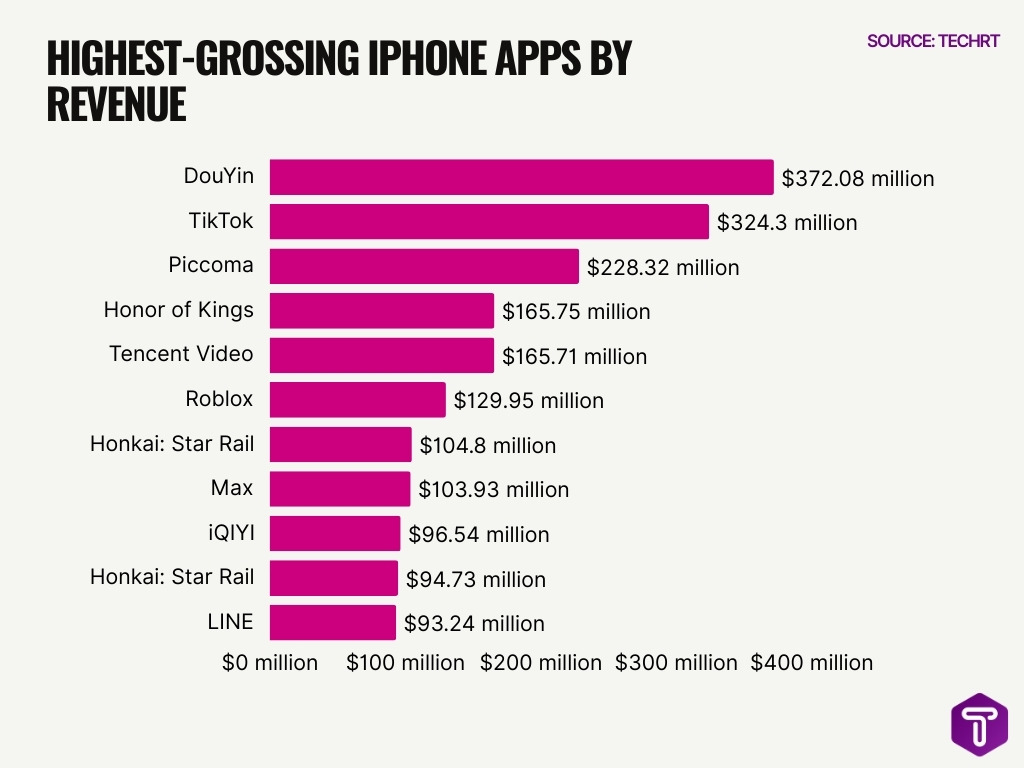
- DouYin is the highest-grossing iPhone app, generating approximately $372.08 million in revenue, making it the top-earning mobile app on iOS in this dataset.
- TikTok ranks second, earning around $324.3 million, showing the massive monetization power of short-form video platforms on iPhone.
- The Japanese manga platform Piccoma secured third place with $228.32 million, highlighting the strong demand for digital comics and reading apps on iOS devices.
- Mobile gaming continues to dominate app revenue, with Honor of Kings generating $165.75 million and ranking among the top-grossing iPhone games globally.
- Streaming services also perform strongly, as Tencent Video earned $165.71 million, nearly matching the revenue of top gaming apps.
- Roblox generated approximately $129.95 million, demonstrating the continued popularity of user-generated gaming platforms among iPhone users.
- The role-playing game Honkai: Star Rail appears twice in the ranking, with revenues of $104.8 million and $94.73 million, showing its strong in-app purchase performance on iOS.
- Streaming platform Max generated around $103.93 million, reflecting the growing adoption of subscription-based entertainment apps on iPhones.
- Chinese video platform iQIYI recorded about $96.54 million in revenue, emphasizing the global demand for mobile streaming services.
- Messaging app LINE generated $93.24 million, proving that communication platforms can also drive significant revenue through in-app purchases and premium features.
- Overall, social media, gaming, streaming, and digital content platforms dominate the highest-grossing iPhone apps, showing where consumer spending is concentrated in the iOS app ecosystem.
iPhone Users Switching from Android
- Surveys show about 15–20% of new iPhone buyers previously used Android devices, highlighting ongoing platform switching.
- Apple recorded its highest Android-to-iPhone switch rate in several years during 2023–2024.
- iMessage, FaceTime, and ecosystem integration are among the top reasons Android users switch to iPhones.
- Camera quality and longer software support are also key factors driving Android users toward iPhones.
- In the U.S., iPhone’s market share has surpassed 57%, partly due to ongoing migration from Android devices.
- Apple’s trade-in programs allow Android users to exchange their devices for iPhone discounts, making switching easier.
- Younger consumers show higher switching rates from Android to iPhone, particularly among students and first-time premium smartphone buyers.
- Android switchers often cite better app quality and ecosystem reliability on iOS as major advantages.
- Apple’s strong resale value for used iPhones also encourages new users to enter the ecosystem.
iPhone Users and Ecosystem Engagement (iPad, Mac, Watch)
- Apple’s ecosystem surpassed 2.5 billion active devices globally in 2026, including iPhones, iPads, Macs, and wearables.
- Around 80% of iPhone users own at least one additional Apple device, such as an Apple Watch or iPad.
- Apple Watch shipments exceeded 50 million units annually, with most owners pairing the device with an iPhone.
- AirPods have become one of Apple’s fastest-growing products, with tens of millions of units shipped every year.
- iCloud has hundreds of millions of active users, storing photos, backups, and files for iPhone owners.
- Apple Pay is now used by hundreds of millions of consumers globally, many accessing the service through their iPhones.
- Many Apple customers adopt multiple devices due to seamless integration across macOS, iPadOS, and watchOS.
- Features such as AirDrop, Continuity, and Handoff strengthen the connection between Apple devices.
- The ecosystem approach encourages higher customer lifetime value and strong long-term loyalty among iPhone users.
iPhone vs Android App Spending Statistics
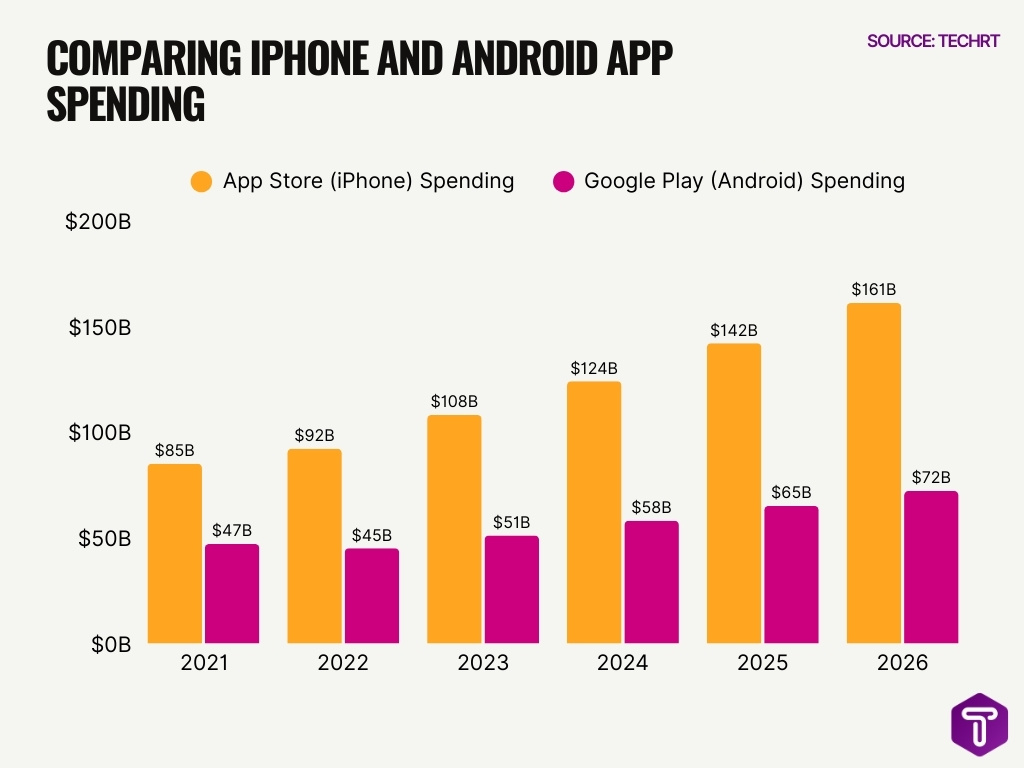
- In 2021, global consumer spending reached $85 billion on Apple’s App Store (iPhone) compared to $47 billion on Google Play (Android), showing Apple generated nearly 81% more revenue than Android.
- By 2022, iPhone users spent $92 billion on apps, while Android users spent $45 billion, widening the gap as iOS continued to dominate app monetization.
- In 2023, App Store spending rose to $108 billion, while Google Play reached $51 billion, meaning iPhone users spent more than double compared to Android users.
- In 2024, iOS app spending climbed further to $124 billion, compared with $58 billion on Google Play, reinforcing Apple’s strong lead in mobile app revenue.
- By 2025, App Store revenue increased to $142 billion, while Android app spending reached $65 billion, highlighting the growing monetization advantage of iPhone users.
- In 2026, consumer spending is projected to reach $161 billion on the App Store versus $72 billion on Google Play, confirming that iPhone users consistently spend far more on apps than Android users worldwide.
Frequently Asked Questions (FAQs)
How many iPhone users are there worldwide in 2026?
There are about 1.56 billion active iPhone users globally, representing roughly 19–20% of the world’s population.
What percentage of the global mobile operating system market does iOS hold?
iOS accounts for around 31.48% of the global mobile OS market, while Android holds about 68%.
How many total iPhones have been sold since the device launched in 2007?
Apple has sold more than 3 billion iPhones worldwide since the product’s debut.
How many Apple devices are currently active worldwide?
Apple reported over 2.5 billion active devices globally, including iPhones, iPads, Macs, and wearables.
What share of global mobile app revenue comes from the Apple App Store?
The Apple App Store generates around 65–67% of global mobile app revenue, significantly more than Google Play.
Conclusion
The iPhone continues to shape the global smartphone industry through its massive user base, strong ecosystem, and premium market dominance. With more than a billion active users and billions of devices shipped since launch, Apple’s smartphone remains a central driver of the company’s revenue and digital services economy. At the same time, high retention rates, strong adoption among younger generations, and growing engagement with Apple’s broader ecosystem suggest the iPhone will remain a dominant force in the mobile technology landscape for years to come.

Leave a comment
Have something to say about this article? Add your comment and start the discussion.