




Online privacy is more than a buzzword; it’s a critical concern for individuals and businesses. As our lives become increasingly digital, data breaches, personal tracking, and regulatory attention shape how people and organizations handle personal information. From shopping online to using social networks, our digital footprints expose us to risks and opportunities for stronger protection. Real-world examples, like the rising global cost of cybercrime and updated privacy policies on major platforms, show privacy’s impact on consumer trust and enterprise compliance. Explore this article to understand key statistics shaping online privacy today.
Editor’s Choice
- 92% of Americans report being concerned about their privacy when using the Internet.
- The average U.S. cost of a data breach reached $10.22 million in 2025 and remains high in early 2026.
- 79% of Americans lack confidence in companies admitting to data misuse.
- Only 42% of U.S. states had passed comprehensive data privacy laws by early 2025.
- 57% of data breaches in 2025 stemmed from third‑party system vulnerabilities.
- Cybercrime costs are projected at $10.5 trillion globally by 2025, up about 15% per year.
- Nearly 84% of consumers want control over what information companies collect.
Recent Developments
- In 2025, EU regulators issued over €1.2 billion in GDPR fines, rising slightly from the prior year as reported in early 2026.
- TikTok’s updated privacy policy in January 2026 expanded precise location tracking and cross‑platform ads, driving fresh concern.
- AI adoption is cited by 90% of organizations as driving expanded privacy programs in 2026.
- Nearly 96% of companies link strong privacy frameworks to unlocking AI innovation.
- 61% of financial institutions plan to increase spending on privacy tech in 2026.
- Cross‑border data transfer compliance is a top challenge for 71% of organizations.
- 40% of large enterprises have been audited for data‑sharing practices recently.
- Nearly 64% of privacy leaders struggle with compliance pressures due to staffing and budget issues.
Data Breach Statistics
- Global cybercrime is expected to cost $10.5 trillion annually by 2025, growing ~15% each year.
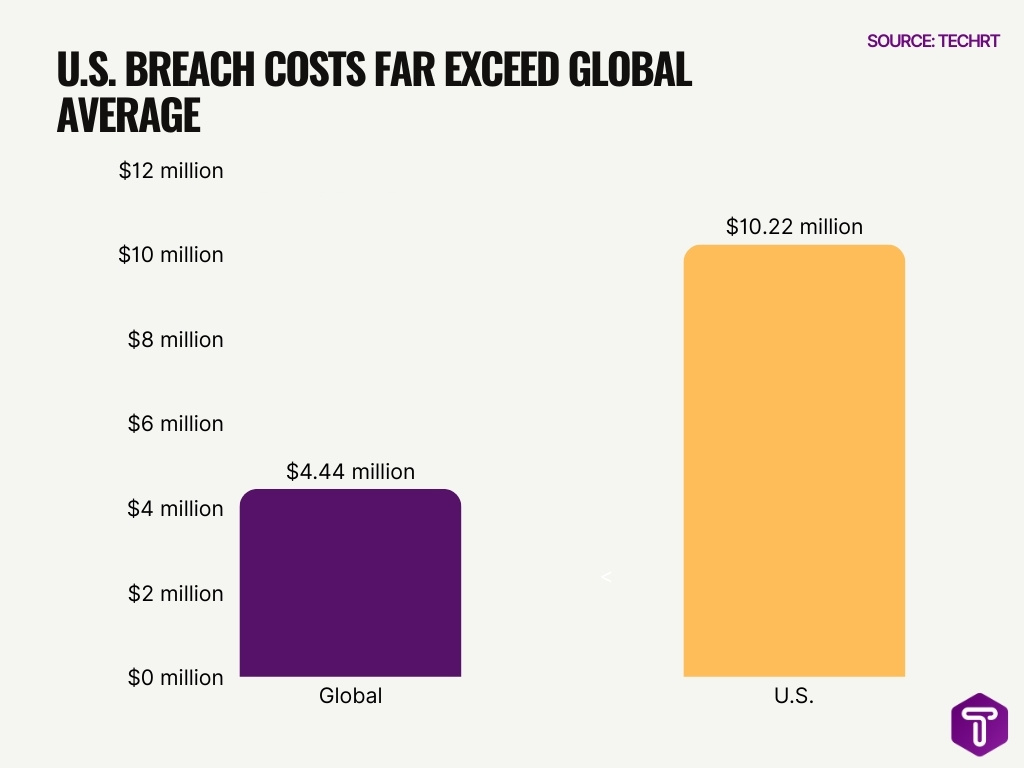
- The average global breach cost: $4.44 million, with the U.S. at $10.22 million.
- Third‑party breaches comprised over one‑third of incidents in 2025.
- In past years, U.S. breaches impacted ~353 million individuals in a single year.
- About 68% of breaches involve a human element, such as error or phishing.
- Financial firms took a median of 177 days to identify breaches and 56 days to contain them.
- Use of stolen credentials appears in ~31% of data breaches.
- Some industries, like healthcare, historically reported hundreds of breaches exposing 100+ million records.
Internet Privacy Awareness
- 79% of Americans lack confidence in a company’s data practices online.
- Only 47% of consumers trust social media to safeguard their data.
- 84% of consumers want control over the information companies collect.
- Roughly 63% of consumers believe companies are not transparent with personal data use.
- A majority of adults believe identity theft and breaches are the top privacy concerns.
- 60% of Americans don’t know what “phishing” means.
- 62% of Americans believe daily life without data collection by companies is impossible.
- 76% of users believe companies must do more to protect user data.
User Concerns Over Privacy
- 92% of U.S. adults express concern about personal online privacy.
- 84% of consumers demand control over data collection practices.
- Nearly four of five Americans distrust corporate handling of personal information.
- Majorities report fear of identity theft when sharing data online.
- Users rank location and financial data among their biggest privacy worries.
- Many consumers pause or abandon online purchases due to privacy concerns.
- Around 75% of consumers will not buy from a brand they don’t trust with data.
- Consumer fear of misuse rises with visibility of breaches and policy changes.
Willingness to Trade Online Privacy for Convenience (By Country)
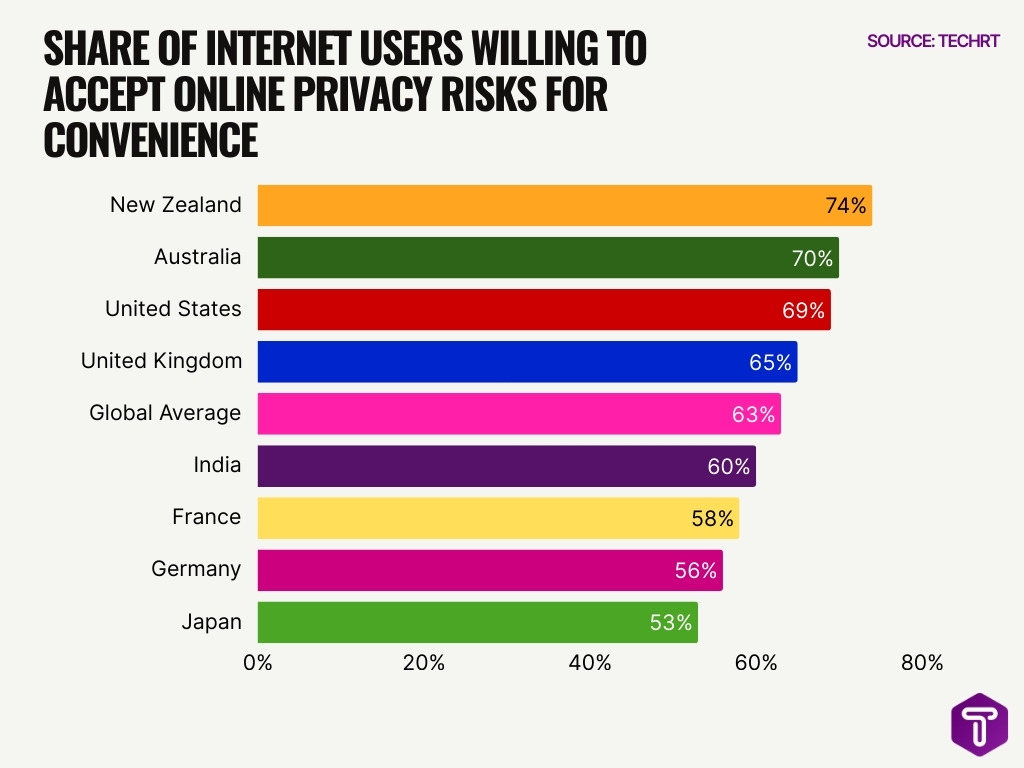
- New Zealand leads globally, with 74% of internet users willing to accept online privacy risks in exchange for greater digital convenience, indicating high trust in online services.
- Australia follows closely, as 70% of users are comfortable trading some level of privacy for ease of use across digital platforms.
- In the United States, 69% of respondents accept privacy compromises, reflecting strong reliance on data-driven apps and services.
- The United Kingdom reports 65%, showing a majority of users prioritize convenience despite growing awareness of data protection concerns.
- At a global level, 63% of internet users are willing to exchange online privacy for smoother digital experiences.
- India records 60%, highlighting rapid digital adoption alongside moderate privacy trade-offs among users.
- France shows 58% acceptance, suggesting a more cautious attitude toward privacy compared to Anglo-Saxon markets.
- Germany, known for a strict data-protection culture, still sees 56% of users willing to accept privacy risks for convenience.
- Japan ranks lowest among surveyed markets, with 53%, reflecting comparatively stronger privacy sensitivity and user restraint.
User Protection Habits
- 40% of users say they use privacy tools like VPNs or ad blockers.
- Many consumers update passwords infrequently, increasing risk.
- Multi‑factor authentication adoption varies widely but is still underutilized.
- Less than half of users routinely review app permissions.
- Users often lack awareness of basic privacy threats like tracking and phishing.
- Digital natives often underestimate the number of apps with data access.
- Roughly half of app users intend to reduce data access when educated about risk.
- Consumer training and awareness programs improve protective actions.
Cybersecurity Threat Stats
- The global cybersecurity market is forecast to grow from $218.98 billion in 2025 to $248.28 billion in 2026, showing sustained investment in digital defense.
- Cybersecurity is ranked the #2 biggest business threat for U.S. small and medium‑sized businesses (SMBs) in 2025.
- 97% of top U.S. retailers experienced third‑party data breaches in the last year, indicating pervasive risk across sectors.
- The retail industry accounts for an estimated 6% of global data breach incidents.
- Around 33% of SMBs operate with outdated cybersecurity technology, which increases vulnerability to attacks.
- Roughly 20% of U.S. SMBs report having no cybersecurity technology at all.
- Ransomware continues as a major threat vector, with thousands of attacks annually affecting infrastructure and services worldwide.
- Over 5,263 large ransomware attacks were documented globally in 2024, with attempts far more serious when all automated attacks are included.
- Cybercrime remains a top driver of privacy breaches, with phishing, social engineering, and malware still prevalent.
Most Important Security Steps Recommended by Experts
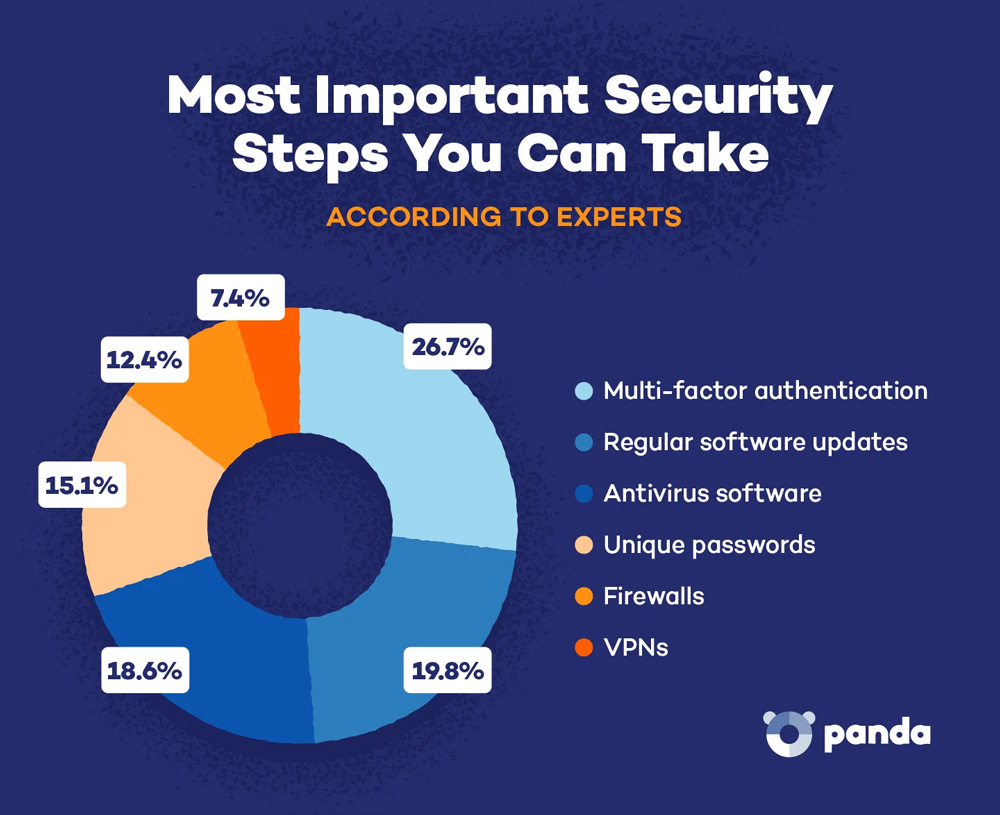
- Multi-factor authentication ranks as the top security measure, with 26.7% of experts identifying it as the most important step to protect online accounts.
- Regular software updates come in second at 19.8%, highlighting how critical timely patches are for reducing security vulnerabilities.
- Antivirus software accounts for 18.6%, showing it remains a core defense layer against malware and cyber threats.
- Using unique passwords is cited by 15.1% of experts, reinforcing the importance of avoiding password reuse across platforms.
- Firewalls are considered essential by 12.4%, serving as a key barrier between trusted networks and external threats.
- VPNs rank lowest at 7.4%, suggesting they are viewed as a supplementary security tool rather than a primary protection method.
Privacy Law Awareness
- The U.S. still lacks a comprehensive federal privacy law, though 19 states have passed broad data protection statutes as of early 2026.
- California’s CCPA and other state laws now require clearer disclosure of data collection and opt‑out rights for consumers.
- GDPR enforcement has resulted in over €1.2 billion in fines across 2025, signaling strong regulatory action on privacy compliance.
- Many organizations face rising cross‑border compliance costs due to evolving privacy laws globally.
- Awareness of specific privacy law provisions varies widely by region. For example, 81% of internet users in China reported privacy law awareness in a mid‑2024 survey, compared with lower figures in other countries.
- Three new U.S. state privacy laws (e.g., Kentucky, Indiana, Rhode Island) began rolling out in early 2026, expanding consumer rights.
- In the EU, the upcoming AI regulation is now tied to data protection compliance, affecting consent and transparency requirements.
- Global enforcement priorities increasingly emphasize children’s data, high‑risk processing, and cross‑border transfer controls.
Privacy Regulation Coverage
- 144 countries have enacted national data privacy laws as of early 2025, covering 82% of the world’s population.
- 167 countries and territories worldwide have adopted comprehensive data protection laws.
- 20 US states have comprehensive consumer privacy laws in effect by the end of 2025.
- Europe has issued 2,245 GDPR fines totaling €5.65 billion through early 2025.
- GDPR enforcement in 2025 alone imposed fines of approximately €1.2 billion.
- China’s PIPL requires audits for processors handling PI of over 10 million individuals every two years.
- India’s DPDP Act 2023 imposes fines up to ₹250 crore for failing security safeguards.
- 72% of African countries (about 39) are covered by comprehensive data privacy laws.
- 73% of Asian countries (about 35) have national data protection laws.
- 75% of the world’s population is covered under modern privacy regulations as of 2025.
Global Privacy Variations
- Europe’s GDPR imposed €1.2 billion in fines on big tech in 2025.
- 20 U.S. states now enforce comprehensive privacy laws effective 2026.
- China’s internet users show 81% privacy law awareness, exceeding the global 53% average.
- 52% of African nations adopted data protection laws inspired by GDPR.
- Brazil’s LGPD allows fines up to 2% of global revenue, akin to GDPR.
- Vietnam launched Decree 356 enforcing PDP from January 2026.
- Asia-Pacific saw 15+ new privacy laws in 2024-2025, led by South Korea.
- 67% of global AI regulations now address automated decision-making privacy.
- 19 U.S. states mandate data portability and opt-out rights by 2026.
- Middle East nations like the UAE fined $1.4 million under PDPL in 2025.
Online Shopping Privacy
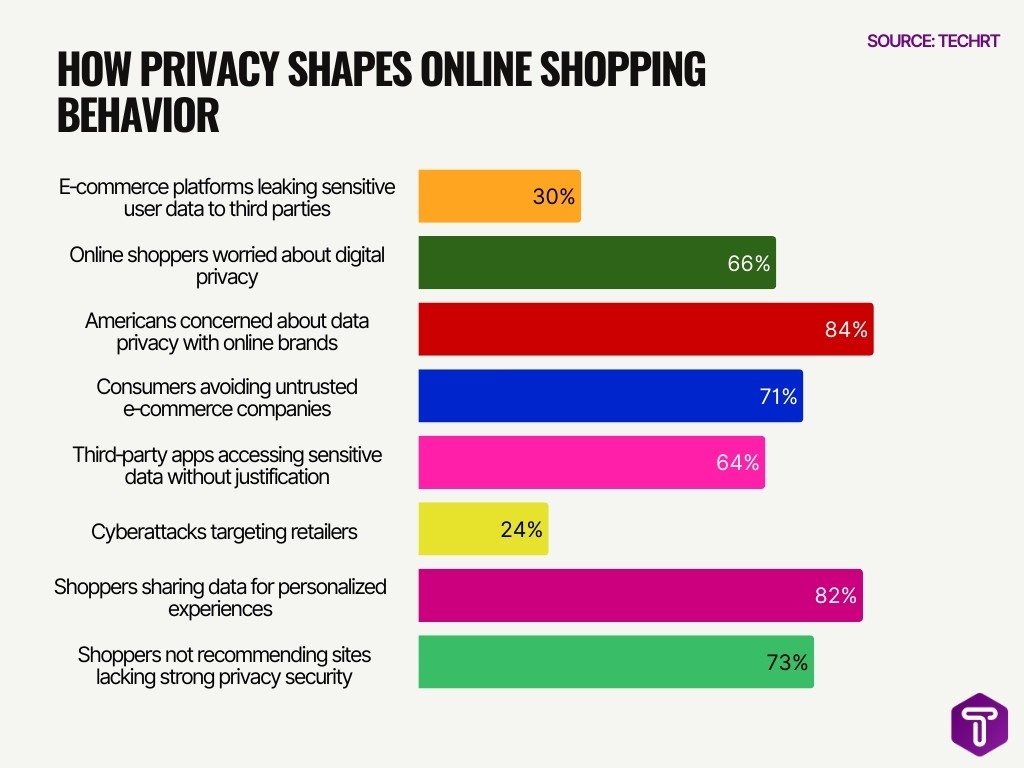
- Nearly 30% of e-commerce platforms leak sensitive user data to third parties.
- 66% of online shoppers worry about digital privacy during purchases.
- 84% of Americans express concerns over data privacy with online brands.
- 71% of consumers avoid buying from untrusted e-commerce companies.
- 64% of third-party apps access sensitive data without justification on websites.
- 24% of all cyberattacks target retailers handling shopping data.
- Retailers use personal behaviors like mouse movements for surveillance pricing.
- 82% of shoppers share data for personalized experiences despite risks.
- 73% won’t recommend sites lacking strong privacy security.
Data Tracking Prevalence
- Studies indicate that nearly all users encounter at least one third‑party tracker within typical browsing sessions.
- Over 50% of users visit sites with session recording or fingerprinting techniques within the first 48 hours of tracking.
- Single organizations, especially major platforms like Google, can monitor over 50% of web activity for many users.
- Location data shared by mobile apps often reveals sensitive inferences about routines and habits.
- Roughly 54% of users underestimate how many apps have access to their data.
- About 47% of users said they would reduce app permissions after realizing the tracking extent.
- Passive tracking technologies like canvas fingerprinting and keylogging scripts appear on many popular sites.
- Global online tracking habits contribute to rising concerns about privacy and transparency obligations.
Mobile and Location Privacy
- Approximately 45% of popular Android apps request precise location tracking access.
- 25% of popular iOS apps seek location permissions, often without clear user awareness.
- 1,325 Android apps access location data via photo metadata despite denied permissions.
- 73% of smartphone users grant location access to apps without fully reviewing risks.
- 72.9% of users intend to revoke location permissions from uncomfortable apps.
- 82% of youth avoid sharing personal info, but 50% neglect privacy settings.
- 33% of users uninstall apps over excessive personal data requests, including location.
- 18% of iOS apps access background location data linked to user identities.
- 56% of respondents are willing to share location data for public health, but fear misuse.
Social Media Data Collection
- Social platforms often collect a wide array of personal details, including IP addresses, device identifiers, and interests.
- TikTok’s 2026 privacy update now collects precise location data when permitted, expanding tracking reach.
- TikTok also logs user interactions with AI features, increasing metadata collection.
- Many social networks share user data with advertising partners and measurement firms.
- Third‑party tracking on social platforms can follow users off the platform to monitor browsing behavior.
- Data brokers sometimes obscure opt‑out links in an effort to make deletion harder for users.
- Consumer discomfort with social data collection can lower trust and platform engagement.
- Platforms increasingly face regulatory scrutiny over how they handle sensitive personal data, especially for minors.
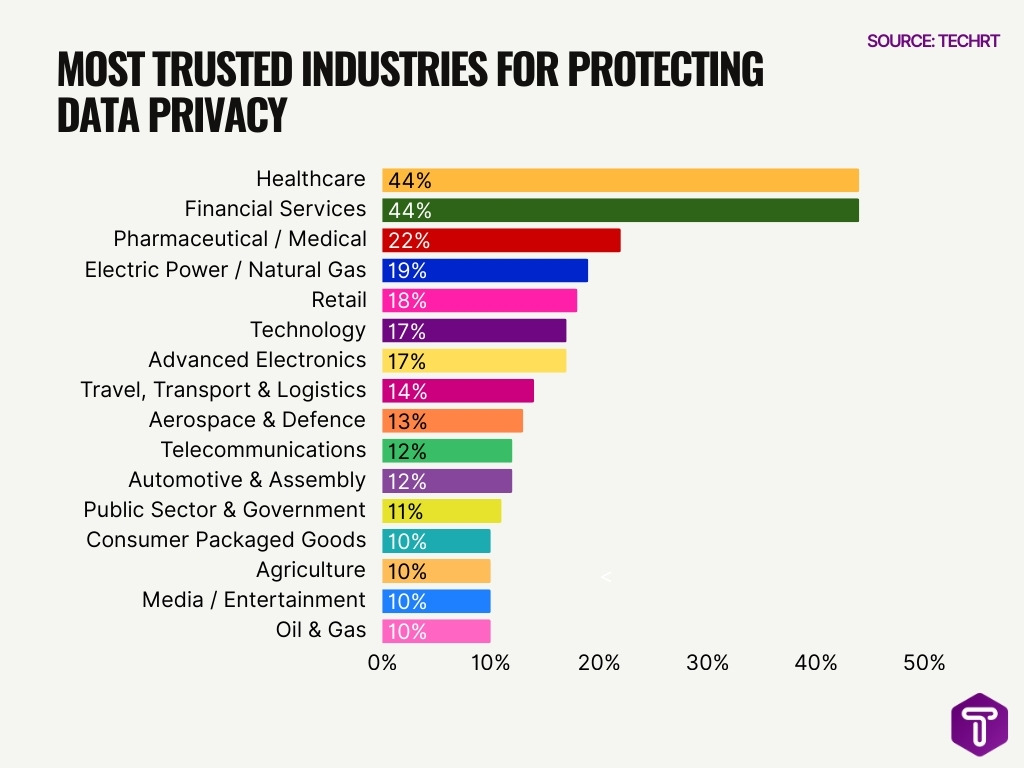
Most Trusted Industries for Protecting Data Privacy
- Healthcare and Financial Services jointly rank as the most trusted industries, with 44% of respondents selecting each sector for protecting data privacy.
- Trust drops sharply after the top two, as Pharmaceutical and Medical companies secure 22%, less than half the trust level of healthcare and finance.
- Electric Power and Natural Gas providers are trusted by 19% of users, indicating moderate confidence in essential infrastructure industries.
- Retail earns 18% trust, reflecting ongoing consumer concerns over payment data and shopping behavior tracking.
- Technology and Advanced Electronics both register 17%, showing that tech-driven industries still face skepticism despite strong security investments.
- Travel, Transport, and Logistics receive 14% trust, suggesting uncertainty around data sharing across complex global networks.
- Aerospace and Defence attract 13%, benefiting from security-focused operations but limited consumer interaction.
- Telecommunications and Automotive & Assembly are tied at 12%, highlighting continued worries over location data and connected vehicle information.
- The Public Sector and Government records only 11% trust, underscoring persistent public doubts about state-managed data protection.
- Consumer Packaged Goods, Agriculture, Media & Entertainment, and Oil & Gas rank lowest, each at just 10%, signaling minimal confidence in these sectors’ data privacy practices.
Company Data Practices
- More than 94% of consumers globally refuse to do business with companies that do not protect their data securely.
- Around 68% of people worldwide express significant concern about protecting their online privacy.
- In the U.S., 86% of consumers say data privacy is a major concern when sharing information online.
- Many companies now deploy data minimization practices, only collecting data necessary to provide services.
- 90% of organizations cite AI adoption as a key reason to expand privacy and governance frameworks in 2026.
- 38% of companies spent over $5 million on privacy programs last year, a significant jump from 2024.
- Roughly 96% of organizations say robust privacy practices help unlock innovation, especially in AI.
- Company data practices increasingly include transparent consent flows and audit trails to satisfy regulators and customers.
Impact on Consumer Trust
- 70% of Americans have little to no trust in companies’ responsible use of AI in products.
- 68% of global consumers are somewhat or very concerned about online privacy.
- 57% of consumers globally agree AI poses a significant threat to their privacy.
- 66% of U.S. consumers would not trust a company following a data breach.
- Over 80% of consumers trust companies more with clear explanations of data usage.
- 76% of consumers would switch brands for greater personal data transparency.
- 84% of consumers are more likely to stay loyal to brands prioritizing transparency and data security.
- 27% of consumers have high or very high trust in tech providers’ data security.
- 58% of consumers believe brands hit by data breaches are not trustworthy.
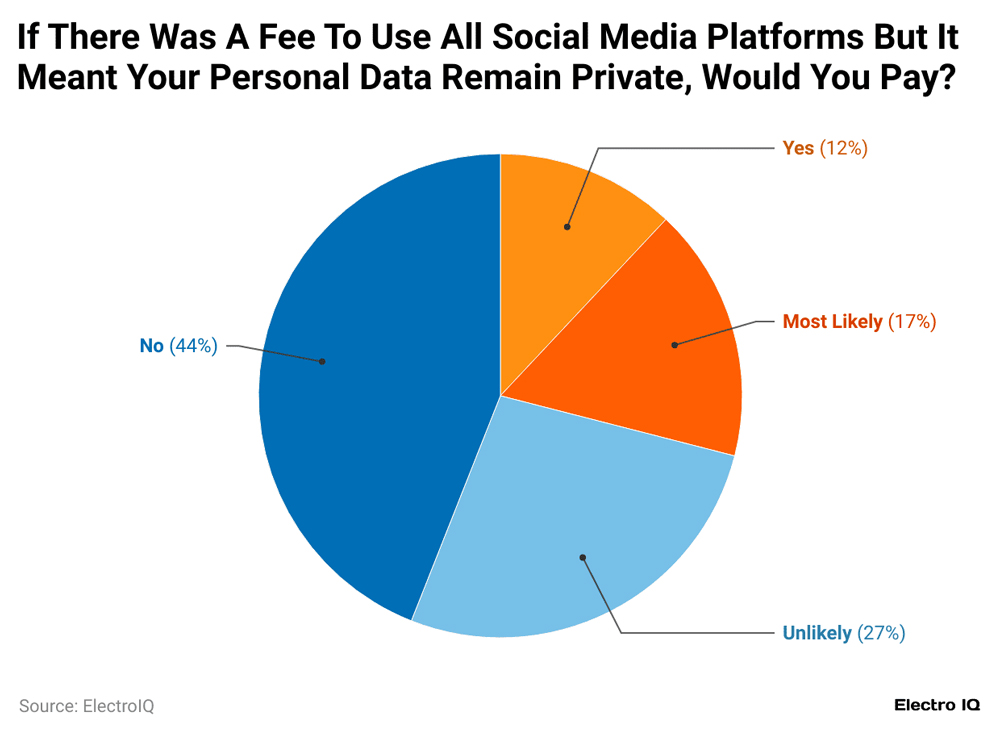
Willingness to Pay for Social Media Privacy
- 44% of users say No, making it clear that nearly half of respondents are unwilling to pay any fee for social media platforms, even if it guarantees complete personal data privacy.
- 27% of respondents are Unlikely to pay for privacy-focused social media, showing strong price resistance despite growing privacy concerns.
- Only 17% of users indicate they are Most Likely to pay a subscription fee if it ensures their personal data remains private.
- Just 12% of respondents definitely say Yes, representing the smallest segment willing to pay for privacy-protected social media access.
- Overall, a combined 71% of users (No + Unlikely) demonstrate low willingness to pay for social media privacy, highlighting a significant privacy–cost trade-off.
- In contrast, only 29% of users (Most Likely + Yes) show any readiness to financially support privacy-first social platforms.
Consumer Use of Privacy Tools
- VPN usage stands at 32% among U.S. adults in 2025, down from 46% in 2024.
- 912 million internet users worldwide employ ad blockers, representing 31.5% of those aged 16-64.
- 36% of U.S. adults (94 million) use password managers in 2025.
- MFA adoption reaches 70% of users as of January 2025.
- DuckDuckGo holds a 0.89% global search market share in 2025.
- Over 40% of consumers aged 18-34 exercise data access rights, versus 15% aged 55-64.
- 29% of consumers changed default privacy settings on devices.
- 79% of consumers express concern over corporate data collection practices.
- 26% enabled multi-factor authentication on select accounts.
- 32% of Americans use ad blockers, correlating with privacy concerns.
Future Privacy Trends
- 90% of organizations have expanded privacy programs due to intensifying AI regulation enforcement.
- Children’s data protections exist in 33 of 50 countries, becoming a global enforcement priority.
- Server-side tracking boosts cookie recognition by 12.6% in cookieless analytics adoption.
- Privacy maturity models standardize governance at Level 3+ in proactive enterprises.
- 96% see robust privacy frameworks enabling AI governance integration.
- Data protection market grows at 15.93% CAGR through automation for compliance.
- Zero-party data strategies lift open rates and purchase frequency for brands.
- 81% face data localization demands challenging cross-border flows.
- 65% struggle accessing high-quality data amid AI privacy complexities.
Frequently Asked Questions (FAQs)
What percentage of internet users encounter third‑party trackers during normal browsing sessions?
Nearly 100% of users encounter at least one third‑party tracker during typical web browsing.
How many personal data breach reports did EU regulators handle per day in 2025?
EU regulators received about 443 personal data breach reports per day in 2025.
By what total amount were GDPR fines levied across the EU in 2025?
GDPR fines issued across Europe in 2025 exceeded €1.2 billion.
What share of consumers worldwide say they want to take greater steps to protect their online privacy?
Approximately 85% of adults worldwide want to take greater steps to protect their online privacy.
How many Californians have signed up for the state’s new privacy opt‑out platform in early 2026?
Over 150,000 Californians signed up for the state’s new data opt‑out privacy tool in January 2026.
Conclusion
Online privacy is at a crossroads of technology, regulation, and consumer expectation. Businesses must balance beneficial data use with robust protections, or risk losing trust and market share. Consumers are increasingly savvy, adopting tools and demanding transparency. At the same time, evolving laws and enforcement raise the bar for compliance worldwide. Understanding these trends and statistics is essential for companies and individuals striving to navigate a digital world where privacy matters more each year.

Leave a comment
Have something to say about this article? Add your comment and start the discussion.