



Website traffic plays a central role in how modern businesses grow, compete, and connect with their audiences. Whether it’s an ecommerce brand optimizing mobile checkout flows or a media company increasing session duration through video content, traffic data directly shapes strategic decisions. It also helps marketers allocate budgets across channels like search, social, and paid ads with greater precision.
As global internet penetration rises and user behavior continues shifting toward mobile and multi-device journeys, understanding traffic trends becomes essential for staying competitive. With that in mind, let’s explore the most important website traffic statistics shaping.
Editor’s Choice
- Over 6.04 billion people worldwide use the internet in 2025, representing 73.2% of the global population.
- Mobile devices generate roughly 62–64% of global web traffic in 2026, maintaining a dominant share.
- Desktop traffic accounts for about 35–38% of global usage, highlighting a persistent but secondary role.
- Tablets contribute only ~1.8–2% of web traffic, continuing a long-term decline.
- Mobile traffic surpassed desktop for the first time in 2016 and has remained dominant since.
- As of 2025, smartphones alone drive 64.35% of total website traffic globally.
- In Q1 2025, 62.73% of all web traffic came from mobile devices, reinforcing mobile-first design strategies.
Recent Developments
- Mobile traffic increased by over 3.7 percentage points between early 2024 and 2025.
- Mobile usage stabilized around 62–64% globally in 2026, signaling maturity rather than rapid growth.
- Desktop traffic remains steady at 35–47%, depending on region, driven by workplace usage.
- Global mobile share exceeded 60% for the first time in 2025, marking a structural shift.
- Mobile ecommerce traffic now contributes over 70% of total ecommerce visits worldwide.
- About 55% of the global population has access to 5G networks, accelerating mobile browsing speeds.
- Around 2.8–2.9 billion 5G subscriptions existed globally by the end of 2025.
- Mobile internet speeds average 50–60 Mbps globally, narrowing the gap with broadband.
- Users spend nearly 88% of their mobile time in apps, leaving only ~12% for browser-based web traffic.
Global Website Traffic Overview
- Global web traffic continues to concentrate, with top websites capturing a significant share of total visits.
- Mobile contributes approximately 59–64% of internet usage globally across 2025–2026.
- Desktop traffic averages 36–40% globally, with higher shares in developed economies.
- Tablet traffic remains minimal at ~2% globally, declining year-over-year.
- In the U.S., traffic is nearly split, ~50% desktop vs ~47% mobile.
- Emerging markets like Africa and Asia report mobile traffic exceeding 70%.
- Mobile share grew from less than 1% in 2009 to over 60% in 2025, showing rapid adoption.
- Global broadband speeds reached ~97 Mbps average, supporting higher traffic volumes.
- Internet penetration is expected to cross 75% globally in 2026, further boosting traffic.
Most Visited Websites in the World
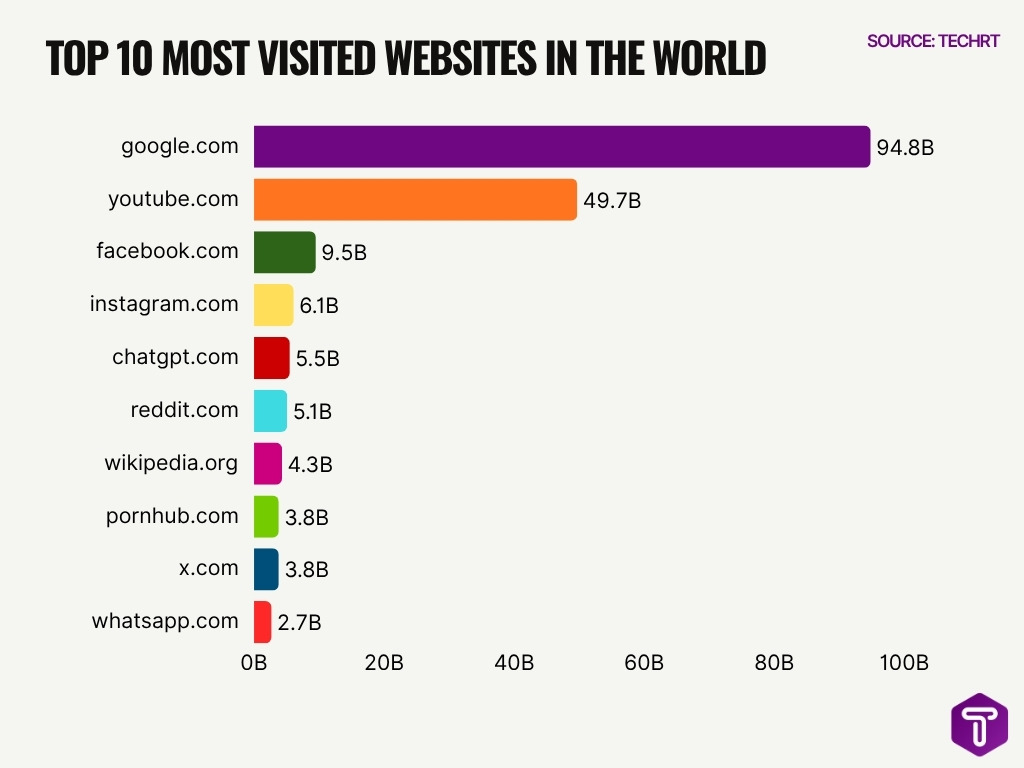
- Google dominates traffic with a massive 94.8 billion visits, making it the clear global leader.
- YouTube ranks second with 49.7 billion visits, capturing over half of Google’s traffic scale.
- Facebook continues strong with 9.5 billion visits, showing sustained demand for social networking.
- Instagram records 6.1 billion visits, highlighting the dominance of visual-first social platforms.
- ChatGPT reaches 5.5 billion visits, reflecting the rapid growth of AI-driven tools in global web traffic.
- Reddit attracts 5.1 billion visits, driven by community-based discussions and niche content.
- Wikipedia sees 4.3 billion visits, maintaining its position as a trusted knowledge resource.
- Pornhub generates 3.8 billion visits, showing continued demand in the adult content segment.
- X also records 3.8 billion visits, indicating stable engagement despite platform changes.
- WhatsApp drives 2.7 billion visits, highlighting strong usage of web-based messaging access.
- The United States dominates web traffic origin, with 9 out of 10 platforms headquartered there.
- Canada appears only once in the top 10, via Pornhub, showing limited geographic diversity among top sites.
- Search, video, and social platforms dominate, collectively accounting for the majority of global visits.
- AI platforms are emerging fast, with ChatGPT already entering the top 5 most visited websites worldwide.
Top Websites by Country and Region
- In the U.S., google.com and youtube.com dominate traffic across categories.
- In India, mobile‑first usage drives higher traffic to platforms like YouTube and Google, with over 70% of web traffic coming from mobile devices in 2025.
- In China, domestic platforms such as Baidu and Douyin account for roughly 80% or more of local web traffic, dwarfing Western sites.
- In Europe, mobile traffic typically ranges from around 50% to 55% of total web visits, leaving desktop still significant in many countries.
- In Africa and Southeast Asia, more than 70% of web traffic is mobile‑driven, with some areas exceeding 75%.
- In North America, mobile traffic accounts for about 58% of total visits, while desktop still holds roughly 40%, reflecting a balanced split.
- In Japan, desktop traffic often stays above 45%, underpinned by workplace‑centric browsing and corporate IT setups.
- Globally, social media platforms such as Facebook, Instagram, and X rank among the top 5 websites in nearly every country by 2025.
- Across regions, mobile share of web traffic has climbed from roughly 50% in 2020 to over 60% by 2025, with some emerging markets near 70% or higher.
- Regional traffic patterns increasingly depend on device accessibility and network infrastructure, with 5G‑rich and high‑smartphone‑penetration markets seeing 70%+ mobile traffic.
Traffic by Geographic Markets
- Asia accounts for over 50% of global internet users, making it the largest traffic region.
- North America generates high-value traffic, with higher average session durations and conversions.
- Europe contributes roughly 15–18% of global web traffic, with balanced device usage.
- Africa is the fastest-growing region, with internet penetration rising by over 10% year-over-year in some countries.
- India alone contributes over 900 million internet users, driving massive mobile traffic.
- The U.S. remains the largest single-country traffic source, especially for high-value niches.
- Southeast Asia shows mobile traffic dominance above 70%, fueled by affordable smartphones.
- Latin America records steady growth in ecommerce traffic, with increasing mobile adoption.
- Developed markets show higher desktop engagement, while developing regions prioritize mobile-first access.
Website Traffic By Age: Key Usage Insights
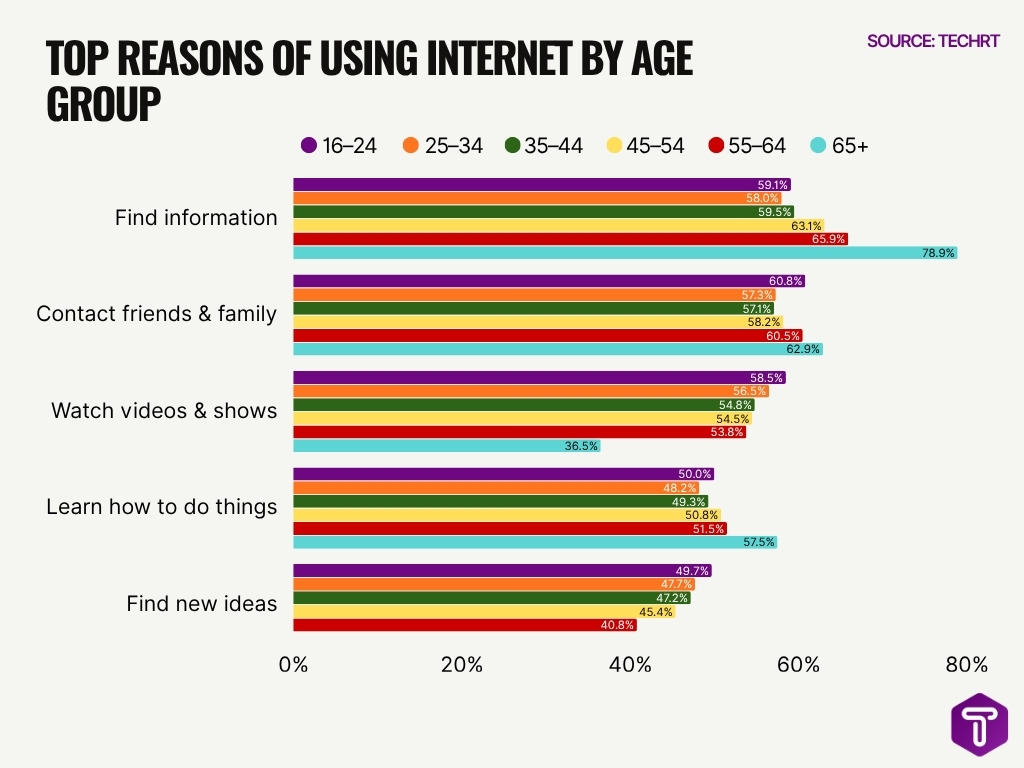
- Information search dominates across all age groups, with usage peaking at 78.9% among 65+ users, making it the top reason overall.
- Younger users (16–24) also heavily rely on the internet for information at 59.1%, but usage steadily increases with age.
- Connecting with friends & family remains consistently high, ranging from 57.1% to 62.9% across all age brackets.
- The highest engagement is seen among 65+ users (62.9%), highlighting the internet’s role in social connectivity for older demographics.
- Video consumption declines significantly with age, dropping from 58.5% (16–24) to just 36.5% (65+).
- This indicates that younger audiences dominate entertainment-driven traffic, especially for videos and streaming content.
- Learning-based usage increases with age, rising from 50.0% (16–24) to 57.5% (65+).
- Older users are more likely to use the internet for educational and how-to purposes, reflecting intent-driven behavior.
- Finding new ideas is more popular among younger users, with 49.7% (16–24) compared to 40.8% (55–64).
- There is a clear downward trend with age, suggesting exploratory browsing is youth-driven.
- Mid-age groups (35–54) show balanced usage patterns, with no extreme highs or lows across categories.
- Their internet usage is evenly distributed between information, communication, and entertainment.
- The data highlights a behavioral shift from entertainment to utility with age, where younger users prefer content consumption, while older users prioritize information and learning.
- Overall, website traffic intent evolves with age, transitioning from discovery and entertainment (younger users) to purpose-driven activities like learning and information search (older users).
Mobile vs Desktop Traffic Share
- Mobile devices account for 62–64% of global web traffic in 2026, continuing their lead over desktop.
- Desktop traffic contributes roughly 35–38% globally, with stronger usage in corporate environments.
- In the U.S., desktop still holds a higher share at ~50% vs ~47% mobile, reflecting workplace browsing habits.
- Emerging markets like India and Nigeria report mobile traffic exceeding 70%, driven by smartphone-first internet access.
- Mobile traffic grew by over 10 percentage points between 2020 and 2025, indicating sustained adoption.
- Desktop usage remains dominant for high-intent tasks like B2B research and financial transactions.
- Ecommerce conversion rates on desktop are 2–3x higher than mobile, despite a lower traffic share.
- Tablet traffic has declined to under 2% globally, making it the least impactful device category.
- Cross-device journeys influence over 70% of purchase decisions, with users switching between mobile and desktop.
Browser-Based Traffic Distribution
- google.com Chrome dominates the browser market with ~65–67% global share in 2026.
- Apple Safari accounts for ~18–20% of global browser traffic, driven by iOS and macOS users.
- Microsoft Edge holds around 5–6% share, growing steadily due to Windows integration.
- Mozilla Firefox contributes approximately 2–3% of global traffic, declining gradually.
- Samsung Internet captures ~3% of mobile browser traffic, especially in Asian markets.
- Chrome dominates mobile browsing with over 70% share on Android devices.
- Safari leads iOS browsing with over 90% share on Apple devices.
- Browser choice impacts performance, with Chrome users generating higher engagement metrics on average.
- Privacy-focused browsers like Brave and DuckDuckGo are gaining traction but still hold less than 1% share each.
Website Traffic Distribution by Device Type
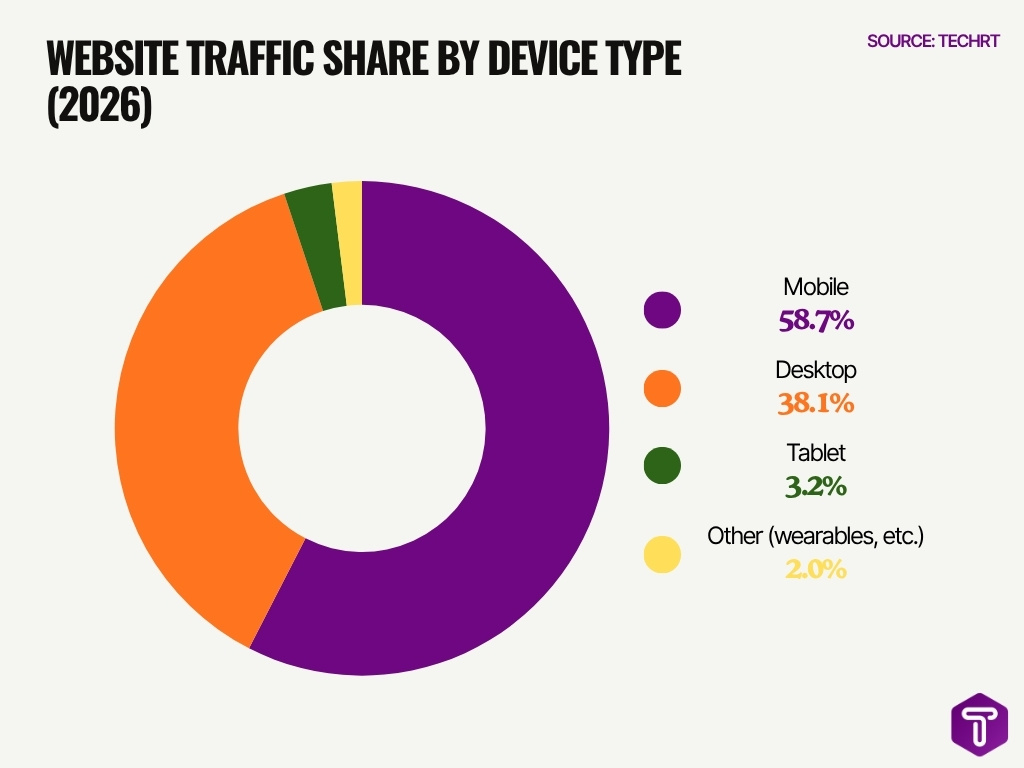
- Mobile dominates global web traffic, accounting for 58.7% of total usage, making it the primary access channel.
- Desktop remains significant with a 38.1% share, highlighting continued relevance for work and high-intent browsing.
- Tablet usage is minimal, contributing only 3.2% of global website traffic.
- Other devices, such as wearables and smart devices, represent just 2%, indicating a niche but emerging segment.
- The data clearly shows a mobile-first internet landscape, with over half of all traffic coming from smartphones.
- Despite mobile dominance, desktops still capture over one-third of traffic, emphasizing the need for cross-device optimization.
- The gap between mobile and desktop (20.6 percentage points) reflects a strong shift toward portable, always-on devices.
- Tablets and other devices combined account for just 5.2%, reinforcing their limited impact on overall traffic trends.
Top Traffic-Driving Categories
- Search engines remain the dominant discovery channel, with Google alone holding ~89–90% of the global search engine market share through late 2024.
- Social media captures about 35–36% of global online time, with the typical internet user spending roughly 2 h 23 m per day on social platforms in 2024.
- Ecommerce continues to surge, with global online sales reaching $6.09 trillion in 2024 and projected to climb to $6.56 trillion in 2025, powering massive retail web traffic.
- Video streaming is one of the biggest bandwidth hogs, accounting for almost 50% of downstream internet traffic worldwide and 19% of upstream, ahead of most other categories.
- News and media sites see major spikes during elections, with CNN.com drawing 57.9 million visits on 2024 US Election Day, one of the top‑10 traffic days in the outlet’s history.
- Online learning platforms generated around $35.2 billion in revenue in 2023 and are forecast to reach $130.8 billion by 2032, reflecting sustained growth in e‑learning traffic.
- Generative AI platforms exploded as a traffic source, with average monthly Gen‑AI visits growing 76% year‑on‑year and AI platforms driving over 1.1 billion referral visits in June 2025 alone, up 357% YoY.
- Gaming is a massive traffic driver, with an estimated 3.32 billion active video game players worldwide by 2024, up by more than 1 billion gamers in nine years.
- Digital health and telehealth remain elevated post‑pandemic, with virtual visits stabilizing at 13–17% of US outpatient visits, around 38× higher than pre‑COVID baselines, sustaining strong health‑site and app usage.
Bot Traffic vs Human Traffic Share
- Bots account for nearly 49.6% of total internet traffic in 2024–2025, almost equal to human traffic.
- Malicious bots represent over 30% of all bot traffic, posing security risks.
- Good bots make up ~20% of total traffic, supporting indexing and ranking.
- Human traffic accounts for just over 50% of global internet activity, reflecting automation growth.
- Bot traffic increased by over 2% year-over-year, driven by AI and automation tools.
- Ecommerce websites are among the most targeted by malicious bots, especially for scraping and fraud.
- Account takeover attacks via bots rose significantly in 2025, impacting user trust.
- Advanced bots now mimic human behavior, making detection more complex.
- Companies invest heavily in bot management solutions to protect traffic integrity.
Website Traffic Sources Breakdown
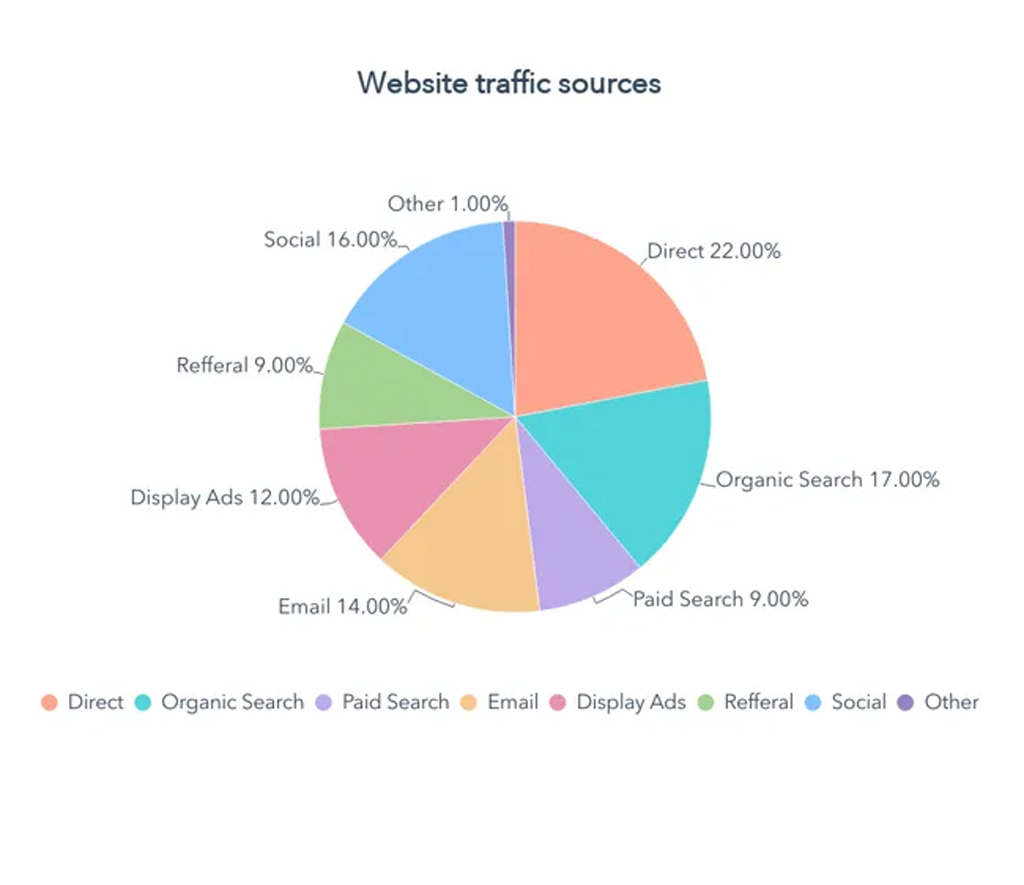
- Direct traffic dominates with 22%, making it the largest source of website visits, indicating strong brand recognition and repeat users.
- Organic search contributes 17%, highlighting the critical role of SEO in driving consistent and high-intent traffic.
- Social media drives 16% of traffic, showing its growing importance as a major acquisition channel for websites.
- Email marketing accounts for 14%, proving it remains a highly effective and reliable traffic source for engagement and retention.
- Display advertising generates 12%, demonstrating its value in paid visibility and brand awareness campaigns.
- Both paid search and referral traffic contribute 9% each, indicating a moderate but steady impact from paid campaigns and external website links.
- Other sources make up just 1%, showing that alternative channels have minimal influence on overall traffic distribution.
User Engagement Metrics and Behavior Trends
- The average website bounce rate ranges between 37% and 41% globally.
- Average session duration across industries is 2–3 minutes, depending on content type.
- Pages per session average 2–3 pages, indicating moderate engagement levels.
- Websites that load within 2 seconds have significantly lower bounce rates.
- A 1-second delay in page load time can reduce conversions by up to 7%.
- Mobile users show higher bounce rates but faster browsing behavior compared to desktop users.
- Video content increases average session duration by up to 88%.
- Personalization can improve engagement metrics by 20–30%, especially in ecommerce.
- Returning visitors are more likely to convert, with conversion rates up to 2x higher than new users.
Industry-Wise Traffic and Engagement Benchmarks
- Ecommerce websites’ average global conversion rates are 2.1–3.14% in 2025.
- B2B websites convert 2–3% of visitors to leads with $206 average cost per lead via SEO.
- Media sites see email traffic converting at 19.3%, far above the 6.6% median across industries.
- SaaS companies get over 50% of traffic from organic search.
- Healthcare websites average bounce rates of 52–67% with 1.5–4.5% conversion rates.
- Education platforms achieve 3–5 minute average session durations on informational pages.
- Travel sites report 72–74% occupancy and 14% RevPAR growth during peak holiday seasons.
- Finance websites see 36% preferring online banking sites weekly, with desktop conversions higher than mobile.
- Retail websites draw 68.4% mobile traffic, but desktops yield higher conversions.
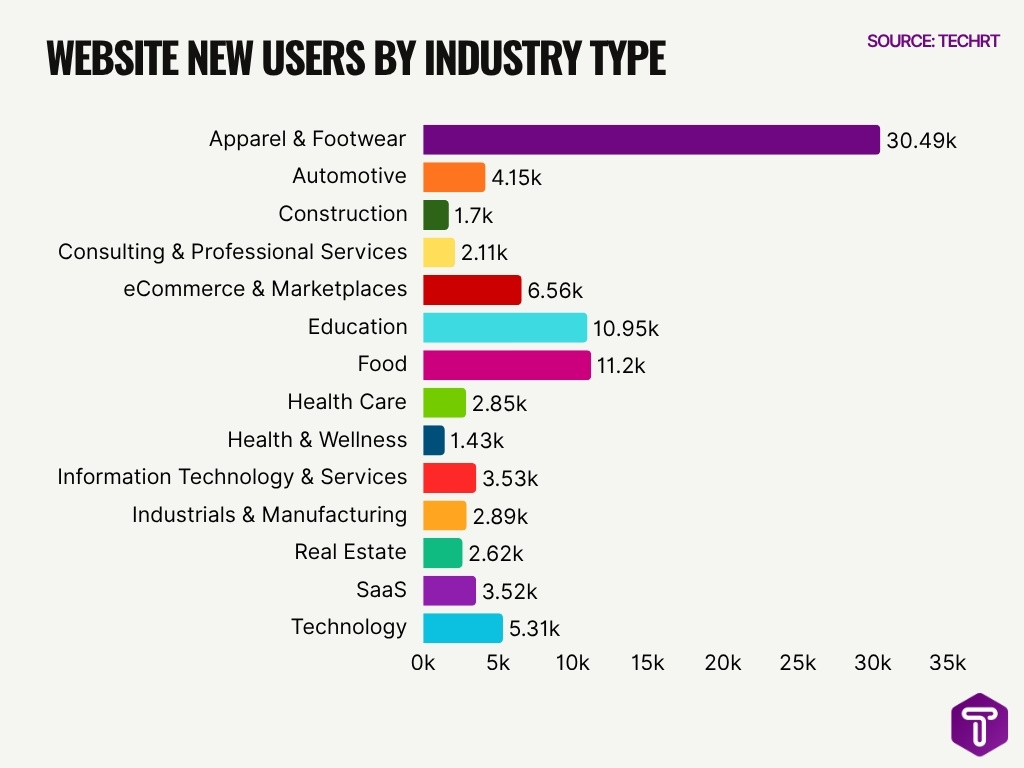
Website New Users by Industry Type
- Apparel & Footwear leads with 30.49k new users, dominating all other industries by a wide margin.
- The Food sector (11.2k) and Education (10.95k) are the next strongest performers, both crossing the 10k+ mark.
- eCommerce & Marketplaces generated 6.56k users, highlighting strong digital shopping demand.
- Technology (5.31k) and Automotive (4.15k) show moderate but steady growth in user acquisition.
- IT & Services (3.53k) and SaaS (3.52k) have almost identical user volumes, indicating similar market traction.
- Mid-tier industries like Industrials & Manufacturing (2.89k), Health Care (2.85k), and Real Estate (2.62k) show consistent but lower engagement.
- Consulting & Professional Services (2.11k) and Construction (1.7k) fall into the lower acquisition range, suggesting niche or slower digital adoption.
- Health & Wellness records the lowest with just 1.43k users, indicating untapped growth potential.
- The gap between the top (30.49k) and bottom (1.43k) industries is significant, showing a highly uneven distribution of new users.
- Overall, consumer-driven industries (fashion, food, and education) outperform B2B and traditional sectors in attracting new users.
Frequently Asked Questions (FAQs)
What percentage of website traffic comes from organic search?
Organic search drives around 53% to 57.8% of total website traffic globally.
How much global web traffic comes from mobile devices?
Mobile devices account for approximately 62.73% of total website traffic as of 2025.
What share of search clicks go to organic results vs paid ads?
About 90%–94% of search clicks go to organic results, while only 6%–10% go to paid ads.
What percentage of total website traffic comes from direct visits?
Direct traffic contributes roughly 25% of total website visits globally.
What percentage of online experiences begin with a search engine?
Around 68% to over 90% of online experiences start with a search engine.
Conclusion
Website traffic reflects a mobile-first, data-driven ecosystem where user behavior, device preferences, and traffic sources continuously evolve. Businesses now rely on a mix of organic search, paid advertising, social media, and referral channels to drive consistent growth, while also addressing challenges like bot traffic and fragmented user journeys. At the same time, engagement metrics such as bounce rate, session duration, and conversion rates offer deeper insight into user intent and experience quality.
As competition intensifies across industries, companies that actively analyze and adapt to traffic patterns across devices, regions, and acquisition channels will be better positioned to improve performance, increase conversions, and build long-term digital resilience.

Leave a comment
Have something to say about this article? Add your comment and start the discussion.