



YouTube creators now sit at the center of digital entertainment, shaping how brands advertise and how audiences consume content at a global scale. From product launches driven by influencer videos to education channels replacing traditional learning formats, creators influence billions of daily decisions across industries like retail, gaming, finance, and media. In fact, many brands now build entire marketing strategies around YouTube partnerships, while educators and businesses use the platform to reach audiences more efficiently than traditional channels.
At the same time, YouTube has evolved far beyond a video-sharing platform. It now functions as a hybrid of social media, streaming TV, and e-commerce, where creators can build full-scale businesses through ads, sponsorships, and direct product sales. As competition intensifies and new formats like Shorts reshape content discovery, understanding the data behind creator growth, engagement, and monetization becomes essential. Let’s explore the latest YouTube creator statistics and uncover what they reveal about the future of the creator economy.
Editor’s Choice
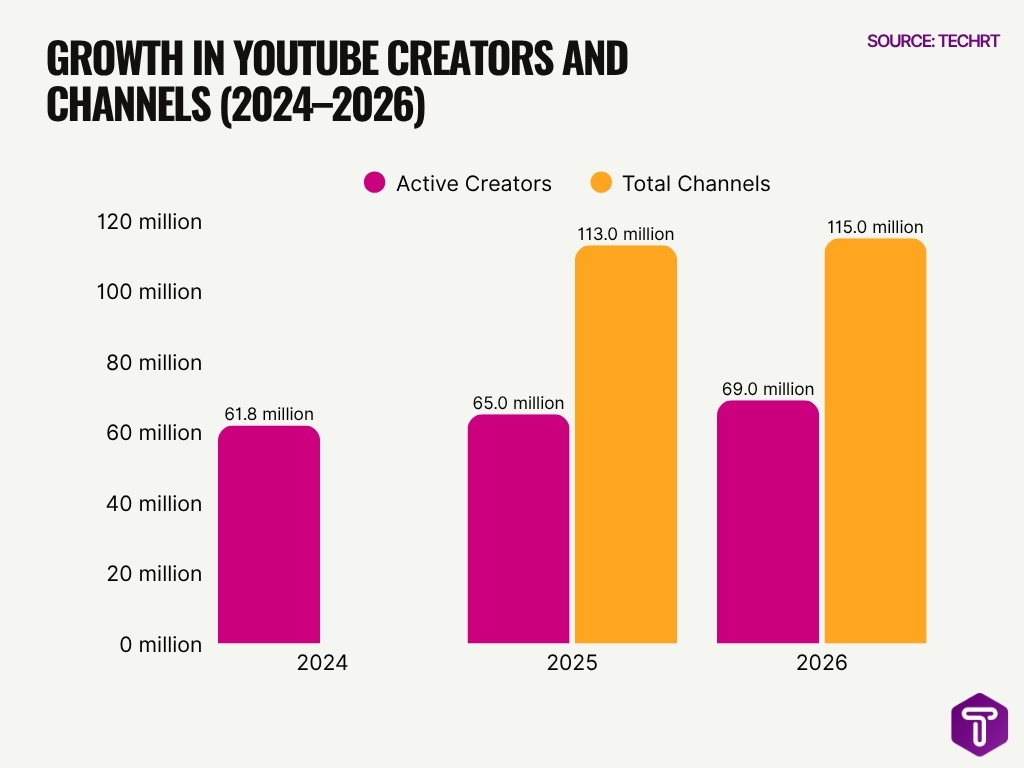
- There are approximately 69 million active YouTube creators worldwide in 2026, up from 61.8 million in 2024.
- YouTube reaches 2.53 billion monthly active users globally, making it one of the largest creator platforms.
- More than 115 million YouTube channels exist globally, including brands, studios, and individuals.
- Over 500 hours of video are uploaded every minute, highlighting intense competition among creators.
- YouTube Shorts generates 200 billion daily views, reshaping how creators gain visibility.
- More than 35,000 channels have surpassed 1 million subscribers, indicating strong creator scaling opportunities.
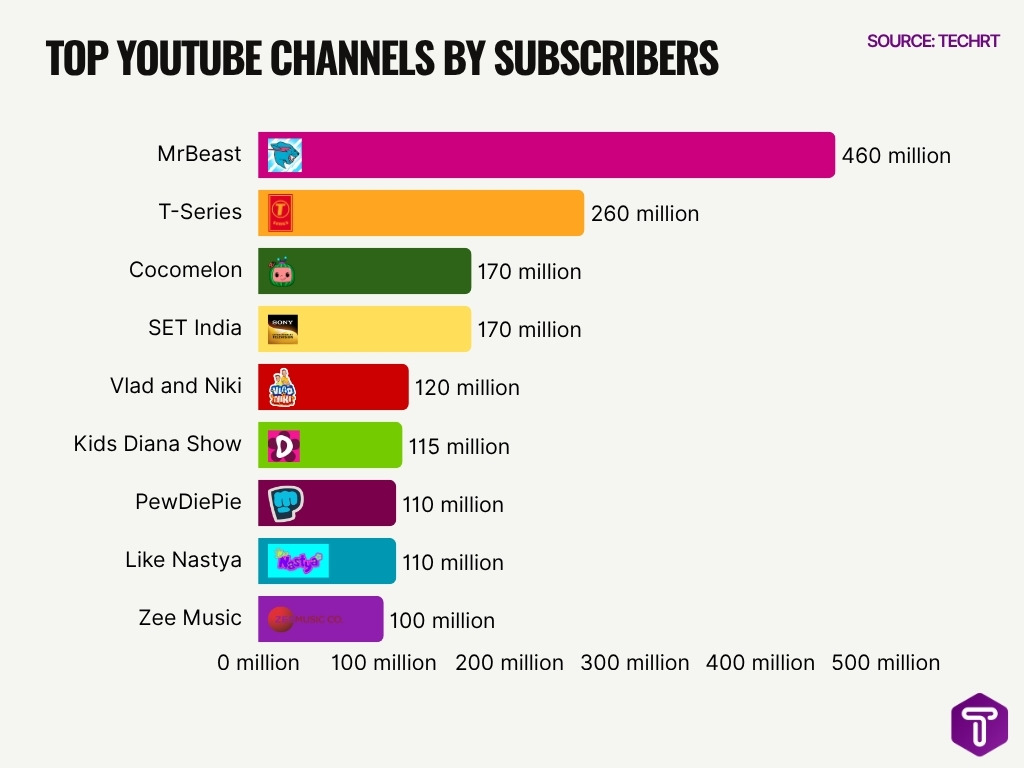
- The top creator, MrBeast, has over 460+ million subscribers in 2026, showing the platform’s massive reach potential.
Recent Developments
- YouTube accounted for 12.5% of all U.S. TV viewing in 2025, signaling its shift into mainstream entertainment.
- Creator-led sponsorships grew by 54% year-over-year in 2025, reflecting rising brand investment.
- YouTube has paid over $100 billion to creators since 2021, reinforcing its role in the creator economy.
- Shorts now attracts over 2 billion monthly users, making it a major discovery channel.
- Daily YouTube usage exceeds 120 million active users, showing strong engagement growth.
- YouTube Premium and Music combined surpassed 100 million subscribers globally.
- Connected TV viewing of YouTube content continues to rise, with 1 billion hours watched daily on TV screens.
- AI-generated content moderation increased, with YouTube removing top AI-driven channels in 2025 to maintain quality.
- Global partnerships like FIFA integrations now allow live sports clips and creator collaborations, expanding content formats.
Overview of YouTube Creators
- Around 69 million creators actively upload content, excluding dormant channels.
- Approximately 4.4% of YouTube users create content, showing a small but influential creator base.
- The platform supports creators across 100+ countries, reflecting global reach.
- Many creators manage multiple channels, contributing to over 115 million total channels.
- YouTube remains the second-largest social platform globally, behind Facebook.
- Creator-led businesses now span education, entertainment, and e-commerce sectors.
- The creator economy linked to YouTube is projected to exceed $60 billion by 2031.
- YouTube creators increasingly produce TV-style episodic content, competing with traditional media.
- Over 250,000 creators use YouTube Shopping, blending content with commerce.
Total Number of YouTube Creators and Channels
- There are over 69 million active creators globally in 2026.
- The number of creators grew by 11.6% year-over-year from 2024 to 2026.
- YouTube hosts more than 115 million total channels, including inactive ones.
- Around 65 million creators were active in 2025, indicating steady annual growth.
- Many users operate multiple channels, increasing the total channel count beyond the creator count.
- Only a small portion of users, about 4–5%, actively create content, emphasizing creator scarcity.
- Over 2.7 billion accounts exist on YouTube, but only a fraction produce content.
- Creator growth correlates with increased mobile video consumption, which dominates viewing behavior.
Growth of the YouTube Creator Community Over Time
- Creator numbers increased from ~65 million in 2025 to 69 million in 2026.
- The platform added millions of new creators annually, driven by monetization opportunities.
- YouTube’s global user base grew to 2.53 billion monthly users in 2025, fueling creator growth.
- The number of channels is expected to expand to over 113–115 million by 2025, reflecting long-term growth.
- Daily users surpassed 120 million globally, increasing demand for new content.
- YouTube Shorts’ adoption accelerated creator entry due to low production barriers.
- Monetization features like ads and memberships expanded creator participation.
- The rise of AI tools has enabled faster content production, further increasing creator numbers.
Top YouTube Creators by Subscribers
- MrBeast leads globally with over 460 million subscribers in 2026, making him the most-subscribed individual creator.
- T-Series remains the most-subscribed channel overall with 260+ million subscribers, driven by music content.
- Cocomelon holds over 170 million subscribers, highlighting the dominance of children’s content.
- SET India has crossed 170 million subscribers, reflecting strong regional growth in India.
- Vlad and Niki surpassed 120 million subscribers, showing the scale of family-friendly content.
- Kids Diana Show has over 115 million subscribers, reinforcing demand for kids’ entertainment.
- PewDiePie maintains 110+ million subscribers, remaining one of the longest-standing top creators.
- Like Nastya, which exceeds 110 million subscribers, driven by global multilingual content.
- Zee Music Company crossed 100 million subscribers, highlighting music’s strong presence.
Top YouTube Creators by Views
- T-Series has accumulated over 300 billion lifetime views, making it the most-viewed channel globally.
- Cocomelon has surpassed 180 billion views, driven by continuous children’s content consumption.
- SET India holds more than 160 billion views, reflecting strong regional TV content demand.
- Sony SAB has crossed 110 billion views, supported by episodic TV-style uploads.
- Zee Music Company exceeds 90 billion views, driven by Bollywood music videos.
- Like Nastya has accumulated 100+ billion views, showing strong engagement among younger audiences.
- Kids Diana Show has generated over 90 billion views, driven by consistent uploads.
- MrBeast’s channel has exceeded 80 billion views, fueled by viral challenge content.
- Short content contributes heavily to view counts, with billions of views generated daily across top creators.
Distribution of Creators by Channel Size
- Over 35,000 channels have more than 1 million subscribers, forming the top tier of creators.
- Only 14 channels have crossed 100 million subscribers, highlighting extreme concentration at the top.
- The majority of creators operate small channels with fewer than 10,000 subscribers.
- A tiny percentage of creators generate most of the platform’s total views and revenue.
- Mid-sized creators (100K–1M subscribers) represent a growing segment of monetized channels.
- Top channels like T-Series exceed 300 billion lifetime views, dominating global traffic.
- The gap between micro-creators and mega-creators continues to widen due to algorithmic exposure.
- Shorts has enabled small creators to scale faster, improving discoverability.
Most Profitable YouTube Niches by RPM
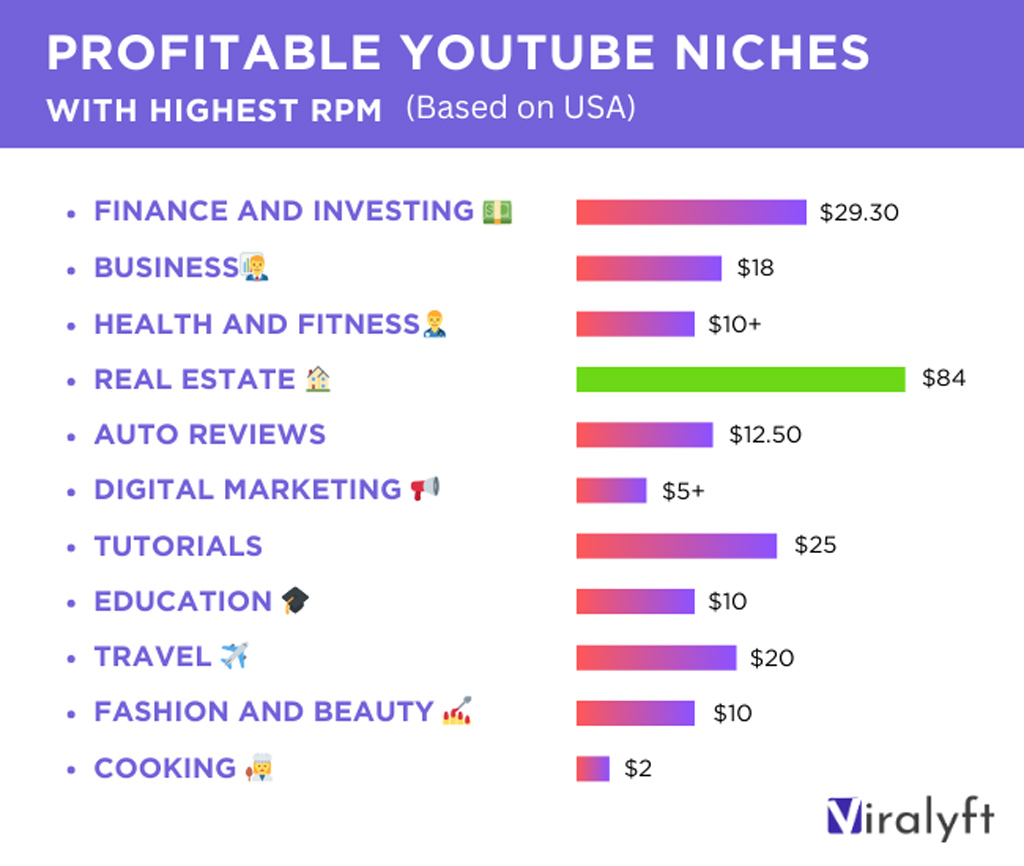
- Real Estate dominates with the highest RPM at $84, making it the most lucrative YouTube niche by a wide margin.
- Finance and investing rank second, generating around $29.30 RPM, driven by high-value advertisers like banks and fintech brands.
- Tutorials content performs strongly with $25 RPM, showing the monetization power of educational/how-to videos.
- Travel niche earns approximately $20 RPM, benefiting from tourism, booking, and lifestyle brand ads.
- Business content delivers about $18 RPM, indicating strong B2B and entrepreneurship advertiser demand.
- Auto Reviews generate around $12.50 RPM, supported by high-ticket product advertising (cars, accessories).
- Health and Fitness earns $10+ RPM, reflecting steady demand from wellness and supplement brands.
- Education and Fashion & Beauty both average around $10 RPM, showing moderate but consistent monetization potential.
- Digital Marketing has relatively lower returns at $5+ RPM, despite being a competitive and saturated niche.
- Cooking content ranks lowest with just $2 RPM, highlighting lower advertiser spend and monetization limitations.
YouTube Creator Demographics by Age
- Around 60% of YouTube creators are between 18 and 34 years old, making it the dominant age group.
- Creators aged 25–34 represent the largest single segment at approximately 35%.
- Teen creators (13–17) account for 10–15% of new channel creation annually.
- Creators aged 35–44 make up roughly 20% of the creator base, often focusing on professional niches.
- Older creators (45+) represent less than 10%, but are growing steadily.
- Gen Z creators dominate Shorts content, contributing to over 60% of short-form uploads.
- Younger creators are more likely to monetize early through brand deals and affiliate links.
- The average age of top YouTubers remains under 30 years, reflecting youth-driven trends.
YouTube Creator Demographics by Gender
- Approximately 70% of YouTube creators are male, while 30% are female.
- Female creators dominate niches like beauty, lifestyle, and parenting content.
- Male creators lead in gaming and tech, accounting for over 80% of gaming channels.
- Gender diversity is increasing, with more non-binary creators gaining visibility.
- Female-led channels often show higher engagement rates in lifestyle categories.
- Brand sponsorships are more evenly distributed, with female creators seeing increased ad spend in 2025–2026.
- Women-led channels in education and wellness have grown by over 20% year-over-year.
- Gender gap persists at the top tier, with male creators dominating the top 100 channels.
YouTube Creators by Country and Region
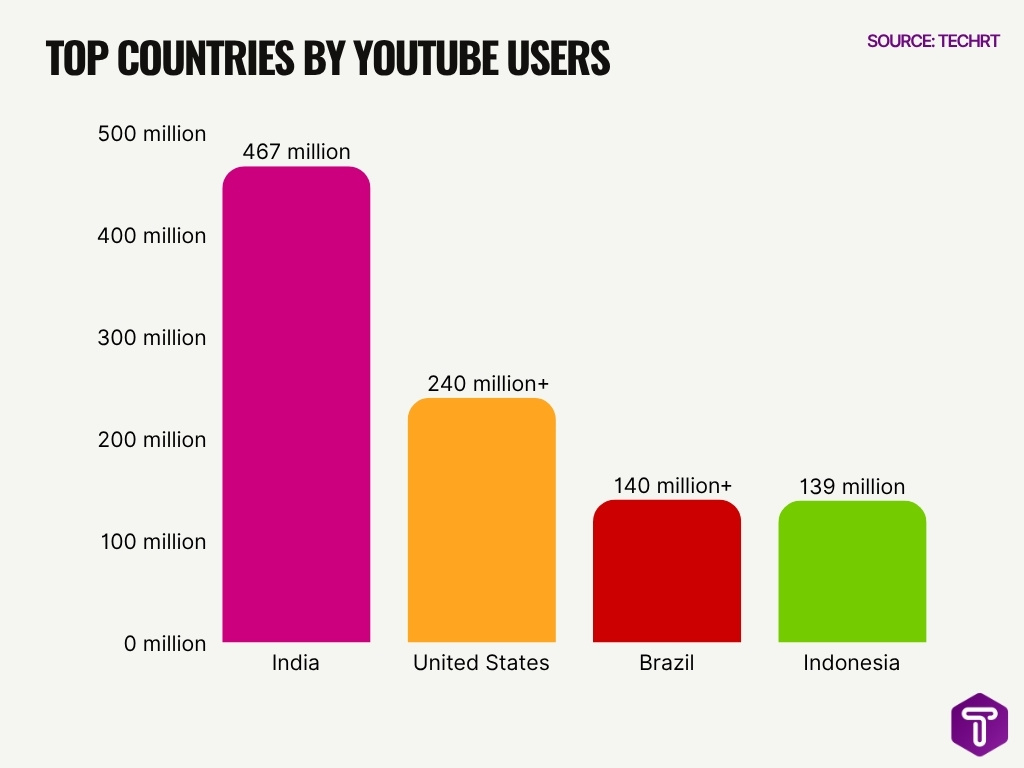
- India leads in creator volume, with over 467 million YouTube users driving massive creator growth.
- The United States remains a top market with 240+ million users and a high concentration of monetized creators.
- Brazil ranks among the top countries, with 140+ million users and a growing creator base.
- Indonesia contributes significantly, with over 139 million users fueling creator expansion.
- Europe collectively represents a large share, with millions of creators across the UK, Germany, and France.
- Regional content in languages like Hindi and Spanish drives faster subscriber growth than English-only channels.
- Emerging markets account for over 60% of new creators joining the platform annually.
- Localized content strategies help creators reach niche audiences and improve engagement rates.
Short-Form vs Long-Form Content Among Creators
- YouTube Shorts generates over 200 billion daily views, making it the fastest-growing format.
- More than 2 billion logged-in users watch Shorts monthly, highlighting massive adoption.
- Short-form videos (under 60 seconds) account for 30–40% of total uploads in 2025–2026.
- Long-form content still dominates monetization, contributing to over 70% of creator ad revenue.
- Creators using both formats see higher subscriber growth rates, often 1.5x faster than single-format creators.
- Average Shorts length remains 15–30 seconds, optimized for quick engagement.
- Long-form videos (8–15 minutes) perform best for watch time and monetization metrics.
- Shorts acts as a discovery funnel, with over 25% of viewers converting to long-form subscribers.
Engagement Rates on Creator Channels
- Average YouTube engagement rate ranges between 2% and 6%, depending on the niche.
- Smaller creators (<10K subscribers) often achieve higher engagement rates of 8–12%.
- Videos with strong thumbnails and titles can increase click-through rates by up to 30%.
- The average watch time per session exceeds 40 minutes globally, reflecting deep engagement.
- Shorts typically achieve higher engagement but lower retention depth compared to long-form content.
- Channels posting consistently see up to 2x more engagement than irregular uploaders.
- Comments and likes are strongest in niches like gaming, lifestyle, and education.
- Engagement peaks during evening hours and weekends, especially in the U.S. market.
YouTube Posting Frequency Trends Among Creators
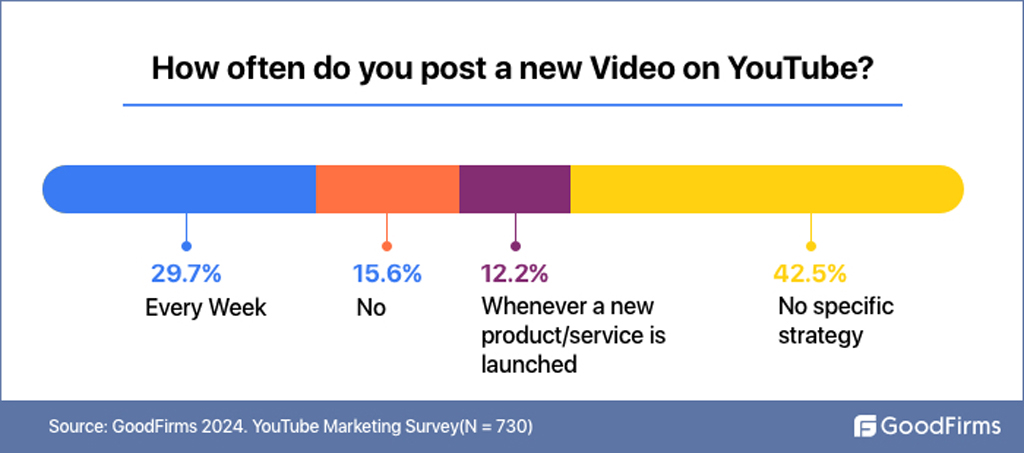
- 42.5% of creators follow no specific posting strategy, making it the largest segment, indicating a lack of structured content planning.
- 29.7% of creators publish videos every week, showing that nearly 1 in 3 creators maintain a consistent upload schedule.
- Only 15.6% of creators reported not posting regularly, suggesting that the majority are at least somewhat active on the platform.
- 12.2% of creators post only during product or service launches, highlighting a campaign-driven content approach rather than ongoing engagement.
- Overall, over 70% of creators either post regularly or strategically, while a significant portion still lacks a defined content cadence.
Revenue Streams for YouTube Creators
- YouTube has paid creators over $100 billion since 2021, primarily through ad revenue.
- AdSense remains the primary income source, contributing to 50–70% of total creator earnings.
- Sponsorship deals can generate $10–$50 per 1,000 views, often exceeding ad revenue.
- Affiliate marketing contributes significantly, with top creators earning six-figure annual commissions.
- Channel memberships and subscriptions are used by millions of creators globally.
- Merchandise sales account for 10–30% of income for top creators.
- YouTube Shopping allows creators to monetize directly through product tagging and storefronts.
- Live streaming revenue (Super Chat, Super Thanks) continues to grow, especially in gaming niches.
YouTube Partner Program Eligibility and Participation Rates
- To qualify for monetization, creators need 1,000 subscribers and 4,000 watch hours in 12 months.
- Alternatively, creators can qualify with 10 million Shorts views in 90 days.
- Less than 10% of creators qualify for the YouTube Partner Program (YPP).
- Millions of creators are now part of YPP, enabling monetization through ads and memberships.
- The introduction of Shorts monetization in 2023–2024 expanded eligibility.
- Creators who meet YPP requirements typically see higher retention and content consistency.
- YouTube takes a 45% revenue share, leaving creators with 55% of ad revenue.
- Participation rates are higher in developed markets like the U.S., where monetization tools are widely adopted.
Average Creator Earnings by Channel Size
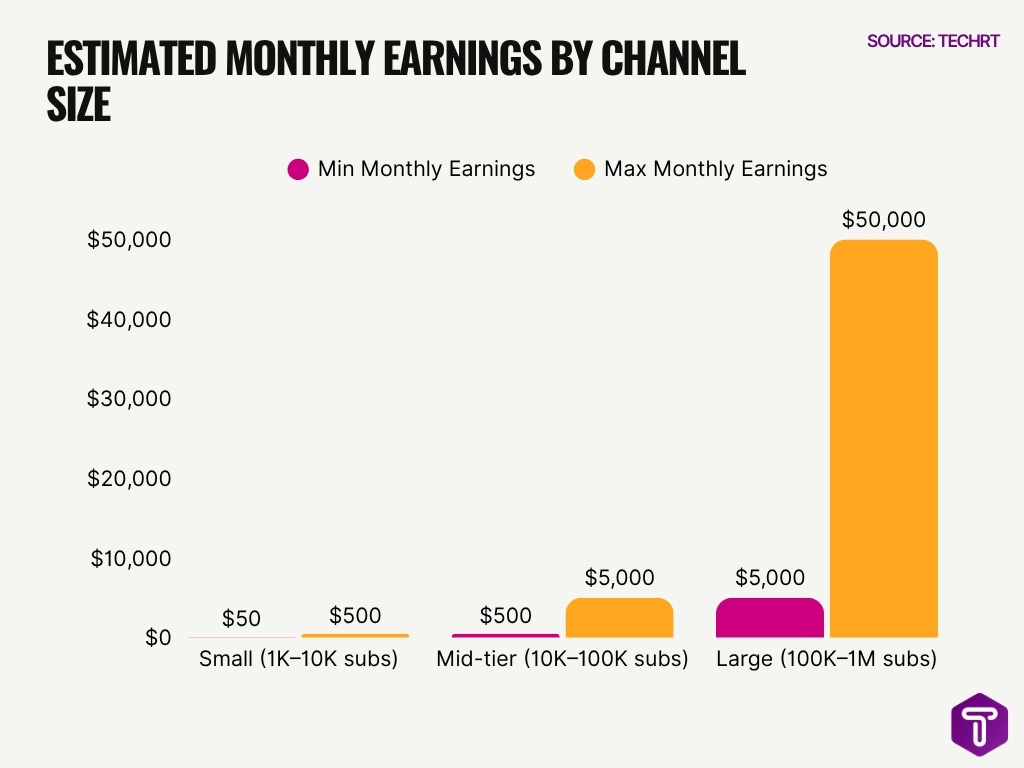
- Small creators (1K–10K subscribers) earn around $50–$500 per month on average.
- Mid-tier creators (10K–100K subscribers) earn $500–$5,000 monthly, depending on niche.
- Large creators (100K–1M subscribers) can earn $5,000–$50,000 per month.
- Top creators (1M+ subscribers) often generate six to seven figures annually.
- CPM rates range between $3 and $12 per 1,000 views, varying by geography and niche.
- Finance and tech niches command higher CPMs, often exceeding $20.
- U.S.-based creators typically earn more due to higher advertiser demand and CPM rates.
- Diversified income streams can increase total earnings by 2–3x compared to ad revenue alone.
Future Trends for YouTube Creators and the Creator Economy
- The global creator economy is projected to exceed $60 billion by 2031.
- AI tools are expected to power over 50% of content production workflows by 2027.
- YouTube continues to expand into TV, with 1 billion hours watched daily on TV screens.
- Brand partnerships with creators are growing at double-digit rates annually.
- Interactive content like live streams and polls is increasing engagement across creator channels.
- YouTube Shopping adoption is rising, with hundreds of thousands of creators selling products directly.
- Regional creators in emerging markets are expected to drive major growth in the next decade.
- Multi-platform creators (YouTube + TikTok + Instagram) are becoming the norm for audience growth.
Frequently Asked Questions (FAQs)
How many YouTube creators are there worldwide in 2026?
There are approximately 69 million active YouTube creators globally.
What percentage of YouTube users actually create content?
Only about 4–5% of YouTube users actively create content.
How much does the top YouTube creator earn annually?
Top creators like MrBeast earn around $54 million to $85 million per year.
What share of revenue do YouTube creators receive from ads?
Creators typically earn 55% of ad revenue, while YouTube keeps 45%.
How much revenue did YouTube generate in 2025?
YouTube generated approximately $60 billion in total revenue in 2025, with over $40 billion from ads.
Conclusion
YouTube creators have transformed from hobbyists into full-scale media businesses, influencing how audiences watch, learn, shop, and interact with digital content. The data highlights a clear shift toward professionalized content creation, where creators operate like brands, diversify revenue streams, and compete directly with traditional media companies. At the same time, formats like Shorts and connected TV viewing continue to redefine how audiences discover and consume content, opening new opportunities for both emerging and established creators.
Looking ahead, the creator economy shows no signs of slowing down. With more creators entering the ecosystem, higher earning potential, and deeper integration with commerce and advertising, YouTube remains a central platform for digital growth. Creators who adapt to changing algorithms, embrace multi-format strategies, and build strong audience relationships will be best positioned to succeed in this evolving landscape.

Leave a comment
Have something to say about this article? Add your comment and start the discussion.