




Google Chrome remains the dominant browser, shaping how people interact with the web. From everyday searches and streaming to enterprise SaaS platforms and web-based development tools, Chrome drives a massive portion of global internet activity. Its influence extends across industries such as digital marketing, cloud collaboration, and e-commerce, where browser performance and compatibility directly affect user experience and revenue. The statistics in this article highlight Chrome’s growth, adoption, and impact across devices, regions, and industries.
Editor’s Choice
- Google Chrome held about 64.7% of the global browser market share in 2025, maintaining its lead as the most widely used web browser worldwide.
- Chrome had an estimated 3.4+ billion active users globally in 2025, making it the most used browser by a large margin.
- As of early 2026, Chrome accounts for roughly 65% of global browser usage, while Safari follows with around 18%.
- On desktop devices, Chrome captured about 65% market share in 2025, outperforming competitors like Microsoft Edge and Firefox.
- Chrome dominates mobile browsing with roughly 67% market share on smartphones worldwide in 2025.
- The Chrome Web Store hosts 190,000+ browser extensions, supporting productivity, security, and developer workflows.
- Google’s Safe Browsing technology protects over 5 billion devices globally, including Chrome users, against phishing and malware threats.
Recent Developments
- In 2025, Google introduced improvements to Chrome’s Privacy Sandbox initiative, replacing third-party cookies with new privacy-preserving advertising technologies.
- Chrome began rolling out AI-powered security features in 2025, helping detect malicious downloads and suspicious websites more effectively.
- Google Chrome’s Memory Saver feature, launched widely in 2023 and expanded in 2024, 2025, can reduce memory usage by up to 30% when multiple tabs are open.
- Chrome’s Energy Saver mode helps extend laptop battery life by limiting background tasks and visual effects when battery levels fall below 20%.
- In 2025, Google added passkey support across Chrome platforms, improving passwordless authentication security.
- Chrome introduced improved tab organization and AI-assisted tab grouping to help users manage large numbers of open tabs.
- Chrome’s built-in real-time phishing protection now blocks millions of unsafe websites daily, improving browser security at scale.
- The Chrome team expanded WebGPU support, enabling faster graphics rendering and improved web-based gaming and design applications.
- In 2024 and 2025, Chrome added enhanced accessibility features, including improved screen reader compatibility and caption support.
Overview of Google Chrome Statistics
- Google Chrome launched in September 2008, quickly gaining popularity due to speed, simplicity, and tight integration with Google services.
- Within just four years of launch, Chrome overtook Internet Explorer to become the world’s most popular browser.
- Chrome currently powers more than 6 out of every 10 web browsing sessions globally.
- Over 3 billion internet users rely on Chrome, highlighting its global reach across consumer and enterprise environments.
- Chrome supports multiple operating systems, including Windows, macOS, Linux, Android, and ChromeOS.
- Google Chrome updates automatically every four weeks, ensuring users receive frequent security and performance improvements.
- Chrome’s rendering engine, Blink, powers not only Chrome but also other browsers such as Microsoft Edge and Opera.
- The browser is built on the Chromium open-source project, enabling developers worldwide to contribute to its ecosystem.
- Chrome supports thousands of web standards and APIs, enabling modern web applications like Google Docs, Figma, and Slack to run in a browser environment.
Global Market Share of Google Chrome
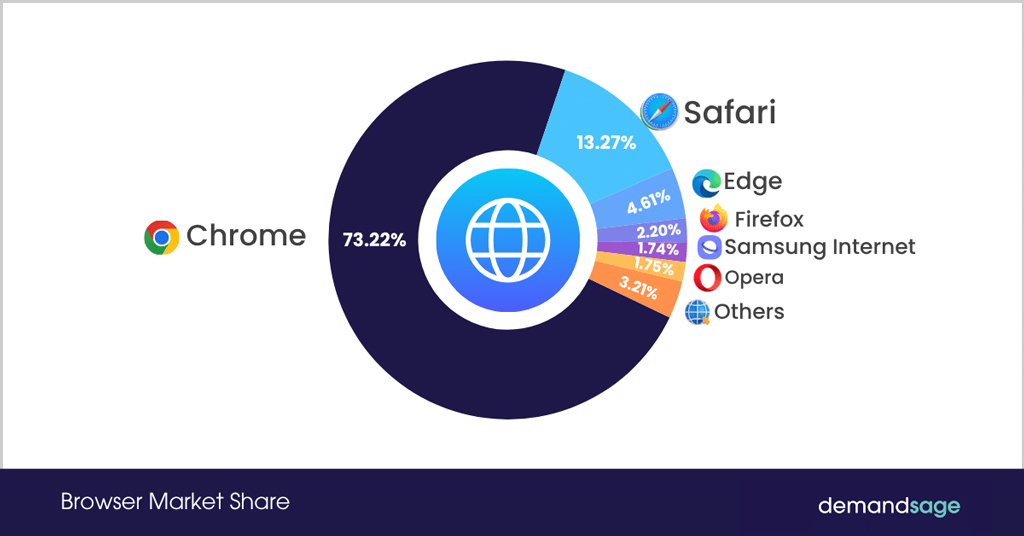
- Google Chrome dominates the browser market with a massive 73.22% market share, making it the most widely used web browser globally.
- Safari ranks second, capturing 13.27% of the global browser market, largely driven by its strong presence on Apple devices such as iPhones, iPads, and Macs.
- Microsoft Edge holds 4.61% market share, positioning it as the third-largest browser, benefiting from its integration with Windows operating systems.
- Other browsers collectively account for 3.21%, showing that a variety of smaller browsers still contribute to overall web usage.
- Mozilla Firefox captures 2.20% of the market, maintaining a loyal user base despite facing strong competition from Chrome and other Chromium-based browsers.
- Opera holds 1.75% market share, reflecting its niche popularity among users who prefer its built-in VPN and productivity features.
- Samsung Internet accounts for 1.74%, primarily used on Samsung mobile devices, especially in regions where Android dominates.
- Overall, Chromium-based browsers dominate the ecosystem, with Chrome and other Chromium browsers collectively controlling the vast majority of global web traffic.
Total Number of Users of Google Chrome
- Google Chrome had approximately 3.3 billion users worldwide in 2024, representing the largest browser user base globally.
- By 2025, the number of Chrome users will have surpassed 3.4 billion globally, reflecting steady growth alongside internet adoption.
- Chrome users account for roughly two-thirds of all internet users worldwide, given the global online population exceeding 5.3 billion people.
- The browser has seen significant adoption in emerging internet markets such as India, Indonesia, and Brazil, contributing to its large user base.
- Chrome’s integration with Android devices has played a major role in expanding its mobile user base.
- The browser serves billions of daily searches and web sessions, as Google Search remains the default search engine in Chrome.
- Chrome is installed on over 70% of Android smartphones globally, driving large-scale adoption across mobile users.
- Millions of organizations use Chrome for enterprise cloud applications and SaaS platforms, expanding usage beyond personal browsing.
- Chrome’s user base grew significantly during the 2020–2023 remote work trends, when cloud tools like Google Docs and Zoom became widely used.
Growth of Google Chrome Market Share Over Time
- In 2009, Google Chrome held just around 3% of the global browser market, as Internet Explorer dominated web browsing.
- By 2012, Chrome had surpassed Internet Explorer and reached roughly 32% global market share, becoming the most used browser worldwide.
- Chrome’s market share continued growing rapidly, crossing 50% global share in 2016, marking a major shift in browser dominance.
- Between 2017 and 2019, Chrome maintained strong growth, stabilizing at around 60–64% global market share.
- During the 2020 remote work surge, Chrome usage increased as cloud-based tools like Google Docs and Slack saw higher adoption.
- By 2023, Chrome accounted for roughly 63–65% of global browser usage, maintaining a wide lead over Safari and Edge.
- Chrome’s market share remained above 64% throughout 2024 and 2025, showing long-term stability in user preference.
- Since 2019, no competing browser has exceeded 20% global market share, highlighting Chrome’s sustained dominance.
- Over the past decade, Chrome’s consistent updates and integration with Google services have helped retain billions of users worldwide.
Market Share of Google Chrome by Device Type
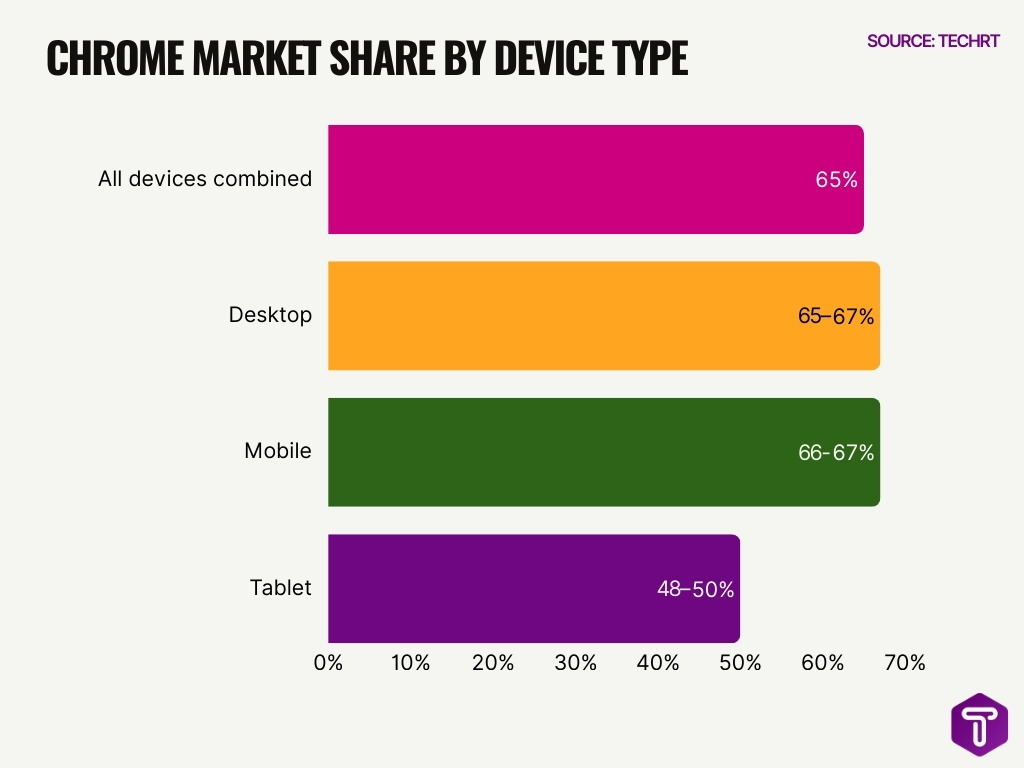
- Across all device categories combined, Chrome holds roughly 65% of the global browser market in 2025.
- On desktop devices, Chrome accounts for approximately 65–67% of browsing activity worldwide.
- On mobile devices, Chrome holds around 66–67% market share globally, largely driven by Android smartphones.
- Tablet devices show slightly lower adoption, with Chrome accounting for roughly 48–50% of tablet browser usage.
- Apple Safari dominates iOS devices, which explains why Chrome’s share on iPhones is significantly lower compared with Android phones.
- Chrome usage is particularly strong on Android smartphones, where it is often preinstalled as the default browser.
- Chrome also powers Chromebook devices, which are widely used in education and enterprise environments.
- The Chromium engine also powers several other browsers, meaning Blink-based browsers collectively power most web traffic globally.
- Developers frequently optimize websites for Chrome first because it represents the largest share of device-based web traffic.
Desktop Browser Market Share of Google Chrome
- Google Chrome held around 65–66% of the global desktop browser market in 2025.
- Microsoft Edge ranks second on desktop with roughly 11–12% market share, benefiting from Windows integration.
- Apple Safari accounts for about 9–10% of desktop browser usage, mostly among macOS users.
- Firefox has roughly 6–7% desktop market share worldwide.
- Opera holds around 3% of the desktop browser market globally.
- Chrome became the leading desktop browser in 2012, overtaking Internet Explorer.
- Chrome’s desktop dominance increased due to fast JavaScript execution and strong developer tools.
- Enterprises widely deploy Chrome through centralized management policies, which helps maintain its strong presence in corporate environments.
- Many SaaS platforms recommend Chrome for optimal compatibility, which contributes to its high desktop adoption rates.
Mobile Browser Market Share of Google Chrome
- Chrome controlled approximately 66–67% of the global mobile browser market in 2025.
- Apple Safari holds the second-largest share on mobile devices with roughly 23–24% market share.
- Samsung Internet ranks third with about 4–5% of global mobile browser usage.
- UC Browser maintains around 1–2% mobile market share, particularly in parts of Asia.
- Chrome’s dominance in mobile browsing largely comes from Android devices, which represent the majority of smartphones worldwide.
- Android powers more than 70% of the global smartphone market, supporting Chrome’s strong mobile adoption.
- Chrome offers features optimized for mobile users, including data saver modes and synchronization across devices.
- Mobile browsing accounts for over 58% of total web traffic globally, making Chrome’s mobile presence particularly important.
- In many developing markets, Chrome accounts for over 70% of mobile browsing activity.
Chrome Market Share by Region Worldwide
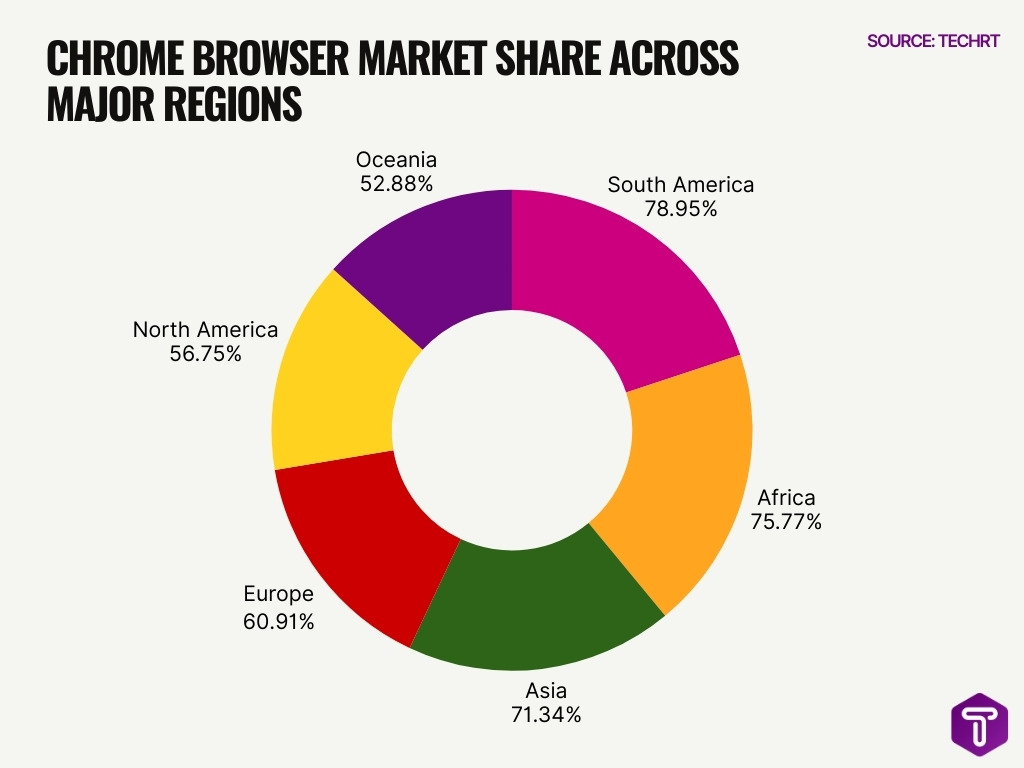
- South America leads in Chrome adoption, with the browser capturing 78.95% market share, making it the most dominant region for Chrome usage.
- Africa follows closely, where Chrome holds a strong 75.77% share of the browser market, highlighting its widespread accessibility and popularity across the continent.
- In Asia, Chrome maintains a significant 71.34% market share, indicating its dominant position among billions of internet users in the region.
- Europe shows a comparatively lower share, but Chrome still leads the market with 60.91% usage, remaining the most widely used browser across European countries.
- North America records a Chrome market share of 56.75%, reflecting stronger competition from other browsers like Safari in the region.
- Oceania has the lowest Chrome share among the listed regions, at 52.88%, though Chrome remains the leading browser in the region.
Comparison of Google Chrome Market Share with Other Browsers
- Google Chrome leads the global browser market with about 64–66% market share in 2025, far ahead of any competitor.
- Apple Safari ranks second globally with roughly 18–19% browser market share, largely due to its default presence on iPhones and macOS devices.
- Microsoft Edge holds approximately 5–6% of global browser usage.
- Mozilla Firefox accounts for around 2–3% of the global browser market.
- Opera holds about 2% global browser market share, with stronger usage in parts of Africa and Asia.
- Samsung Internet accounts for roughly 3–4% of global mobile browser usage, primarily among Samsung smartphone users.
- Chromium-based browsers collectively power over 75% of global web browsing.
- Chrome remains the preferred browser for web developers and digital marketers, as most websites prioritize Chrome compatibility first.
- Over the past decade, Chrome has maintained a market share gap of more than 40 percentage points compared with the second-largest browser.
Share of Global Web Traffic from Google Chrome
- Google Chrome generates approximately 65% of global web traffic across desktop, mobile, and tablet devices.
- Chrome accounts for around two-thirds of worldwide page views, making it the most influential browser for web traffic distribution.
- Mobile devices contribute more than 58% of total web traffic globally, and Chrome leads mobile browsing.
- Chrome drives a significant portion of traffic to Google Search, YouTube, and Google Workspace applications.
- Many large websites report that over 60% of their visitors access content through Chrome-based browsers.
- Chrome’s cross-device sync enables users to continue browsing across desktop, mobile, and tablet environments, increasing overall traffic engagement.
- In several emerging markets, Chrome accounts for more than 70% of website visits due to Android smartphone penetration.
- Web developers frequently test websites on Chrome first because it represents the largest portion of global web sessions.
- Chrome-based browsers dominate modern web applications that rely heavily on JavaScript and Web APIs.
Top US States with the Highest Share of Google Chrome Users
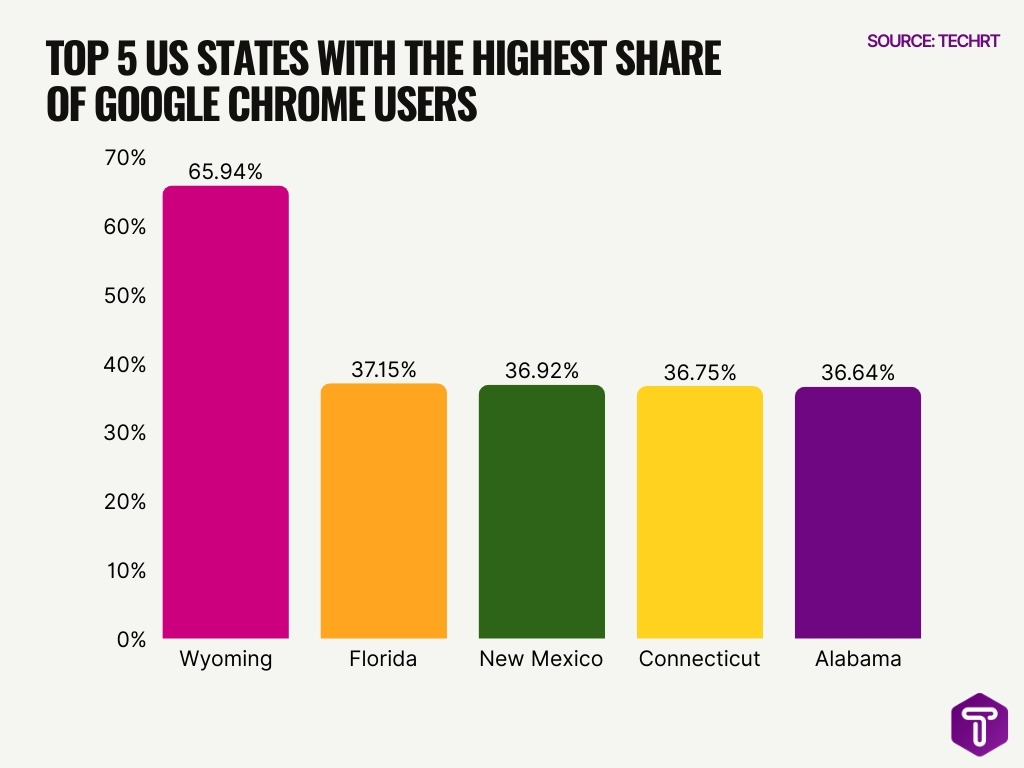
- Wyoming leads by a large margin, with 65.94% of internet users in the state using Google Chrome, making it the highest Chrome adoption rate among the listed states.
- Florida ranks second, where 37.15% of users rely on Chrome as their primary browser, highlighting strong adoption in one of the most populous US states.
- New Mexico holds the third position, with 36.92% of users using Google Chrome, showing nearly identical usage levels compared to Florida.
- Connecticut follows closely, recording 36.75% Chrome usage, indicating that more than one-third of internet users in the state prefer Chrome.
- Alabama rounds out the top five, with 36.64% of users using Google Chrome, only slightly behind Connecticut.
- A notable insight is the massive gap between Wyoming and the other states: Chrome usage in Wyoming (65.94%) is almost 29 percentage points higher than in Florida (37.15%), the second-highest state in the list.
- Overall, aside from Wyoming, the remaining four states show very similar Chrome adoption rates, all clustered between 36.64% and 37.15%.
Adoption of Google Chrome Among Businesses and Enterprises
- Chrome Enterprise powers millions of organizations worldwide with centralized security controls.
- Over 300 management policies in Chrome Enterprise enable IT admins to control browser settings.
- 74% of large enterprises adopt Chrome infrastructure for cloud workloads.
- PwC deploys Chrome across 275,000+ employees in 170 global offices.
- Chrome Browser Cloud Management saves 75% IT time on tickets and updates.
- Organizations save $2.6 million in breach costs over 3 years using Chrome.
- Chrome cuts service desk tickets by 30%, enhancing productivity.
- Chromebook enterprise shipments hit 22.11 million units in 2025.
- Chrome commands 66.3% global browser market share in Q3 2025.
- Forrester: $278 saved per employee yearly via Chrome management.
Version Distribution and Adoption of Google Chrome
- Over 83% of browser traffic runs on the Chromium engine, powering Chrome’s widespread adoption.
- Chrome 144.0 holds 22.09% desktop market share worldwide as of February 2026.
- Chrome 145.0 commands 10.62% of desktop usage, showing strong recent version uptake.
- Combined, Chrome 144.0 and 145.0 represent about 33% of the desktop browser share.
- Globally, Chrome for Android leads with 38.51% market share across all platforms.
- Chrome boasts 3.45–3.83 billion active users worldwide in 2026.
- Chrome maintains a 68.9% overall browser market share as of early 2026.
- Over 90% of new ChromeOS devices receive updates immediately upon activation.
- Chrome update adoption reaches 97% within 21 days for many releases.
- Desktop Chrome market share stands at 65.72% in 2026.
Payment Models Used by Paid Google Chrome Extensions
- The vast majority of paid Chrome extensions (86.4%) use a one-off purchase model, making it the most common monetization strategy among developers.
- Only 6.3% of Chrome extensions rely on in-app payments, indicating that additional feature purchases within extensions are relatively uncommon.
- Around 5.7% of paid extensions operate on a monthly subscription model, showing limited adoption of recurring monthly pricing.
- Annual subscriptions account for just 1.6% of paid Chrome extensions, making it the least used payment structure in the ecosystem.
- Overall, the data highlights a strong preference for simple one-time payments over recurring subscription models in the Chrome extension marketplace.

Performance and Speed Statistics of Google Chrome
- Chrome achieved a 22% improvement in Speedometer 3.1 benchmark since August 2024.
- Chrome‘s Speedometer 3 score rose 72% from May 2022 to 2025.
- Memory Saver reduces Chrome‘s memory usage by up to 40%.
- Chrome‘s Memory Saver saves up to 10GB of RAM on heavy workloads.
- V8 engine in Chrome delivers 13.7x faster binary-trees JavaScript performance.
- Chrome optimizations extended battery life by up to 28% via JavaScript throttling.
- Chrome‘s Speedometer 3.1 score hit the highest ever on the M4 MacBook Pro.
- Multi-process architecture nearly triples graphics performance in MotionMark.
- Chrome scored 51.43 points on Speedometer 3 in stable version 137.
Security and Safe Browsing Statistics in Google Chrome
- Google Safe Browsing protects more than 5 billion devices worldwide, including Chrome users.
- Chrome checks billions of URLs daily to identify malicious websites and phishing attempts.
- Google reports that Safe Browsing helps detect millions of dangerous sites each week.
- Chrome automatically blocks downloads from known malware-hosting websites.
- Enhanced Safe Browsing mode provides real-time protection against phishing, malware, and suspicious extensions.
- Chrome includes sandboxing technology, which isolates browser processes to limit the impact of security threats.
- Automatic security updates ensure vulnerabilities are patched quickly across billions of Chrome installations worldwide.
- Chrome’s password manager warns users about compromised credentials detected in data breaches.
- Passkey authentication support introduced in recent updates improves passwordless login security across websites.
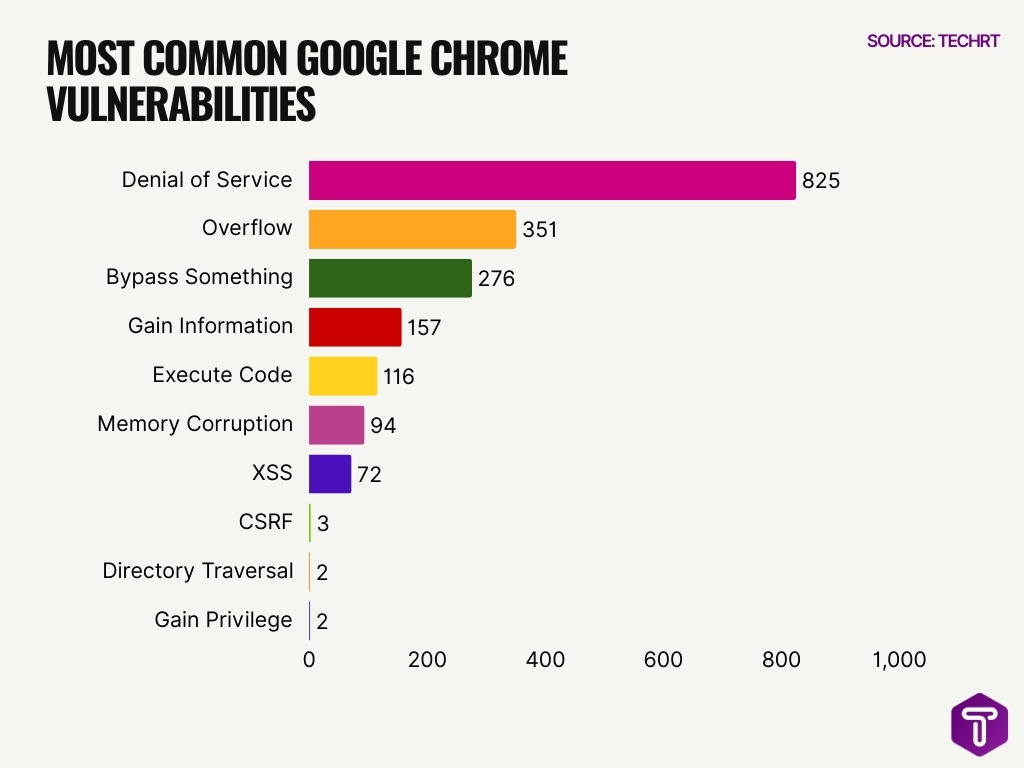
Key Insights From the Most Common Google Chrome Vulnerabilities
- Denial of Service (DoS) is the most common Chrome vulnerability, accounting for 825 reported cases, significantly higher than any other category.
- Overflow vulnerabilities rank second with 351 cases, highlighting frequent issues related to buffer or integer overflow attacks in Chrome.
- Bypass-related vulnerabilities come third with 276 instances, showing how attackers often attempt to circumvent security protections in the browser.
- There are 157 vulnerabilities related to information disclosure, indicating cases where attackers could potentially gain sensitive data from Chrome systems.
- Code execution vulnerabilities total 116 cases, representing serious threats where attackers may execute malicious code on a user’s device.
- Memory corruption issues account for 94 vulnerabilities, often linked to unsafe memory handling that can lead to crashes or exploits.
- Cross-Site Scripting (XSS) vulnerabilities appear 72 times, allowing attackers to potentially inject malicious scripts into web pages viewed through Chrome.
- A very small number of vulnerabilities involve CSRF (Cross-Site Request Forgery), with only 3 reported cases, making it one of the least frequent Chrome security issues.
- Directory traversal vulnerabilities are extremely rare, with just 2 cases, indicating limited exposure to attacks that attempt to access restricted directories.
- Privilege escalation vulnerabilities are also minimal, with only 2 instances, meaning cases where attackers could gain higher-level permissions in Chrome are very uncommon.
Extension Ecosystem Statistics of Google Chrome
- The Chrome Web Store hosts over 221,282 extensions as of March 2026.
- 111,933 active Chrome extensions are available, down from 137,345 in 2020.
- 55.5% of extensions (62,127) were categorized as productivity tools.
- 85% of extensions (95,136) have fewer than 1,000 users.
- 57.65% (64,526) extensions with under 100 users.
- 242 extensions boast over 1 million users each.
- Total installations across all extensions exceed 1.69 billion.
- AdBlock leads with 67 million users, followed by Grammarly at 50 million.
- AI extensions number 442 with 1,000+ users, totaling 115.5 million downloads.
Frequently Asked Questions (FAQs)
How many people use Google Chrome worldwide?
What percentage of the global browser market does Google Chrome hold?
What is Google Chrome’s browser market share in the United States?
How many extensions are available in the Chrome Web Store?
What percentage of the mobile browser market share does Chrome hold globally?
Conclusion
Google Chrome continues to dominate the global browser market, powering a majority of web sessions across desktop and mobile devices. Its widespread adoption stems from strong performance, frequent security updates, and deep integration with the Google ecosystem. Chrome’s influence extends beyond casual browsing, shaping enterprise workflows, developer tools, and the modern web application landscape. As internet usage expands and web technologies evolve, Chrome will likely remain a key gateway to the digital world for billions of users.

Leave a comment
Have something to say about this article? Add your comment and start the discussion.