




Black Friday has evolved from a single-day retail event into a global shopping phenomenon that shapes the entire holiday season. Retailers rely on the event to drive year-end revenue, while consumers use it to secure deep discounts on electronics, apparel, and household products. For example, e-commerce platforms handle massive traffic spikes during Black Friday, while brick-and-mortar stores plan staffing, inventory, and pricing strategies months in advance. The statistics below reveal how Black Friday influences consumer behavior, digital commerce growth, and global retail trends.
Editor’s Choice
- $11.8 billion in U.S. online sales was recorded on Black Friday 2025, a 9.1% increase from 2024, marking the first time online sales crossed the $11 billion mark.
- Global Black Friday online spending reached approximately $79 billion in 2025, reflecting a 6% year over year increase.
- The Thanksgiving weekend shopping period attracted 203 million shoppers in 2025, one of the largest totals ever recorded.
- Black Friday alone drew 80.3 million in-store shoppers and 85.7 million online shoppers in the United States.
- U.S. holiday retail spending for November and December is projected to exceed $1 trillion for the first time in 2025.
- Between 10 a.m. and 2 p.m. on Black Friday, online shoppers spent about $12.5 million every minute on retail websites.
- Black Friday promotions now start earlier, with 45% of consumers beginning holiday shopping before November.
Recent Developments
- In 2025, U.S. online Black Friday sales reached $11.8 billion, setting a new digital retail record.
- Global e-commerce platforms reported $79 billion in worldwide Black Friday online revenue, highlighting the event’s global scale.
- Online traffic to U.S. retail sites surged as AI-driven referrals increased by 805% during Black Friday 2025.
- U.S. shoppers spent roughly $18 billion online during Black Friday, according to industry estimates.
- Shopify merchants generated around $6.2 billion in Black Friday sales worldwide, with peak sales reaching $5.1 million per minute.
- Overall, Black Friday retail sales rose 4.1% year over year, excluding automotive purchases.
- Online retail sales increased 10.4% year over year, while in-store spending grew only 1.7%, reflecting the shift to digital shopping.
- Holiday promotions have expanded into a multi-week sales window, with many retailers launching deals weeks before Black Friday.
Overall Black Friday Key Statistics
- 203 million consumers shopped between Thanksgiving and Cyber Monday in 2025, demonstrating sustained demand for holiday deals.
- Around 129.5 million shoppers visited physical stores, while 134.9 million shopped online during the 2025 holiday weekend.
- Black Friday remains the most popular shopping day, outperforming other days during Cyber Week.
- Approximately 70% of U.S. shoppers plan to shop on Black Friday, according to projections.
- Holiday retail sales reached $976.1 billion in 2024, setting the stage for a trillion-dollar season in 2025.
- Nearly 40% of shoppers research products online before completing purchases in stores during Black Friday.
- The average consumer increasingly spreads purchases across several promotional days rather than buying everything on one day.
- Retail traffic analytics show stabilization in store visits with roughly 1.17% growth year over year in some retail segments.
Black Friday Sales by Year (Historical Trend)
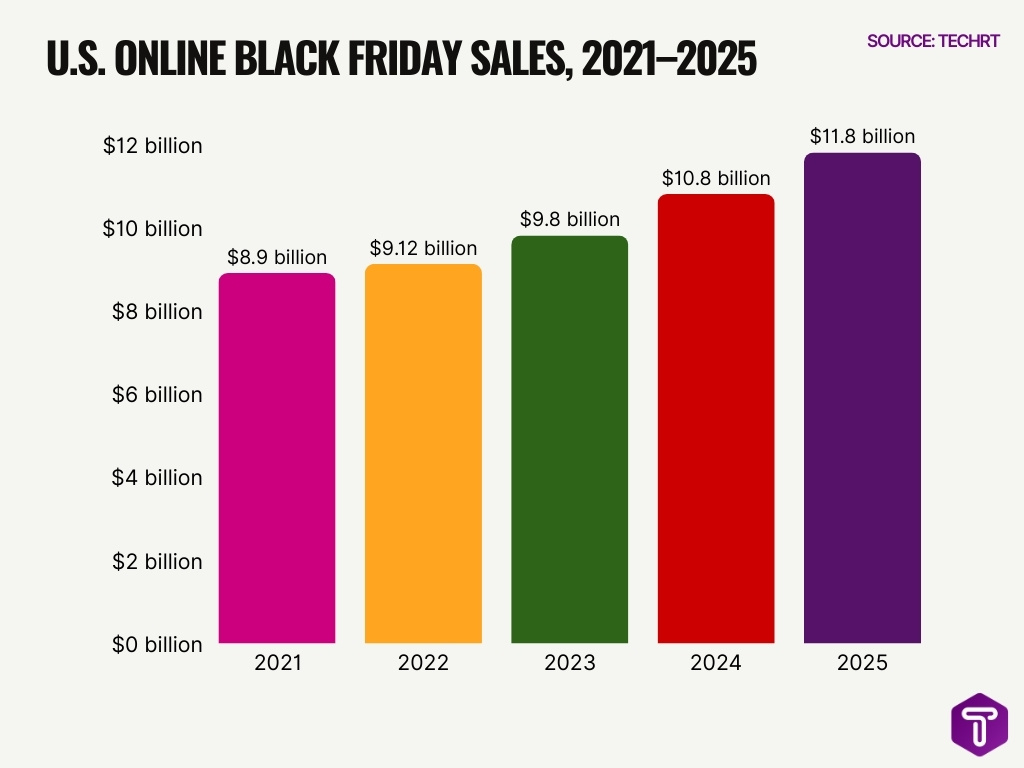
- In 2025, U.S. online Black Friday sales reached $11.8 billion, setting a new record.
- In 2024, online Black Friday sales totaled $10.8 billion in the United States.
- 2023 recorded roughly $9.8 billion in online Black Friday sales, continuing the steady growth trend.
- In 2022, U.S. online sales reached about $9.12 billion during Black Friday.
- 2021 saw approximately $8.9 billion in online Black Friday revenue as e-commerce demand surged.
- Black Friday weekend spending in 2019 reached $68.8 billion across retail categories.
- The number of Black Friday shoppers grew from 165 million in 2018 to around 190 million in 2019, highlighting rapid consumer adoption.
- Long-term data shows that Black Friday has steadily shifted from store-focused sales to digital-first commerce, especially after 2020.
Black Friday Sales Revenue Worldwide
- Global Black Friday online sales totaled approximately $79 billion in 2025, representing 6% annual growth.
- In 2024, worldwide online Black Friday sales reached $74.4 billion, showing consistent growth in global digital commerce.
- Shopify merchants alone generated $6.2 billion in worldwide Black Friday sales, demonstrating the role of independent sellers.
- Global online sales during the broader Cyber Week shopping period often exceed $270 billion, according to industry estimates.
- International markets, including Europe, Latin America, and Asia, now run localized Black Friday promotions, expanding the event beyond the U.S.
- The rapid expansion of cross-border e-commerce means global shoppers increasingly purchase from U.S. retailers during Black Friday events.
- Retailers report significant growth in mobile-first international markets, where shoppers rely on smartphones for holiday purchases.
- Global promotional events modeled after Black Friday now drive significant revenue in markets such as Brazil, the UK, and Germany.
Black Friday Sales Revenue in the United States
- U.S. online Black Friday sales reached $11.8 billion in 2025, the highest ever recorded.
- In 2024, U.S. Black Friday online sales totaled $10.8 billion, showing strong year-over-year growth.
- Industry estimates placed $18 billion in U.S. online Black Friday revenue when accounting for a broader set of retail platforms.
- The holiday shopping season is forecast to generate $1.01 trillion to $1.02 trillion in U.S. retail sales.
- U.S. holiday retail sales in 2024 reached $976.1 billion, a 4.3% increase over 2023.
- Retail sales growth in the U.S. is projected to increase 3.7% to 4.2% in 2025, driven largely by holiday spending.
- Black Friday promotions contribute a significant share of Cyber Week sales, which collectively generate tens of billions in revenue each year.
- Many retailers launch early Black Friday deals weeks before Thanksgiving, increasing total revenue beyond a single shopping day.
Black Friday vs Cyber Monday Shopping Preferences by Generation
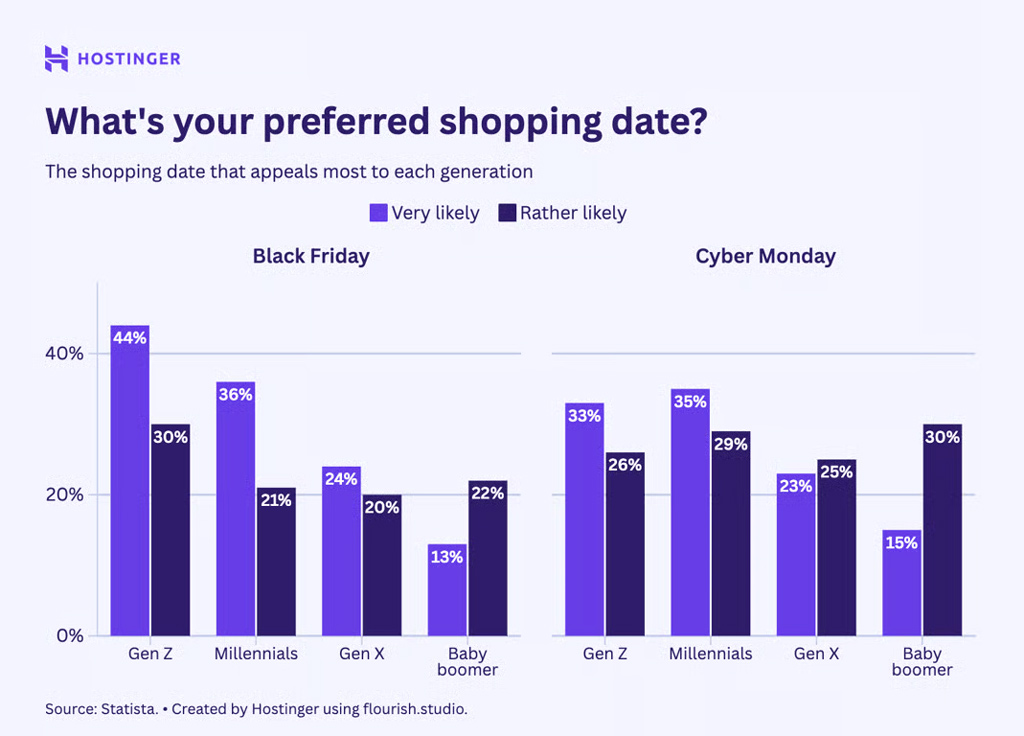
- Gen Z strongly prefers Black Friday, with 44% saying they are very likely to shop on that day, compared to 33% for Cyber Monday. Another 30% are rather likely to shop on Black Friday.
- Millennials show almost equal interest in both events, with 36% very likely to shop on Black Friday and 35% very likely on Cyber Monday, making them the most balanced generation between the two.
- Among Gen X shoppers, 24% are very likely to shop on Black Friday compared to 23% on Cyber Monday, showing only a 1 percentage point difference in preference.
- Baby Boomers are the least likely generation to shop on Black Friday, with only 13% very likely, but 22% still report being rather likely to shop on that day.
- For Cyber Monday, Baby Boomers show stronger moderate interest, with 30% saying they are rather likely to shop, the highest “rather likely” share among all generations.
- Cyber Monday appeals strongly to Millennials, where 35% say they are very likely to shop, the highest “very likely” rate among all generations for this shopping day.
- Overall, younger generations (Gen Z and Millennials) show greater enthusiasm for Black Friday, while older generations, especially Baby Boomers, lean toward Cyber Monday or moderate participation.
- The data highlights a clear generational divide in shopping behavior, with Gen Z leading Black Friday enthusiasm at 44%, while Millennials lead Cyber Monday engagement at 35%.
Black Friday vs Cyber Monday Statistics
- Cyber Monday generated $12.4 billion in U.S. online sales in 2024, surpassing Black Friday’s $9.8 billion online revenue the same year.
- In 2025, Cyber Monday again led with approximately $13 billion in U.S. online sales, while Black Friday recorded about $11.8 billion online.
- Black Friday still drives more total shoppers, with 80+ million in-store shoppers compared to Cyber Monday’s primarily digital audience.
- Around 77% of U.S. consumers say they plan to shop on Black Friday, compared with roughly 61% who plan to shop on Cyber Monday.
- Cyber Monday typically records higher online conversion rates, while Black Friday benefits from both store and online purchases.
- In 2024, average Cyber Monday discounts reached 30% to 35%, compared to 25% to 30% on Black Friday.
- Electronics sales peak on Cyber Monday, while apparel and household goods dominate Black Friday purchases.
- Combined Cyber Week generated over $38 billion in U.S. online sales in 2024.
Black Friday In-Store Shopping Statistics
- In 2025, approximately 80.3 million consumers shopped in physical stores on Black Friday in the United States.
- Around 129.5 million shoppers visited physical stores during Thanksgiving weekend 2025, highlighting continued interest in in-store deals.
- U.S. in-store retail sales increased by 1.7% year over year in 2025, a modest rebound after pandemic declines.
- About 38% of Black Friday shoppers prefer shopping in stores to experience deals and immediate product access.
- Retail foot traffic during Black Friday increased 2% to 3% in many shopping centers in 2024.
- Department stores and electronics retailers remain the most visited store categories during Black Friday.
- Around 40% of in-store shoppers research products online beforehand, demonstrating the rise of omnichannel behavior.
- Retailers continue offering early morning doorbuster deals to attract shoppers to physical locations.
Black Friday Online Shopping Statistics
- U.S. online Black Friday sales reached $11.8 billion in 2025, representing a 9% increase from the previous year.
- In 2024, Black Friday online sales totaled about $10.8 billion in the United States.
- Approximately 87 million Americans shopped online on Black Friday 2025.
- Global online Black Friday spending surpassed $79 billion in 2025, driven largely by e-commerce platforms.
- Between 10 a.m. and 2 p.m. on Black Friday, consumers spent around $12.5 million per minute online.
- Roughly 70% of U.S. shoppers use online channels to research Black Friday deals before making purchases.
- Electronics, toys, and apparel rank among the most searched product categories online during Black Friday.
- Many retailers now release online deals earlier than Black Friday, sometimes weeks in advance.
Black Friday vs Overall Holiday Season Sales
- During the 2024 holiday shopping weekend, millions of consumers shopped both online and in physical stores, highlighting strong omnichannel shopping behavior.
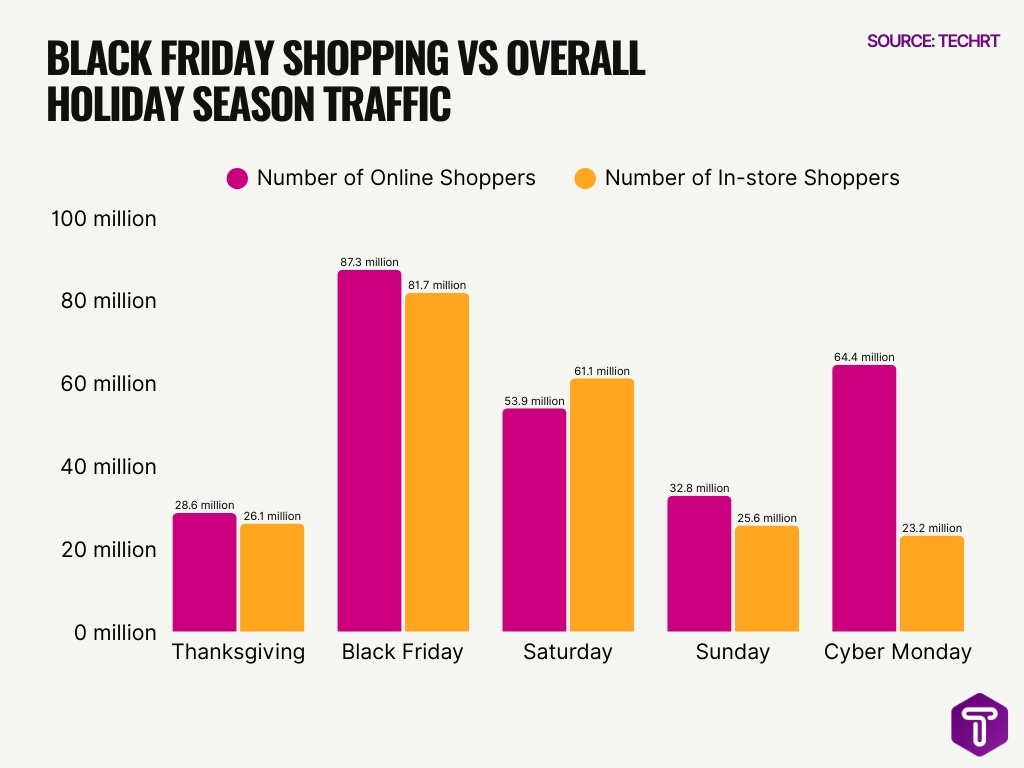
- Black Friday recorded the highest shopping activity, with 87.3 million online shoppers and 81.7 million in-store shoppers, making it the busiest retail day of the holiday season.
- Cyber Monday remained a dominant online shopping day, attracting 64.4 million online shoppers, while only 23.2 million consumers shopped in stores, showing the clear preference for digital deals on this day.
- On Thanksgiving Day, 28.6 million shoppers purchased online, slightly exceeding the 26.1 million people who visited physical stores, reflecting the growing trend of early online holiday shopping.
- The Saturday after Black Friday saw a strong in-store shopping surge, with 61.1 million in-store shoppers, compared to 53.9 million online shoppers, indicating that many consumers still prefer weekend store visits for holiday deals.
- Sunday shopping activity slowed slightly, with 32.8 million online shoppers and 25.6 million in-store shoppers, though it remained an important day in the extended holiday shopping period.
- Overall, the data shows that online shopping dominates on key digital deal days like Cyber Monday, while in-store traffic peaks during Black Friday and the weekend, demonstrating the continued importance of both e-commerce and brick-and-mortar retail during the holiday season.
Mobile Black Friday Shopping Statistics
- Mobile devices accounted for about 57% of U.S. online Black Friday sales in 2025.
- Smartphones generated over $7 billion in mobile commerce sales during Black Friday 2025.
- Mobile traffic represented over 70% of visits to retail websites during Black Friday.
- In 2024, mobile devices accounted for around 54% of online Black Friday purchases.
- Retail apps often see 2 to 3 times higher engagement during Black Friday compared to typical shopping days.
- Consumers increasingly use smartphones to compare prices while shopping in stores.
- Mobile wallets and digital payment tools continue to increase during Black Friday purchases.
- Retailers optimizing mobile checkout flows can improve conversion rates by up to 20% during high-traffic sales events.
Cross-Device and Omnichannel Shopping Statistics
- Around 73% of consumers use multiple devices when researching or purchasing Black Friday deals.
- Nearly 40% of shoppers start browsing on mobile and complete purchases on desktop during Cyber Week.
- Consumers who engage with retailers across multiple channels spend 30% more on average.
- About 65% of shoppers check product availability online before visiting stores on Black Friday.
- Buy Online, Pick Up In Store orders increased over 20% during Black Friday promotions in 2024.
- Retailers using omnichannel strategies report higher customer retention rates during holiday seasons.
- Around 30% of Black Friday shoppers use social media to discover deals or promotions.
- Retailers integrating online and in-store inventory systems reduce lost sales during Black Friday demand spikes.
Black Friday and Cyber Monday Shopping Participation Statistics
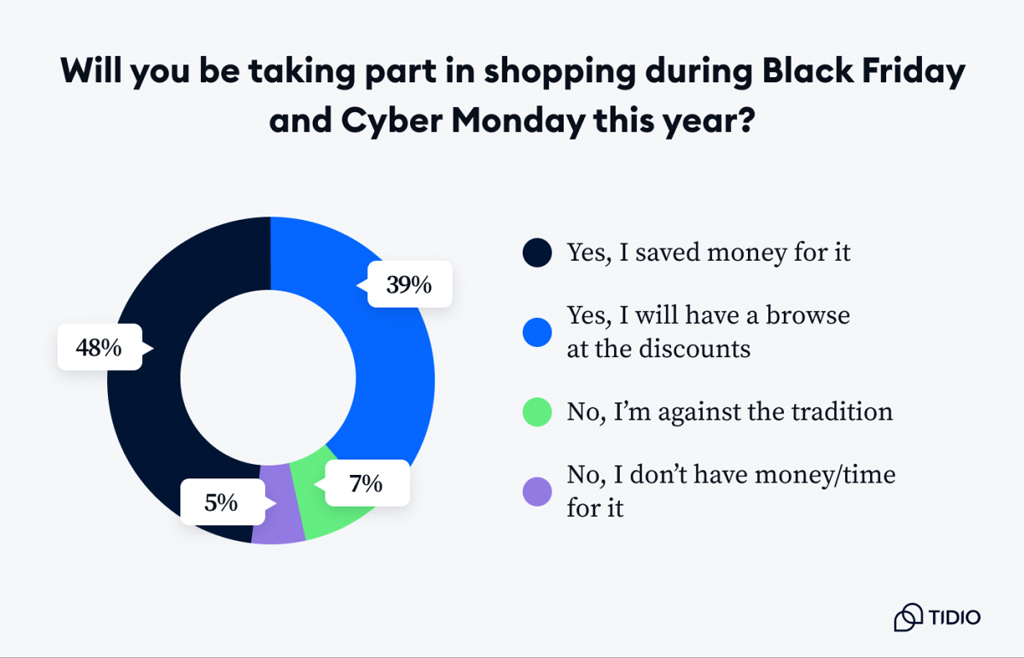
- 48% of consumers say they saved money specifically to shop during Black Friday and Cyber Monday, showing strong planning and anticipation for the biggest retail events of the year.
- Another 39% of shoppers plan to browse discounts and deals, indicating that many consumers participate in the sales even without a fixed purchase plan.
- Only 7% of respondents said they are against the Black Friday shopping tradition, suggesting that resistance to the event remains relatively low.
- Around 5% of people reported they do not have the money or time to participate, highlighting a small group excluded due to financial or time constraints.
- Overall, a massive 87% of consumers show some level of interest in Black Friday and Cyber Monday shopping, either by actively saving money (48%) or planning to browse deals (39%), reinforcing the events’ strong influence on holiday shopping behavior.
Black Friday Traffic and Website Visits
U.S. retail websites tracked over 1 trillion visits annually by Adobe, with Black Friday seeing massive spikes.
- U.S. e-commerce saw 134.9 million online shoppers on Black Friday weekend.
- Ecommerce sites experienced up to 65% traffic surge on Black Friday vs typical Fridays.
- Online stores averaged 103% traffic increase on Black Friday, from 1,999 to 4,062 daily visitors.
- AI-driven traffic to U.S. retail sites surged 805% year-over-year on Black Friday.
- Amazon website visits jumped 90% on Black Friday vs. the prior 30-day average.
- Retailers handled 2 billion visits across 12,000 ecommerce sites on Black Friday globally.
- Peak Black Friday traffic hits between 10 a.m. and 2 p.m. local time.
- One-second website delays cut conversions by up to 7% during high-traffic events.
- Amazon and Walmart saw 90-100% visit increases on Black Friday.
Conversion Rate Statistics on Black Friday
- The average e-commerce conversion rate on Black Friday ranges from 4.5% to 5.2%, significantly higher than the typical retail benchmark of about 2% to 3%.
- Desktop conversion rates during Black Friday average 5% to 6%, while mobile conversions typically range between 2.5% and 3.5%.
- In 2024, U.S. retail websites saw conversion rates increase by roughly 30% compared to average November shopping days.
- Email campaigns sent during Black Friday week often generate conversion rates above 6%, making email one of the most effective marketing channels for holiday promotions.
- Retargeting campaigns during Cyber Week produce conversion rates up to 10%, as shoppers revisit previously viewed products.
- Cart abandonment remains high even during peak periods, with approximately 69% of online carts left uncompleted globally.
- Retailers offering free shipping during Black Friday can improve checkout conversions by up to 20%.
- Faster page load speeds can increase conversion rates by up to 7% for every second saved, especially during high-traffic sales events.
When Do Brands Start Their Holiday Season Promotions?
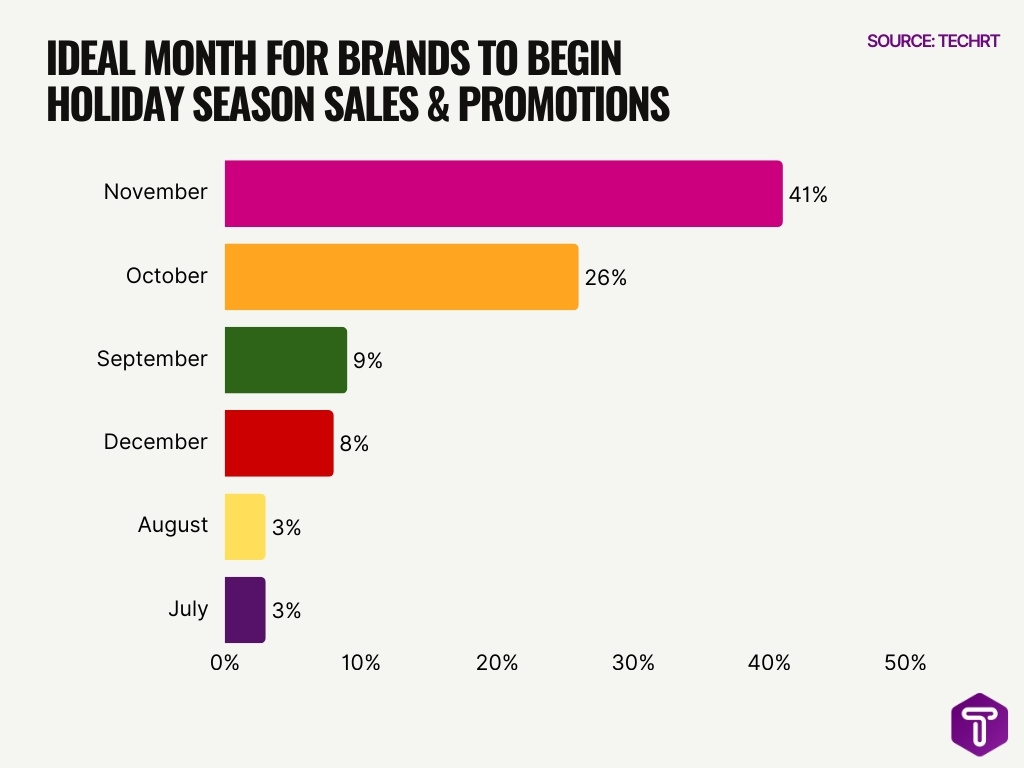
- November is the most popular month, with 41% of brands beginning their holiday sales and promotional campaigns during this period. This timing aligns with major events like Black Friday and Cyber Monday, making it the peak kickoff month for retailers.
- October ranks second, as 26% of brands start their holiday promotions early to build momentum and capture early shoppers before the Black Friday rush.
- Only 9% of brands begin in September, indicating that a smaller portion of retailers launch very early holiday campaigns to extend the shopping season.
- Just 8% of brands start in December, suggesting that most companies prefer launching promotions earlier rather than waiting until the final month of the holiday shopping season.
- August and July see minimal activity, with only 3% of brands each starting their holiday sales campaigns this early.
- Overall, the data shows that 67% of brands launch holiday promotions between October and November, highlighting these two months as the strategic window for preparing and executing Black Friday and Cyber Monday campaigns.
Black Friday Average Order Value Statistics
- The average order value on Black Friday in the U.S. reached about $134 in 2025, reflecting steady growth in consumer spending.
- In 2024, the average online Black Friday order value was approximately $128 per transaction.
- Electronics purchases typically drive higher average order values, often exceeding $300 per order during Black Friday promotions.
- Apparel purchases tend to generate lower average order values of around $80 to $100, as shoppers buy multiple discounted items.
- Retailers using bundled deals during Black Friday can increase average order value by 10% to 15% compared to single product promotions.
- Buy now, pay later services contributed to over $940 million in Black Friday purchases in 2024.
- Consumers using buy now pay later services often spend 15% to 20% more per transaction compared to traditional payment methods.
- Cross-selling and upselling strategies can increase Black Friday order values by up to 30% for online retailers.
Black Friday Marketplace and Platform Statistics
- Amazon captured an estimated ~25–30% of all U.S. Black Friday online spending in 2025, translating to roughly $3–4 billion in GMV on its marketplace alone.
- Shopify merchants generated a record $14.6 billion in global Black Friday–Cyber Monday 2025 sales, up 27% year over year, with peak sales hitting $5.1 million per minute.
- Walmart’s U.S. e‑commerce sales rose around 8–10% on Black Friday 2025, with click‑and‑collect and curbside accounting for an estimated 40%+ of online orders.
- Target’s digital revenue during Cyber Week 2025 climbed an estimated high single digits year over year, with over half of online orders fulfilled via same‑day services such as Drive Up and curbside pickup.
- Third‑party marketplace sellers contributed over 60% of Amazon’s holiday season unit sales in 2024, reflecting the broader trend that marketplaces now drive 60%+ of global e‑commerce transactions.
- Social and social commerce channels influenced roughly 25–30% of Black Friday purchase decisions in 2025, with TikTok, Instagram, and Facebook driving billions of product discovery impressions.
- AI‑driven recommendations and shopping assistants helped drive an estimated $3 billion in U.S. Black Friday 2025 online sales, as retailers used personalized suggestions to lift conversion rates.
- Typical online stores saw traffic spikes of about 2–3x normal levels on Black Friday, with one study reporting a 103% average surge in visitors and nearly 79% higher conversion rates.
- Global online spending on Black Friday 2025 reached $79 billion, up about 6% year over year, while U.S. online sales hit a record $11.8 billion, rising ~9% from 2024.
Black Friday Discounts by Product Category
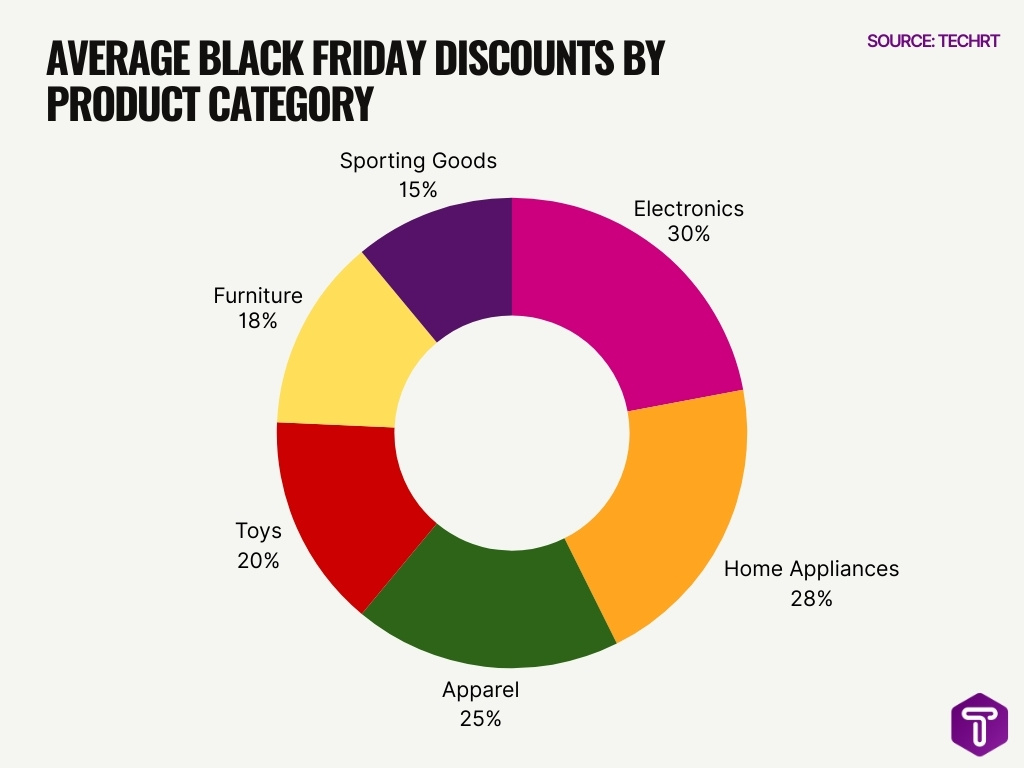
- Electronics offered the largest average discount at 30%, making it the most heavily discounted category during Black Friday sales.
- Home Appliances followed closely with an average discount of 28%, highlighting strong promotional offers on major household devices.
- Apparel saw an average discount of 25%, reflecting aggressive pricing strategies by fashion retailers to boost seasonal sales.
- Toys recorded an average discount of 20%, driven largely by holiday demand for children’s gifts.
- Furniture products were discounted by an average of 18%, showing moderate markdowns compared to other retail categories.
- Sporting Goods had the lowest average discount at 15%, indicating smaller price reductions compared to electronics and apparel.
- Overall, technology and household-related products (electronics and appliances) received the steepest discounts, while lifestyle and recreational categories experienced relatively smaller price cuts during Black Friday promotions.
Forecasts and Future Black Friday Growth Statistics
- Global Black Friday e-commerce sales are projected to surpass $90 billion annually by 2027.
- U.S. online sales on Black Friday are expected to exceed $13 billion within the next few years if current growth trends continue.
- Mobile commerce could account for over 60% of Black Friday online purchases by 2027.
- Artificial intelligence and personalization tools are predicted to increase online retail conversion rates by 10% to 15% during future holiday events.
- Buy now, pay later services are forecast to exceed $100 billion in global transaction value during holiday shopping seasons by 2027.
- Cross-border e-commerce is expected to grow rapidly, allowing international shoppers to participate in U.S. Black Friday promotions.
- Retailers will increasingly use AI-powered inventory forecasting to avoid stock shortages during peak shopping days.
- The Black Friday sales window will likely continue expanding, with promotions starting earlier each year.
Frequently Asked Questions (FAQs)
How much did U.S. consumers spend online on Black Friday 2025?
How many people shopped online on Black Friday in 2025?
How much was spent globally online during Black Friday 2025?
What is the typical conversion rate during Black Friday compared with normal days?
How much do shoppers plan to spend during the Black Friday–Cyber Monday weekend?
Conclusion
Black Friday remains one of the most influential events in the global retail calendar. What began as a single day of in-store promotions has evolved into a multi-week shopping season driven by digital commerce, mobile devices, and omnichannel retail strategies. The data shows strong growth in online spending, rising mobile usage, and increasing reliance on marketplaces and AI-powered retail tools.
For businesses, these statistics highlight the importance of optimizing website performance, mobile checkout experiences, and omnichannel fulfillment strategies. For consumers, Black Friday continues to deliver significant savings across electronics, apparel, and household products. As e-commerce technology advances and global participation expands, Black Friday is expected to remain a major driver of retail revenue for years to come.

Leave a comment
Have something to say about this article? Add your comment and start the discussion.