



Artificial intelligence now shapes hiring systems, medical diagnostics, fraud detection, customer service, and content moderation at scale. However, rapid AI adoption has also increased concerns about bias, misinformation, transparency, and accountability across industries. Governments, enterprises, and researchers are investing heavily in responsible AI frameworks as public scrutiny grows. This article explores the latest AI ethics and bias statistics, highlighting how organizations and regulators are responding to one of technology’s most urgent challenges.
Editor’s Choice
- 74% of organizations identified inaccurate AI outputs as a major risk in 2026, while 72% pointed to cybersecurity concerns.
- Global investments in responsible AI and AI ethics initiatives are projected to exceed $10 billion in 2025.
- Only 31% of Americans trust the US government to regulate AI effectively, one of the lowest trust levels globally.
- AI-related incidents increased by 50% between 2022 and 2024, with 2025 already surpassing 2024 incident levels by October.
- Nearly 95% of executives reported experiencing at least one AI-related mishap at work in 2025.
- Around 57% of employees admitted they hide AI use from employers, often due to policy uncertainty or fear of job replacement.
- 52% of organizations implemented formal workplace AI policies in 2025 as governance concerns intensified.
- Twelve major AI companies had published frontier AI safety frameworks by late 2025.
Recent Developments
- The EU AI Act entered its enforcement phase in 2025, introducing stricter compliance rules for high-risk AI systems.
- Several governments proposed mandatory disclosure rules for AI training datasets in 2025 and 2026.
- A global AI ethics recommendation now applies across 194 member states, making it one of the broadest international AI governance frameworks.
- AI-generated deepfake incidents surged sharply during 2025, especially involving political and explicit content.
- One analysis found users generated roughly 6,700 AI-generated explicit images per hour using a popular chatbot platform in early 2026.
- Global enterprises collectively lost around $4.4 billion from AI-related compliance failures, flawed outputs, and bias issues in 2025.
- Around 83% of enterprises planned to increase AI spending despite rising ethical concerns and failed pilot programs.
- Nearly 49% of organizations increased employee reskilling initiatives to support responsible AI adoption.
- Several major AI vendors paused or modified generative AI features after misinformation and political manipulation concerns emerged in 2025.
Global Overview of AI Ethics and Bias
- AI ethics is a global challenge affecting human rights, equality, and democratic governance.
- A recent AI report revealed a 50-point gap between experts and the public in optimism about AI’s impact on the workplace.
- 73% of AI experts expect AI to improve jobs, compared with only 23% of the public.
- Global surveys show emerging economies report higher trust in AI than advanced economies.
- Researchers identified at least 13 major application areas where unethical AI incidents frequently occur.
- Autonomous driving, language models, and service robots rank among the most common categories linked to AI ethics incidents.
- International regulators increasingly classify AI systems using risk-based frameworks instead of blanket regulation.
- AI governance discussions now include environmental impact, labor displacement, misinformation, and biometric privacy concerns.
- More than half of organizations surveyed globally adopted AI primarily due to competitive pressure instead of a long-term strategy.
- Researchers continue to identify racial discrimination, unfair algorithms, and privacy violations as leading AI ethics issues worldwide.
Major AI Ethics Concerns
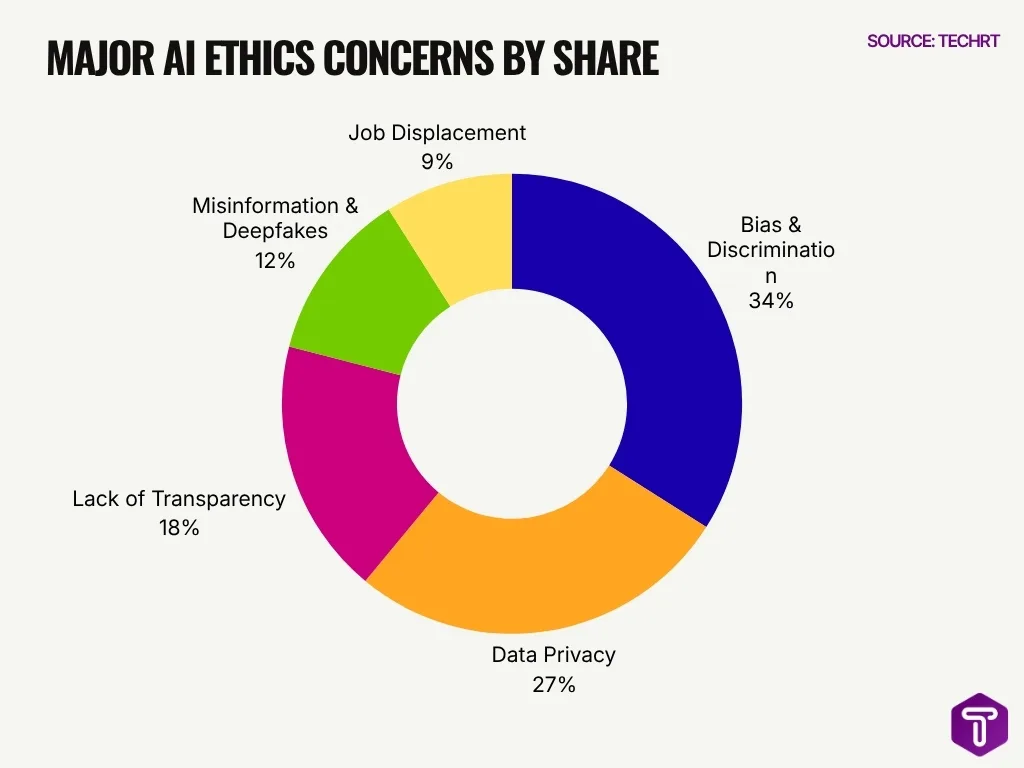
- Bias & Discrimination is the top ethical concern in AI, accounting for 34% of the total share.
- Data Privacy ranks second at 27%, showing that users and organizations remain highly concerned about how AI systems collect, store, and use personal data.
- Together, Bias & Discrimination and Data Privacy make up 61% of all listed AI ethics concerns.
- Lack of Transparency represents 18%, highlighting the need for clearer explanations of how AI models make decisions.
- Misinformation & Deepfakes account for 12%, reflecting growing worries about AI-generated fake content and manipulated media.
- Job Displacement has the lowest share at 9%, but it remains an important concern as automation affects more industries.
- The data shows that the biggest AI ethics risks are linked to fairness, privacy, and accountability, rather than only economic disruption.
- Overall, the chart suggests that building trustworthy AI requires stronger controls around bias reduction, data protection, and model transparency.
Adoption of AI Ethics Policies in Organizations
- Around 52% of organizations have introduced formal AI ethics policies as part of their workplace guidelines in 2025.
- Roughly only 2% of companies are classified as meeting mature responsible‑AI deployment standards in global surveys.
- Nearly 9 out of 10 surveyed billion‑dollar enterprises say they have experienced some financial loss linked to AI governance issues.
- Enterprises with mature AI ethics frameworks report up to 23% higher employee satisfaction and over 15% better sales outcomes compared to peers.
- About 44% of large enterprises increased their AI‑ethics training budgets by more than 20% in 2024–2025.
- Over 60% of businesses now require mandatory human oversight for high‑risk AI decisions as part of governance frameworks.
- Around 89% of firms investing in AI say they maintain audit logs and model documentation for ethical and compliance purposes.
- Approximately 67% of organizations have embedded fairness audits and bias‑risk scoring into their AI‑development pipelines.
- Nearly three‑quarters of Fortune‑500 companies now use multi‑stakeholder AI governance boards, including legal, technical, and ethics teams.
- Researchers estimate that over 70% of AI‑ethics awareness among developers is driven by formal workplace rules and organizational policies.
Prevalence of Documented AI Bias Incidents
- AI incident reports increased by more than 50% between 2022 and 2024.
- By October 2025, AI incident databases had already exceeded total incident counts recorded in 2024.
- Researchers identified racial discrimination as one of the most frequently documented AI ethics violations.
- Hiring systems remain one of the highest-risk areas for algorithmic bias complaints.
- A University of Washington study found humans often reinforced biased AI hiring recommendations instead of correcting them.
- Deepfake abuse incidents involving AI-generated explicit imagery surged during late 2025 and early 2026.
- Misinformation, scams, and harmful chatbot interactions emerged as fast-growing AI incident categories in 2025.
- Researchers reported that many AI harm incidents still go undocumented due to inconsistent reporting standards.
- Autonomous systems, facial recognition tools, and generative AI platforms remain heavily represented in AI ethics controversies.
- Governments and regulators are increasingly requiring mandatory reporting for severe AI incidents and harms.
Types of Bias in AI Systems
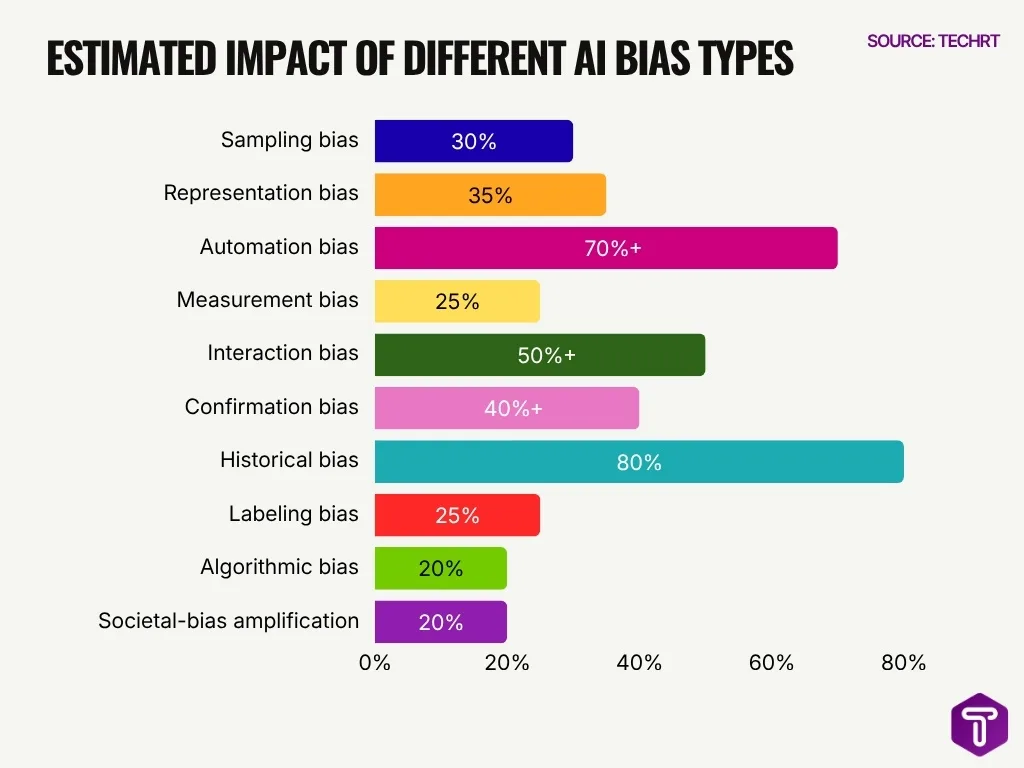
- Sampling bias causes up to 30% of model errors in non‑representative datasets used for hiring and loan‑approval systems.
- Representation bias leads some facial‑recognition systems to perform up to 30–40% worse on darker‑skinned individuals than on lighter‑skinned users.
- Automation bias makes users accept over 70% of flawed AI recommendations when interfaces present them as highly confident.
- Measurement bias distorts fairness metrics by up to 25% when AI relies on proxy variables instead of true outcome indicators.
- Interaction bias in public generative‑AI chatbots grew by more than 50% between 2023 and 2026 as usage expanded.
- Confirmation bias in AI‑assisted workflows affects over 40% of decisions in customer‑service and legal‑review pipelines.
- Historical bias persists in nearly 80% of credit and hiring models trained on decades of human‑driven decision logs.
- Labeling bias accounts for around 20–30% of fairness‑related errors when large‑scale annotations are outsourced without strict oversight.
- Algorithmic bias in high-stakes domains such as healthcare can increase misclassification rates by up to 15–20% for underrepresented groups.
- Societal‑bias amplification through AI has been linked to roughly 10–20% higher adverse outcomes for marginalized communities in policing and welfare systems.
Data Collection and Sampling Bias in AI
- Around 80% of AI development work involves collecting, labeling, and preparing training data.
- Sampling bias occurs when datasets fail to reflect real-world demographic diversity.
- Researchers found several medical AI datasets underrepresent minority populations, reducing diagnostic accuracy.
- AI language datasets continue to overrepresent English-language content despite billions of non-English internet users worldwide.
- An analysis found that many benchmark datasets contain geographic concentration bias toward North America and Europe.
- Researchers reported that image datasets frequently underrepresent older adults and people with disabilities.
- Data imbalance contributes to higher false-positive rates in predictive policing and fraud detection systems.
- Around 38% of AI practitioners identified poor-quality training data as their largest fairness challenge in 2025.
- Synthetic data usage increased sharply in 2025 and 2026 as firms attempted to reduce demographic imbalance.
- Researchers warn that synthetic data can still inherit hidden bias patterns from original datasets.
Algorithmic Bias in Model Training and Design
- 83% of neuroimaging AI models for psychiatric diagnosis carry high bias risk from imbalanced training data.
- 66% of US adults express great concern over AI-biased decisions in model outputs.
- 72% of companies reported AI risks, including bias, in 2025, up from 12% in 2023.
- Only 13% of companies actively test generative AI for bias despite widespread use.
- 83.1% of neuroimaging models showed high bias risk, with 71.7% using inadequate samples.
- LLMs are 6.8x more likely to assign female stereotypical occupations in prompts.
- 55% of AI experts worry about biased AI decisions amplifying discriminatory outcomes.
- Only 20% of organizations conduct formal bias testing on AI models in use.
- Algorithms trained on 80% majority class data achieve 80% accuracy by ignoring minorities.
- 34% of marketers report that generative AI produces biased information in training designs.
Industries Facing the Highest AI Bias Concerns
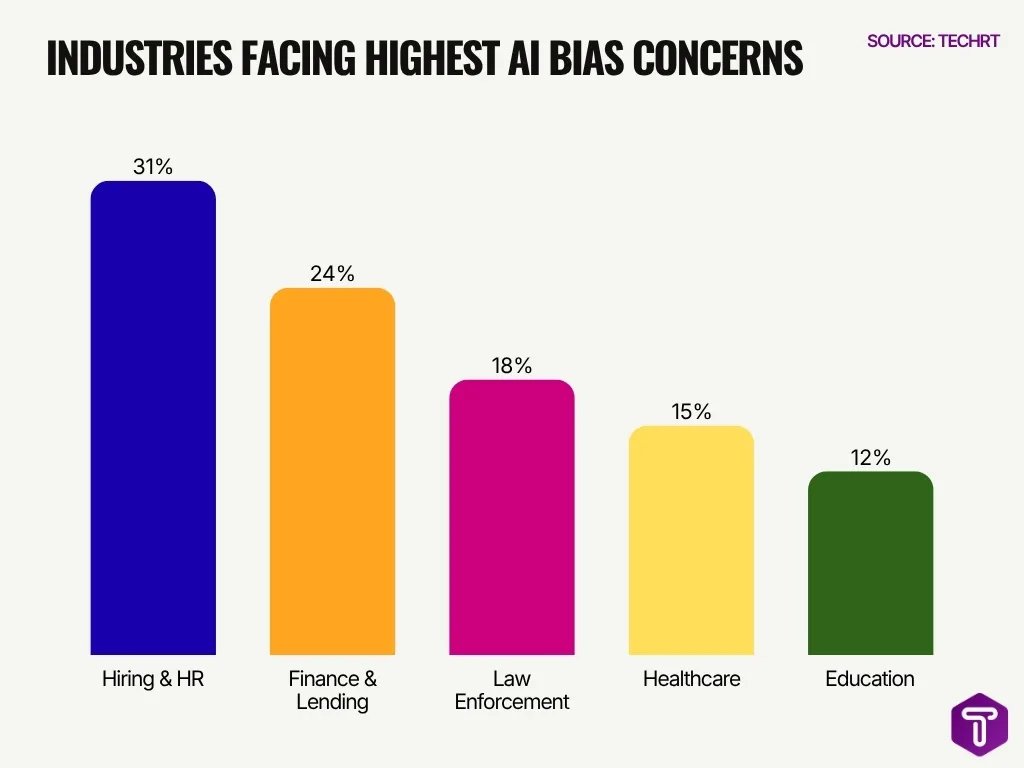
- Hiring & HR has the highest level of AI bias concern, accounting for 31% of the total share.
- This suggests that AI tools used in resume screening, candidate ranking, and recruitment decisions face the strongest scrutiny for potential bias.
- Finance & Lending ranks second, with 24% of concerns linked to AI bias in areas such as loan approvals, credit scoring, and risk assessment.
- Law Enforcement represents 18% of AI bias concerns, highlighting ongoing worries around predictive policing, surveillance, and facial recognition systems.
- Healthcare accounts for 15% of the share, showing that bias in AI-driven diagnosis, treatment recommendations, and patient risk prediction remains a major issue.
- Education has the lowest share among the listed sectors at 12%, but concerns still exist around student assessment, admissions, and personalized learning systems.
- Together, Hiring & HR and Finance & Lending make up 55% of all listed AI bias concerns, indicating that employment and financial access are the most sensitive areas.
- The data shows that AI bias is most concerning in industries where automated decisions can directly affect jobs, money, legal outcomes, healthcare access, and education opportunities.
Demographic Bias in AI Outcomes
- Facial‑recognition systems show error rates up to 34.7% for darker‑skinned women versus under 1% for lighter‑skinned men.
- Speech‑recognition systems can exhibit up to 16% higher word‑error rates for non‑native or regional accents compared with standard accents.
- AI‑based hiring tools have shown up to 39% fairer outcomes for women and up to 45% fairer outcomes for racial minorities than human‑led processes.
- Around 15% of AI systems in hiring fail to meet fairness metrics for at least one demographic group when tested.
- Generative AI image models depict people of color in professional roles between 20% and 40% less often than white individuals in benchmark prompts.
- AI‑assisted healthcare algorithms trained mainly on European‑ancestry data can underperform by up to 30% in accuracy for minority groups.
- In translation and language‑based AI, gender‑stereotyped job associations appear in over 60% of tested occupational terms.
- Nearly 62% of Americans report concern that AI will worsen discrimination in hiring and policing, up from about 40% in 2023.
- Demographic bias testing now reveals performance gaps of 10–20 percentage points across age, gender, and skin‑tone groups in deployed AI.
- Over 75% of HR leaders now rank demographic bias as a top concern when adopting new AI talent‑acquisition tools.
AI Misinformation and Content Quality Concerns
- AI-generated misinformation doubled in the last two years, per a 2025 World Economic Forum report.
- Deepfake incidents surged to 179 in Q1 2025 alone, up 19% over all of 2024.
- AI misleading posts gained 8.19% more impressions and 20.54% more reposts than non-AI ones.
- 70% of respondents struggle to trust online info due to the inability to detect AI generation.
- 66% of workers have mistaken AI-generated content for human-written work.
- AI search engines inaccurately cited news sources over 60% of the time.
- AI hallucinations caused $67.4 billion in global business losses in 2024.
- Fact-checking articles on AI content hit a record 10% in August 2025.
- The AI content detection software market is valued at $1.79 billion in 2025.
Organizations Reporting Bias in Generative AI Outputs
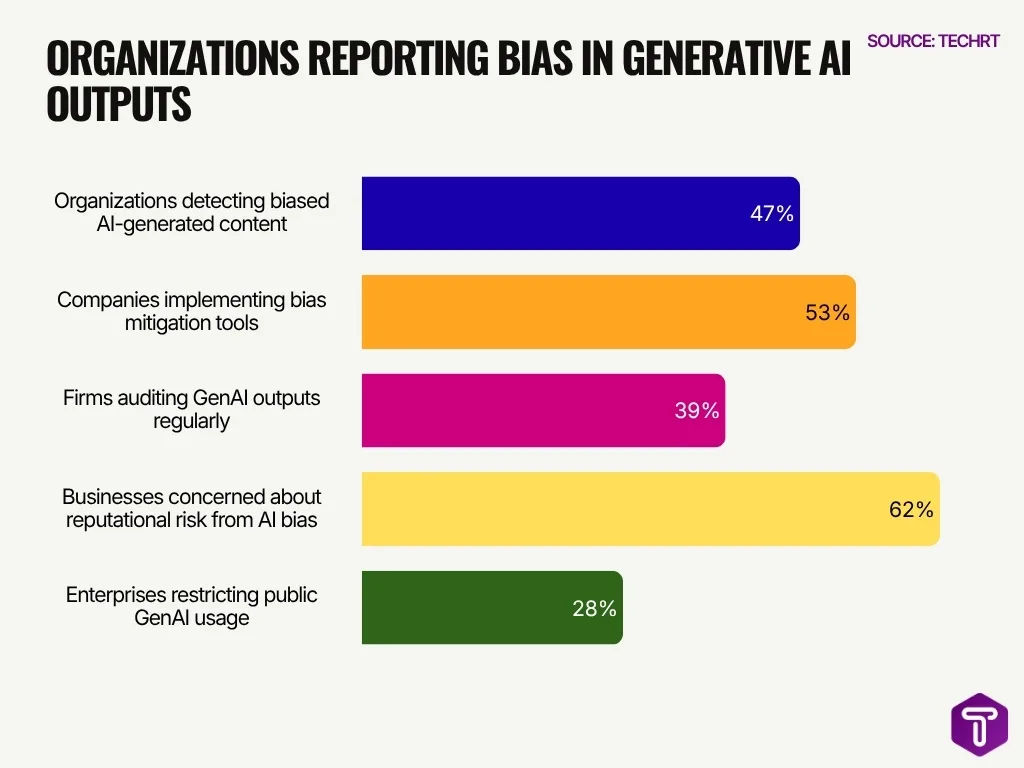
- Reputational risk is the top concern, with 62% of businesses worried that AI bias could damage their brand image, customer trust, or public credibility.
- Bias mitigation is gaining traction, as 53% of companies have implemented tools or processes to reduce biased outputs from generative AI systems.
- Nearly half of organizations, 47%, report detecting biased AI-generated content, showing that bias remains a significant operational and ethical challenge.
- Only 39% of firms audit GenAI outputs regularly, suggesting that many organizations may still lack consistent oversight or monitoring practices.
- 28% of enterprises restrict public GenAI usage, indicating that some businesses are responding to bias and risk concerns by limiting employee access to public AI tools.
- The data suggests a gap between awareness of AI bias risks and formal governance practices, since concern about reputational harm is much higher than regular auditing.
- Overall, organizations appear to be moving toward bias mitigation, but stronger AI governance, auditing, and risk management may be needed to ensure responsible GenAI adoption.
AI Fairness and Bias Measurement Metrics
- Equalized odds require equal true positive rates and false positive rates across demographic groups in AI models.
- Demographic parity achieves fairness when positive prediction rates are independent of sensitive group membership.
- Face recognition algorithms show 10-100x higher false positives for Asian and African American faces versus Caucasians.
- Only 39% of production AI systems undergo regular fairness testing across demographic groups.
- 72% of enterprises run at least one AI workload in production, with fairness checks increasingly integrated.
- AI Fairness 360 toolkit supports over 70 fairness metrics for bias detection and mitigation.
- 52% of enterprises have formal generative AI governance policies, including fairness evaluations.
- EU AI Act mandates risk assessments for high-risk AI systems in health, finance, and security.
- Disparate impact ratios below 0.8 between groups trigger legal concerns in AI fairness audits.
- 55% of large EU enterprises use AI versus 17% of small firms, highlighting fairness adoption gaps.
Explainability and Transparency Statistics in AI Systems
- Over 75% of enterprises now consider explainability a requirement for deploying AI in regulated sectors.
- Explainable AI (XAI) tools are adopted in roughly 60% of new healthcare diagnostic AI systems to justify clinical decisions.
- More than 68% of AI practitioners report that model transparency improves internal audit and compliance review efficiency.
- Financial services firms using explainable credit‑risk models see up to 30% higher regulatory approval rates.
- Around 64% of organizations now collect and retain model documentation for every mission‑critical AI deployment.
- Organizations using model cards and data sheets report over 45% better understanding of model limitations by non‑technical stakeholders.
- In black‑box AI systems, over 70% of users express low trust without clear reasoning explanations.
- EU‑based AI deployments under the AI Act regime must provide explainability for high‑risk systems in a fully documented form.
- Large language models with over 1 billion parameters remain less than 25% interpretable using standard XAI techniques.
- Firms publishing AI transparency reports report roughly 50% higher user acceptance of automated decisions compared with opaque systems.
AI Hiring Bias by Age Group
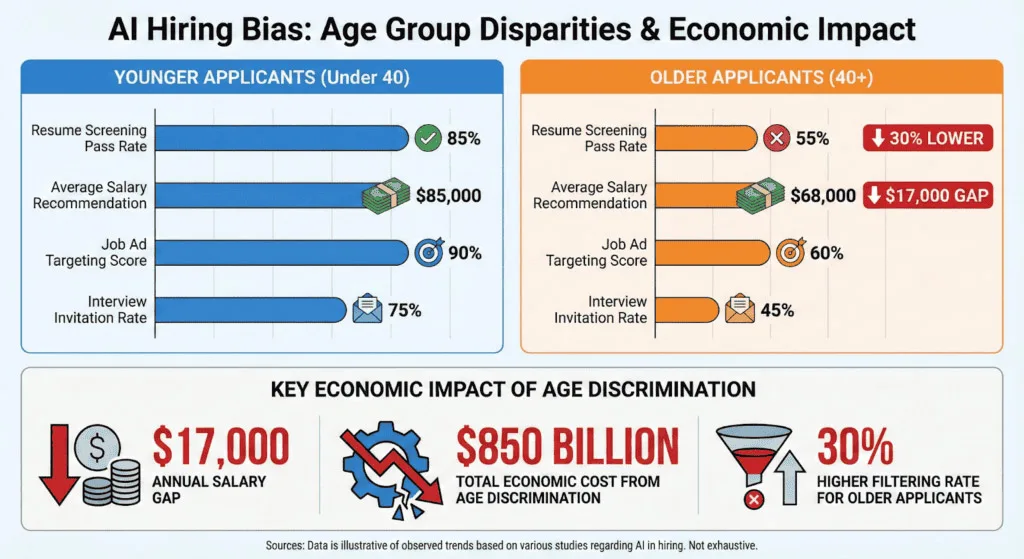
- AI-based hiring systems show a clear disparity between younger applicants under 40 and older applicants aged 40+ across resume screening, job ad targeting, salary recommendations, and interview invitations.
- Younger applicants have a much higher resume screening pass rate of 85%, compared with only 55% for older applicants.
- Older applicants experience a 30% lower resume screening pass rate, suggesting that AI hiring tools may filter out candidates aged 40+ more aggressively.
- The average salary recommendation is also lower for older applicants, with younger applicants recommended at $85,000 compared with $68,000 for older applicants.
- This creates a significant annual salary gap of $17,000, highlighting how AI-driven hiring decisions can influence long-term earnings.
- Younger applicants receive a job ad targeting score of 90%, while older applicants receive only 60%, showing a 30 percentage-point gap in job visibility.
- The interview invitation rate is also much higher for younger applicants at 75%, compared with 45% for older applicants.
- This means older applicants may face reduced access to interviews even before a human recruiter reviews their qualifications.
- The chart estimates the total economic cost of age discrimination at $850 billion, showing that hiring bias can have a broad financial impact beyond individual applicants.
- Older applicants face a 30% higher filtering rate, which may reduce their chances of being considered for suitable roles.
- Overall, the data suggests that AI hiring bias can affect career opportunities, salary outcomes, and economic mobility for older workers.
Human Oversight and Accountability in AI Decision-Making
- Around 71% of enterprises require human review before final AI‑driven decisions in sensitive workflows.
- Roughly 48% of enterprises established dedicated AI governance committees by 2026 to enforce human oversight.
- In surveyed healthcare settings, more than 60% of institutions mandate physician review for AI‑generated diagnoses or treatment plans.
- About 64% of executives report that AI recommendations are routinely double‑checked by human decision‑makers in high‑risk areas.
- Studies show that after repeated exposure to AI suggestions, human critical‑thinking performance drops by up to 22% over several months.
- Nearly two‑thirds (66%) of legal and compliance teams insist on clear human accountability for harmful outcomes of AI‑driven decisions.
- Following new regulations, over 55% of public‑sector AI systems now embed a mandatory human override step for critical decisions.
- Research indicates that human‑in‑the‑loop (HITL) governance models reduce AI‑related incidents by about 38% in high‑risk deployments.
- In large‑scale generative AI moderation operations, human oversight costs rose by an average of 27% as organizations expanded global review teams.
- Surveys reveal that 73% of AI ethics experts recommend continuous human supervision for autonomous and self‑learning AI decision‑making systems.
Legal and Regulatory Actions Related to AI Bias
- EU AI Act imposes fines up to €35 million or 7% of global turnover for prohibited high-risk AI practices like biometric surveillance.
- 45 US states introduced over 1,561 AI-related bills by March 2026, focusing on bias, hiring, and deepfakes.
- FTC brought at least a dozen AI-washing enforcement cases in 2025, targeting deceptive claims in consumer AI products.
- AI class actions in the US are expected 40% growth in 2025, driven by bias, privacy, and IP disputes.
- Over 70 AI copyright infringement lawsuits filed by the end of 2025, more than doubling from 2024 totals.
- At least 72 countries proposed over 1,000 AI policy initiatives by early 2026, addressing safety and governance.
- Facial recognition is classified as high-risk or prohibited under the EU AI Act, requiring strict bias checks and oversight.
- India proposed mandatory watermarking covering 10% of AI-generated content surface for synthetic media traceability.
Key Data Issues in Neuroimaging-Based AI Models
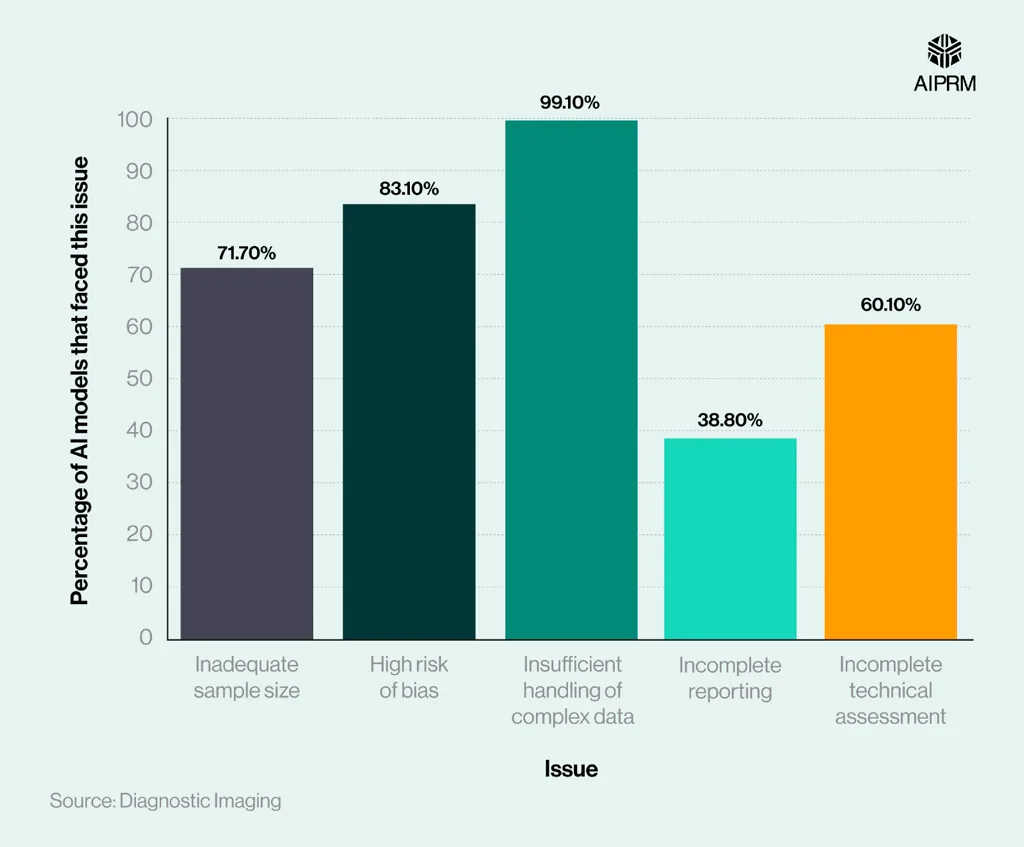
- Insufficient handling of complex data was the most common issue, affecting 99.10% of neuroimaging-based AI models.
- High risk of bias was also widespread, reported in 83.10% of AI models.
- Inadequate sample size affected 71.70% of models, showing that many AI systems may be trained or tested on limited datasets.
- An incomplete technical assessment was found in 60.10% of models, suggesting gaps in how model performance and reliability were evaluated.
- Incomplete reporting was the least reported issue, but still appeared in 38.80% of AI models.
- The data shows that nearly all neuroimaging-based AI models struggled with handling complex data, making it the biggest concern in this category.
- More than 8 in 10 models faced a high risk of bias, which can reduce trust in AI-driven diagnostic or clinical decisions.
- Over 7 in 10 models had inadequate sample sizes, increasing the risk of unreliable or less generalizable results.
- These findings highlight the need for stronger data quality standards, better bias controls, and more transparent model evaluation in neuroimaging AI.
Future Outlook on AI Ethics, Bias, and Regulation
- The AI governance market is projected to reach $5.64 billion by 2030 from $750 million in 2024, implying 40% annualized growth.
- The responsible AI market is forecast to hit $10.26 billion by 2030 with a 45.3% CAGR from 2025 to 2030.
- The broader AI policy and standards market is expected to expand by $509.3 billion from 2026 to 2030, at a 38.4% CAGR.
- There are already more than 2,083 AI governance initiatives worldwide, including 426 adopted policies and 259 laws, showing regulation is spreading fast.
- Global AI rules remain fragmented, with over 70 countries having AI strategies but only about 27 countries enacting binding AI-specific laws.
- High-risk AI systems face the strictest controls, including risk management, data governance, technical documentation, record-keeping, and human oversight requirements.
- Transparency rules are tightening, and high-risk systems must provide detailed information on functioning, limitations, data sources, and potential biases.
- In one global transparency dataset, nearly 90% of companies had no named AI governance framework, while only 13% had a human-oversight policy.
- 77% of employers globally plan to upskill their workforce in response to AI by 2030, with finance, healthcare, and the public sector among the strongest demand areas.
- International coordination is being pushed to reduce fragmentation because divergent national rules raise compliance costs, market barriers, and innovation constraints.
Frequently Asked Questions (FAQs)
What percentage of organizations identified inaccurate AI outputs as a major risk in 2026?
How much did AI-related incident reports increase between 2022 and 2024?
What share of Americans trust conversational AI systems in 2025?
How many UNESCO member states adopted the global AI ethics recommendation?
What was the estimated financial loss from AI governance and bias issues in 2025?
Conclusion
AI ethics and bias have shifted from academic discussions to mainstream business and policy priorities. Organizations now face growing pressure to balance innovation with fairness, transparency, accountability, and security. At the same time, governments worldwide continue to introduce regulations aimed at reducing harmful AI outcomes and improving public trust.
The statistics throughout this report show that AI adoption is accelerating even as concerns around bias, misinformation, and governance intensify. Enterprises are investing more heavily in responsible AI frameworks, fairness testing, human oversight, and explainability tools to manage operational and reputational risk. Meanwhile, researchers continue to uncover demographic disparities and hidden biases in generative AI systems, hiring algorithms, healthcare tools, and predictive models.
Looking ahead, AI ethics will likely become a core requirement for enterprise competitiveness rather than a secondary compliance issue. Companies that prioritize transparent governance, inclusive datasets, and accountable AI systems will be better positioned to maintain consumer trust and meet future regulatory standards.

Leave a comment
Have something to say about this article? Add your comment and start the discussion.