



Bio-digital convergence blends biology with computing, artificial intelligence, and engineering to reshape how modern industries operate. It enables healthcare providers to deliver precision medicine tailored to individual genetic profiles, while pharmaceutical companies use AI-powered models to shorten drug discovery cycles and reduce development costs. Beyond healthcare, this convergence also influences agriculture, environmental monitoring, and advanced manufacturing by turning biological data into actionable digital insights.
As organizations continue to integrate biological systems with digital infrastructure, the speed, accuracy, and scalability of innovation are improving significantly. The following statistics highlight how bio-digital convergence is evolving and why it matters across industries.
Editor’s Choice
- The global bioconvergence market is expected to reach $175.26 billion in 2026, up from $158.2 billion in 2025.
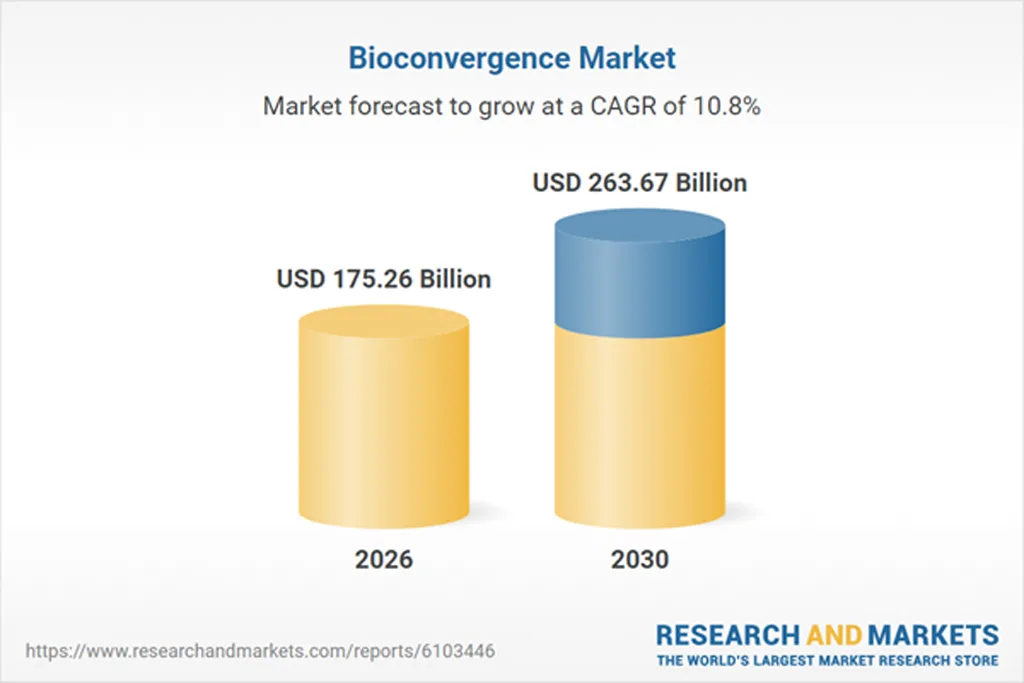
- The market is projected to hit $263.67 billion by 2030, growing at a CAGR of 10.8%.
- Healthcare bioconvergence alone reached approximately $153.21 billion in 2025.
- Bioelectronics accounted for 31.58% of the market share in 2024, highlighting strong device integration trends.
- AI in biotechnology is projected to grow from $4.6 billion in 2025 to $11.4 billion by 2030.
- The FDA approved 26 personalized medicines in 2023, more than double the 2022 levels.
- North America remains the largest regional market, while Asia-Pacific shows the fastest growth.
Recent Developments
- Cross-industry partnerships between chipmakers and biotech firms have increased by over 25% since 2023, accelerating innovation.
- AI-driven drug discovery platforms reduced early-stage research timelines by 30% to 50% in 2024.
- The number of digital health startups integrating biological data exceeded 3,500 globally in 2025.
- Investment in synthetic biology startups crossed $18 billion globally in 2024, showing strong VC confidence.
- Bio-digital clinical trials using remote monitoring increased by 40% year-over-year in 2025.
- Real-time diagnostic tools using AI and biosensors improved early disease detection rates by up to 20%.
- Digital therapeutics adoption expanded rapidly, with the market reaching $9 to $10 billion in 2025.
- Integration of genomics into clinical workflows grew by 35% across US hospitals in 2024.
- Cloud-based bioinformatics platforms saw over 60% adoption among biotech firms in 2025.
Definition and Scope of Bio-Digital Convergence
- Bio-digital convergence integrates biology, data science, AI, and engineering into unified systems.
- The scope includes applications such as precision medicine, bioinformatics, and smart implants.
- The market covers products like lab-on-a-chip devices and bioengineered tissues.
- Bio-digital systems enable real-time patient monitoring and adaptive therapies.
- The convergence supports data-driven healthcare decision-making at scale.
- It reduces drug development costs by up to 25% through automation and AI integration.
- Personalized medicine solutions driven by convergence are expected to grow at double-digit rates through 2030.
- Bio-digital tools are increasingly used in agriculture, environmental monitoring, and industrial biotech.
- The field also includes bioelectronics, nanotechnology, and synthetic biology platforms.
Global Bioconvergence Market Growth Insights
- The global bioconvergence market is projected to reach $263.67 billion by 2030, showcasing strong expansion potential.
- In 2026, the market size is estimated at $175.26 billion, indicating a solid baseline for future growth.
- The market is expected to grow at a compound annual growth rate (CAGR) of 10.8%, reflecting rapid technological advancement and adoption.
- The increase of over $88 billion between 2026 and 2030 highlights significant investment and innovation momentum in the sector.
- This growth is driven by rising integration of biotechnology, digital technologies, and AI, accelerating next-generation healthcare and life sciences solutions.
- The consistent upward trend suggests strong long-term opportunities for stakeholders, including investors, startups, and research organizations.
Key Drivers of Bio-Digital Convergence
- Rising demand for personalized medicine continues to fuel market growth globally.
- Advances in genomics have reduced sequencing costs by over 90% in the last decade.
- AI adoption in life sciences has increased by over 50% among large pharma companies in 2025.
- Increased healthcare data generation, expected to reach 2,314 exabytes by 2025, drives analytics demand.
- Government funding for biotech innovation exceeded $45 billion globally in 2024.
- Growth in wearable health devices has surpassed 1 billion active devices worldwide in 2025.
- Demand for faster drug development cycles has pushed AI adoption rates up by over 40% in R&D pipelines.
- Integration of nanotechnology in medicine is projected to grow at 12% CAGR through 2030.
- Increasing chronic disease prevalence affects over 60% of US adults, boosting demand for advanced diagnostics.
Genomics, AI, and Personalized Medicine Statistics
- The global genomics market reached $36.2 billion in 2024 and is expected to exceed $94 billion by 2030.
- The cost of whole genome sequencing has dropped to under $600 in 2025, compared to $100,000+ in 2001.
- Personalized medicine accounted for over 40% of new drug approvals in 2023.
- More than 300 million people globally have had their genomes sequenced as of 2025.
- AI-driven genomics tools improve diagnostic accuracy by up to 30% in rare disease detection.
- The US precision medicine market alone is projected to surpass $120 billion by 2030.
- Over 65% of oncology treatments now rely on genomic profiling for targeted therapy decisions.
- Pharmacogenomics adoption increased by 25% in US hospitals between 2023 and 2025.
- AI-based genomic data analysis platforms process datasets 10x faster than traditional bioinformatics tools.
Adoption of AI in Biotechnology Statistics
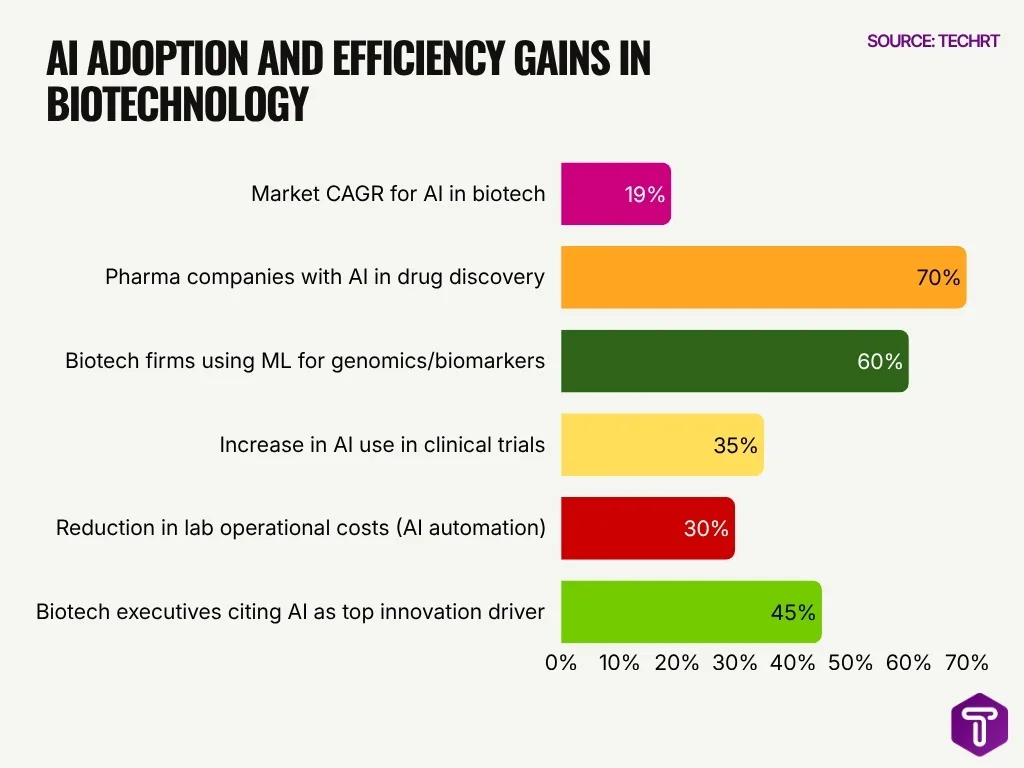
- The global AI in biotechnology market was valued at $4.6 billion in 2025 and is projected to reach $11.4 billion by 2030, growing at a CAGR of over 19%.
- Around 70% of pharmaceutical companies have integrated AI into at least one stage of drug discovery as of 2025.
- AI‑driven platforms have reduced drug discovery timelines by up to 50% in early‑stage research.
- Over 60% of biotech firms now use machine learning for genomic data analysis and biomarker discovery.
- The use of AI in clinical trials increased by 35% between 2023 and 2025, improving patient recruitment and monitoring.
- AI‑based protein structure prediction tools like AlphaFold have contributed to analyzing 200+ million protein structures.
- Investment in AI‑powered biotech startups exceeded $25 billion globally in 2024.
- AI‑enabled automation has reduced laboratory operational costs by 20% to 30%.
- Nearly 45% of biotech executives cite AI as the top driver of innovation in 2025.
Wearables, Sensors, and Real-Time Biological Monitoring
- The global wearable medical device market surpassed $60 billion in 2025.
- Over 1 billion wearable devices are actively used worldwide for health monitoring.
- Continuous glucose monitoring device adoption increased by 28% year-over-year in 2024.
- Wearables can detect early signs of illness with up to 80% accuracy in some studies.
- Real-time health monitoring reduced emergency hospital visits by up to 20%.
- Nearly 35% of US adults used wearable health devices in 2025.
- Biosensors integrated into wearables can track over 10 physiological parameters simultaneously.
- The fitness wearable segment accounts for over 50% of total wearable shipments globally.
- Remote monitoring programs using wearables improved patient adherence by 25%.
Digital Biomarkers vs Traditional Biomarkers Trends
- The digital biomarkers market size reached $5.84 billion in 2025 and is projected to hit $35.83 billion by 2035.
- The market is growing at a 19.89% CAGR from 2026 to 2035, showing strong adoption momentum.
- Clinical trials are expanding digital endpoint use, with thousands of studies now using wearables, sensors, and remote monitoring tools.
- About 59% of study participants had already implemented remote data capture, including digital biomarkers, in their research.
- North America held the largest share at 58.45% of the digital biomarkers market in 2025.
- The healthcare companies segment accounted for 50.18% of the market in 2025.
- Physiological biomarkers represented 40.6% of the market share in 2025.
- In the U.S., the digital biomarkers market was valued at $1.89 billion in 2025 and is forecast to reach $7.86 billion by 2035.
- The U.S. also had 25,000+ active clinical trials with digital endpoints and 120 million+ wearable users supporting adoption.
Bio-Digital Convergence in Healthcare and Diagnostics
- The global digital diagnostics market reached $8.5 billion in 2025, driven by AI and biosensor integration.
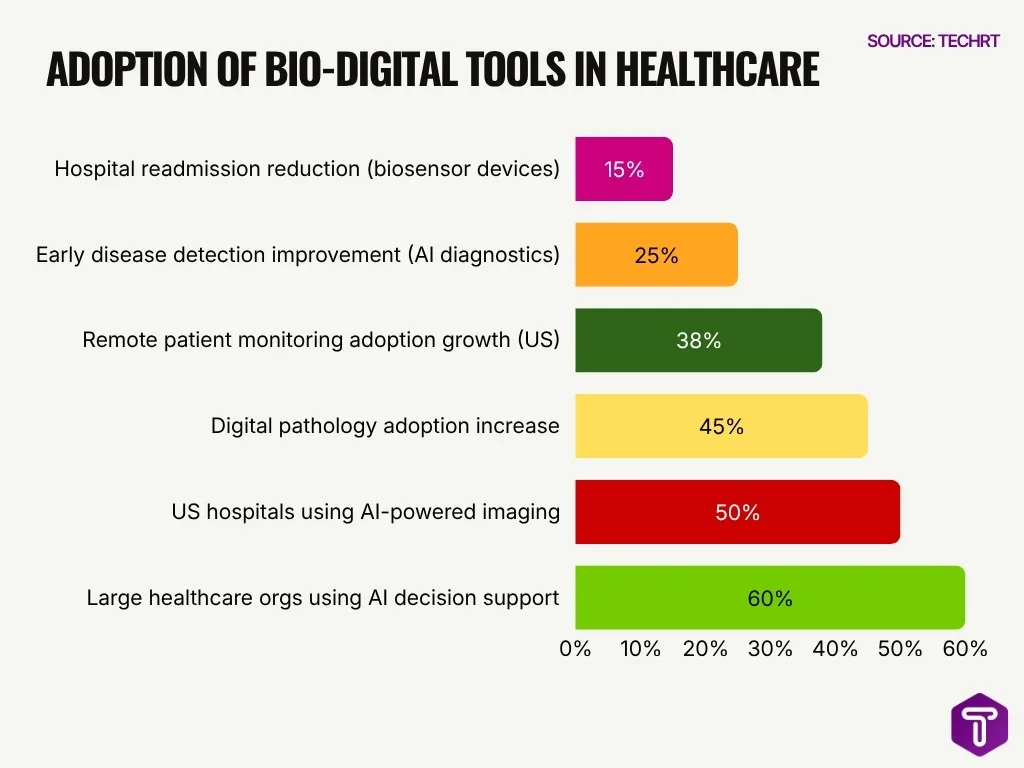
- AI-assisted diagnostic tools have improved early disease detection rates by 20% to 25%.
- Remote patient monitoring adoption grew by 38% in US healthcare systems in 2024.
- Over 50% of US hospitals now use AI-powered imaging systems for radiology workflows.
- Digital pathology adoption increased by 45% globally between 2023 and 2025.
- Biosensor-based diagnostic devices reduced hospital readmission rates by up to 15%.
- AI-driven clinical decision support systems are used in over 60% of large healthcare organizations.
- The global telehealth market reached $130 billion in 2025, supported by bio-digital tools.
- Point-of-care testing devices powered by bio-digital convergence grew at a CAGR of 9% through 2025.
Bio-Digital Convergence in Drug Discovery and Development
- The AI-driven drug discovery market is projected to reach $9.1 billion by 2030.
- Bio-digital platforms reduce drug development timelines by up to 40%.
- The average cost of developing a new drug exceeds $2.6 billion, driving demand for digital optimization.
- AI-enabled screening can analyze millions of compounds in days, compared to months using traditional methods.
- Over 50% of pharmaceutical pipelines now incorporate AI-driven tools.
- Clinical trial success rates improved by 10% to 15% with AI-assisted design.
- Virtual clinical trials adoption increased by 35% globally in 2025.
- Drug repurposing using AI reduced discovery costs by up to 60%.
- Partnerships between biotech and AI firms have grown by over 30% since 2023.
DNA Data Storage and Bio-Hybrid Computing Growth
- DNA data storage density can reach 215 petabytes per gram, far exceeding traditional storage media.
- The DNA storage market is projected to grow at a CAGR of over 60% through 2030.
- Global data creation is expected to exceed 180 zettabytes by 2025, driving interest in alternative storage like DNA.
- Bio-hybrid computing systems can perform certain computations up to 1000x more efficiently than silicon-based systems.
- DNA storage solutions can last thousands of years without degradation under proper conditions.
- Major tech companies have successfully encoded over 200 MB of data into DNA strands in experimental settings.
- DNA synthesis costs dropped by over 90% in the last decade, improving commercial viability.
- Bio-computing research funding increased by 35% globally between 2023 and 2025.
- Hybrid bio-digital chips integrating living cells are being tested for real-time sensing and adaptive computing applications.
Synthetic Biology Statistics
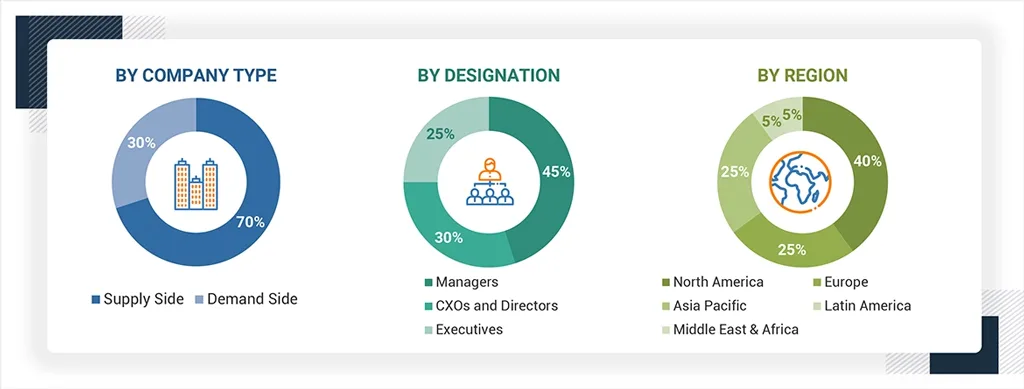
- Supply-side dominance is clear, accounting for a significant 70%, compared to just 30% demand-side participation, indicating that the market is still heavily driven by producers, innovators, and solution providers.
- A strong leadership presence is evident, with 45% of respondents being Managers, followed by 30% CXOs and Directors, highlighting that 75% of insights come from decision-makers and senior leadership.
- Only 25% Executives participation suggests that strategic perspectives outweigh operational viewpoints in shaping synthetic biology trends.
- North America leads the global landscape with a commanding 40% share, reinforcing its position as the hub for synthetic biology innovation and investment.
- Europe and the Asia Pacific are equally competitive, each contributing 25%, indicating balanced growth and increasing global adoption across these regions.
- Emerging markets like Latin America (5%) and the Middle East & Africa (5%) show early-stage adoption, presenting untapped growth opportunities for future expansion.
- The data reflects a highly mature and leadership-driven ecosystem, where strategic decision-makers and developed regions dominate the conversation and growth trajectory.
Robotics, Brain-Machine Interfaces, and Neural Implants Market
- The global brain-computer interface market is projected to reach $6.2 billion by 2030.
- Over 200,000 patients worldwide use neural implants for therapeutic purposes as of 2025.
- The medical robotics market surpassed $20 billion in 2025, driven by surgical automation.
- Brain-machine interface accuracy has improved to over 90% in controlled environments.
- Neuroprosthetics adoption increased by 15% year-over-year in 2024.
- AI-powered surgical robots reduced complication rates by up to 25% in some procedures.
- The US accounts for over 45% of the global BCI market share.
- Neural implant trials expanded by 30% globally between 2023 and 2025.
- Robotics-assisted surgeries now represent over 15% of all minimally invasive procedures.
Investment, Funding, and Startup Ecosystem Statistics
- Global biotech funding reached $34 billion in 2024, despite market volatility.
- Venture capital investment in bio-digital startups grew by 22% year-over-year in 2025.
- The number of active biotech startups globally exceeded 12,000 in 2025.
- US-based startups attracted over 50% of global biotech VC funding.
- Early-stage funding rounds increased by 18% in 2024, indicating strong pipeline growth.
- Average deal sizes in biotech rose to $45 million per round in 2025.
- Corporate partnerships between pharma and startups have increased by over 30% since 2023.
- Public market biotech IPOs raised over $8 billion globally in 2024.
- Government-backed innovation funds contributed over $10 billion to biotech R&D globally.
Patent Filings and Innovation Hotspots in Bio-Digital Tech
- Global biotech patent filings exceeded 250,000 applications annually as of 2024.
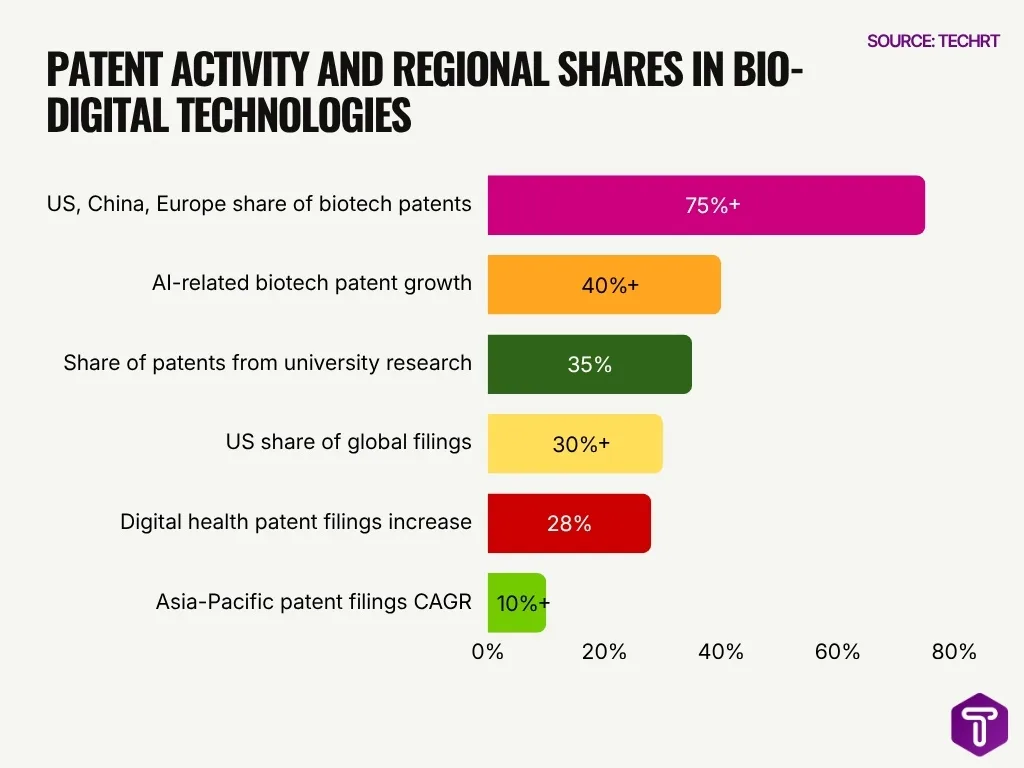
- The US, China, and Europe account for over 75% of global biotech patents.
- AI-related biotech patents grew by over 40% between 2020 and 2024.
- CRISPR-related patents represent one of the fastest-growing segments in life sciences IP.
- Patent filings in digital health technologies increased by 28% year-over-year in 2024.
- University-led research institutions contribute to over 35% of biotech patents globally.
- Asia-Pacific patent filings grew at a CAGR of over 10% through 2025.
- The US remains the top innovation hub, with over 30% of global filings originating domestically.
- Cross-disciplinary patents combining AI and biology increased significantly, reflecting convergence trends.
Regulatory Landscape and Standards for Bio-Digital Systems
- The FDA approved over 50 AI-enabled medical devices in 2024, showing regulatory acceleration.
- Regulatory frameworks for digital health expanded across more than 30 countries by 2025.
- Compliance costs for biotech firms increased by 15% to 20% due to evolving regulations.
- The EU’s Medical Device Regulation impacts over 500,000 medical technologies.
- Data interoperability standards adoption increased by over 40% in healthcare systems globally.
- Regulatory approval timelines for biotech products decreased by 10% with digital submission tools.
- Over 60% of biotech firms cite regulatory complexity as a key barrier to innovation.
- Global harmonization initiatives aim to standardize biotech regulations across major markets.
- Digital therapeutics received over 20 new regulatory approvals globally in 2024.
Cybersecurity, Privacy, and Data Governance Risks
- Healthcare data breaches exposed over 133 million records in the US in 2023, highlighting rising risks.
- The average cost of a healthcare data breach reached $10.93 million in 2024, the highest among industries.
- Over 70% of healthcare organizations experienced at least one cyberattack in 2024.
- Ransomware attacks in healthcare increased by over 50% between 2023 and 2025.
- Around 60% of biotech firms report concerns about data privacy and genomic data misuse.
- HIPAA violations resulted in millions of dollars in fines annually across US healthcare systems.
- Cloud security adoption in healthcare rose to over 65% in 2025, improving resilience.
- AI-driven cybersecurity tools reduced threat detection times by up to 40%.
- Data governance frameworks adoption increased by 30% globally in biotech organizations.
Frequently Asked Questions (FAQs)
What is the global bio-digital convergence market size in 2026?
What CAGR is the bio-digital convergence market expected to grow at through 2030?
How large is the AI in the biotechnology market expected to become by 2034?
What is the projected value of the AI-enabled drug discovery market by 2036?
What share of the global bioconvergence market does North America hold?
Conclusion
Bio-digital convergence continues to redefine the intersection of biology and technology, driving measurable progress across healthcare, biotechnology, and data-driven innovation. From AI-enabled drug discovery and genomics to wearable monitoring devices and programmable organisms, the data shows a clear shift toward more integrated, intelligent systems. At the same time, rising investments, expanding regulatory frameworks, and growing cybersecurity considerations indicate that this field is maturing rapidly.
Organizations that adopt bio-digital strategies can improve efficiency, accelerate research, and deliver more personalized outcomes at scale. As the ecosystem evolves, staying informed on these trends will be essential for decision-makers aiming to remain competitive in a data-driven, biology-powered future.

Leave a comment
Have something to say about this article? Add your comment and start the discussion.