




The freelance economy is evolving fast and reshaping how work gets done worldwide. Independent professionals, from graphic designers to software developers, are choosing flexibility over traditional full-time roles, creating a new normal in the labor market. In the U.S., freelancers are contributing trillions in economic value and expanding opportunities for companies seeking specific talent. Across industries like tech and creative services, businesses increasingly tap freelance talent to stay agile. Explore the latest numbers and trends that define Freelance Statistics as this sector continues to grow.
Editor’s Choice
- 72.9 million independent workers in the U.S. in 2025, combining full-time and part-time freelancers.
- $1.27 trillion earned by U.S. skilled freelancers in 2024.
- 5.6 million U.S. freelancers earned over $100,000 in 2025.
- 28% of U.S. knowledge workers operate as freelancers as of 2025.
- 1.57 billion freelancers globally in 2025, representing nearly 47% of the world’s workforce.
- The average U.S. freelance hourly rate is around $47.71.
- The freelance market is projected to exceed $1.8 trillion in global revenue by 2026.
Recent Developments
- 82% of skilled freelancers reported increased work opportunities year over year.
- 36% of traditional knowledge workers are considering freelance roles.
- 84% of skilled freelancers say they’re excited about AI reshaping work.
- U.S. nonemployer business establishments, including many freelancers, grew by 2.1% in 2023.
- Freelancers contribute to growing local economic receipts totaling approximately $1.7 trillion.
- Many freelancers report higher median income than full-time peers in similar roles.
- Freelance platforms continue improving algorithmic matching and payment systems to increase engagement.
- Global gig worker demand rose 41% between 2016 and 2023.
Global Freelance Statistics
- Around 1.57 billion people freelanced globally by 2025, nearly 47% of the global workforce.
- Global freelance participation significantly exceeds the earlier 36% estimates from 2020.
- Global freelance value estimates range between $500 billion and $1.5 trillion, depending on measurement criteria.
- Freelancers from emerging markets continue to rise rapidly due to platform adoption.
- Online gig work represents a significant share of global labor participation.
- Roughly half of global freelancers work in skilled roles such as IT, design, and marketing.
- Global freelance participation is projected to approach 55% by 2027 to 2028.
- Cross-border freelance projects increasingly contribute to international economic activity.
Growth of the US Freelance Workforce
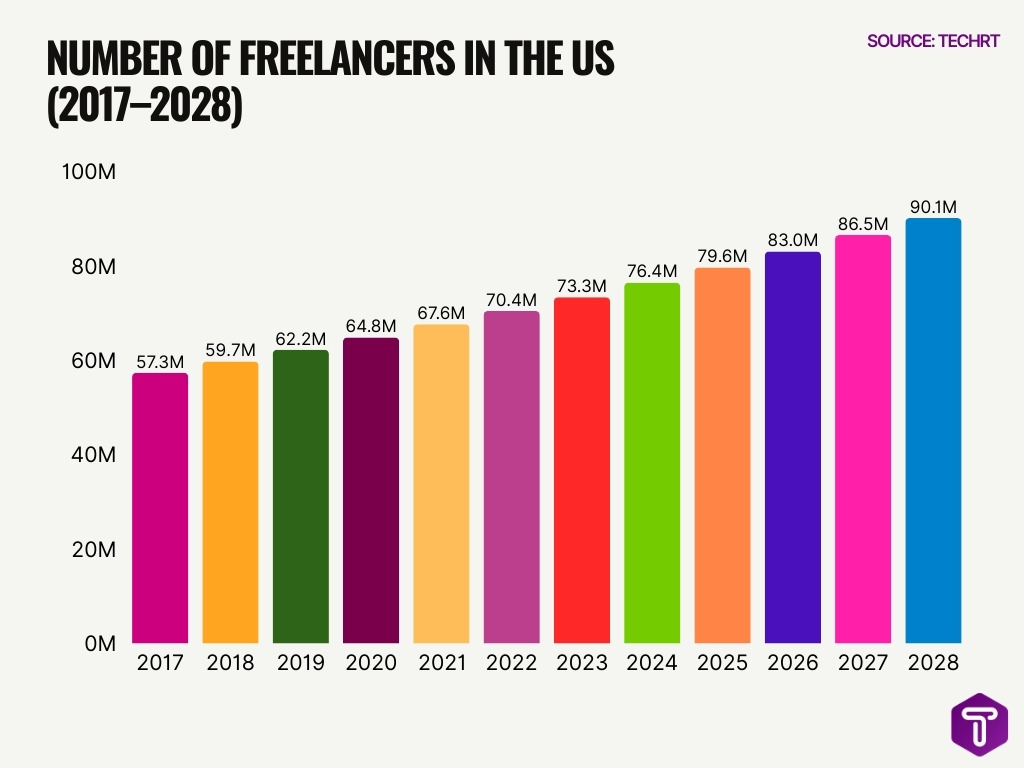
- The number of freelancers in the US increased from 57.3 million in 2017 to 90.1 million in 2028, reflecting a total growth of 32.8 million professionals over eleven years.
- Between 2017 and 2020, the freelance workforce expanded from 57.3 million to 64.8 million, showing steady early-stage growth driven by digital platforms and remote work adoption.
- In 2021, the number of freelancers reached 67.6 million, highlighting the impact of pandemic-era shifts toward flexible and remote employment models.
- From 2022 to 2024, freelance participation rose from 70.4 million to 76.4 million, indicating strong post-pandemic momentum and sustained market demand.
- The period between 2025 and 2026 saw a sharp rise from 79.6 million to 83.0 million, signaling accelerated adoption of independent and gig-based work.
- By 2027, the freelance workforce grew to 86.5 million, demonstrating increasing acceptance of freelancing as a long-term career path.
- Projections show that by 2028, the US will have 90.1 million freelancers, positioning freelancing as a core pillar of the national workforce.
- Overall, the data indicate an average annual increase of nearly 3 million freelancers per year, underscoring the rapid expansion of the gig economy.
Freelancers by Generation
- 53% of Gen Z knowledge workers freelance regularly.
- Millennials comprise 36% of total freelancers, dominating digital gigs.
- Gen X represents 29% of the freelance workforce, balancing multiple income streams.
- Baby Boomers account for 14% of freelancers, up 24% since 2020.
- 70% of freelancers under 35 prioritize flexibility over job security.
- Gen Z leads with 65% adopting AI skills in freelancing.
- 44% of Millennials freelance full-time in tech categories.
- Platform usage is highest among Gen Z at 82% participation rate.
Freelancers by Gender
- Women represent 46% of the U.S. freelance workforce as of 2024.
- Men account for approximately 54% of U.S. freelancers.
- Globally, women make up roughly 39% of freelancers on major online platforms.
- 52% of female freelancers say they freelance by choice.
- Women developers earn within 90 to 95% of their male peers in comparable freelance tech roles.
- Women represent over 60% of freelancers in writing and translation categories.
- Men account for nearly 75% of freelance professionals in IT and programming globally.
- Nearly 48% of new female entrepreneurs began as independent contractors or freelancers.
Average Age Distribution of Freelancers
- Freelancers aged 25–34 dominate the market, representing the largest group at 48%, highlighting that young professionals form the core of the freelance workforce.
- The 18–24 age group accounts for 21%, showing strong participation from students and early-career individuals entering freelancing.
- Professionals aged 35–44 make up 22%, indicating a significant presence of mid-career experts leveraging freelancing for flexibility and income.
- The 45–54 age segment represents only 6%, reflecting lower adoption of freelance work among older professionals.
- Freelancers aged 55–64 contribute just 3%, suggesting limited engagement from pre-retirement workers in the gig economy.
- The 65+ age group holds the smallest share at 1%, showing that freelancing remains largely driven by younger and working-age populations.
- Overall, more than 69% of freelancers are under 35, emphasizing that freelancing is primarily a youth-driven and digitally enabled career path.
Global Freelance Platforms Market Growth
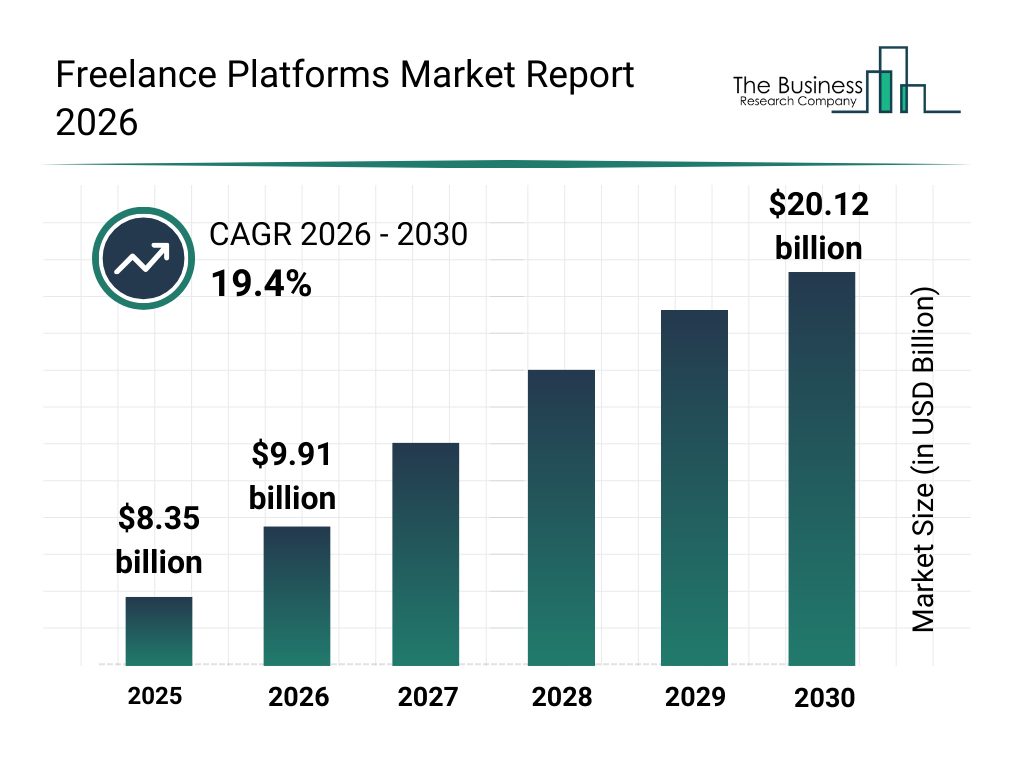
- The global freelance platforms market was valued at $8.35 billion in 2025, reflecting the early stage of accelerated digital workforce adoption.
- In 2026, the market expanded to $9.91 billion, showing strong momentum driven by remote work and platform-based hiring.
- By 2027, the market size is estimated to reach ~$11.80 billion, indicating steady year-over-year growth.
- The industry is projected to grow to ~$14.10 billion in 2028, supported by rising demand for flexible talent solutions.
- In 2029, the market is expected to surpass ~$16.90 billion, highlighting increasing enterprise reliance on freelance platforms.
- By 2030, the global freelance platforms market is forecast to hit $20.12 billion, marking a major milestone in platform economy expansion.
- The market is projected to grow at a strong CAGR of 19.4% from 2026 to 2030, demonstrating sustained long-term growth potential.
- Overall, the market is set to grow by more than $11.7 billion between 2025 and 2030, reflecting rapid digital workforce transformation.
Regional Freelance Data
- The U.S. leads with over 70 million independent workers.
- India contributes nearly 15 million freelancers to the global workforce.
- Freelancing accounts for approximately 2% of GDP in the Philippines.
- Roughly 28% of European workers engage in freelance or independent work.
- The U.K. reports over 4.2 million self-employed individuals.
- Canada’s freelance participation grew by 8% year over year in 2024.
- Australia reports nearly 36% workforce participation in gig or freelance work.
- Latin America experienced a 40% increase in digital freelance registrations since 2021.
Freelancer Earnings Overview
- The median hourly rate for U.S. freelancers ranges between $28 and $32.
- Skilled tech freelancers average between $60 and $120 per hour.
- 5.6 million U.S. freelancers earn over $100,000 annually.
- The average annual income of full-time freelancers exceeds $68,000.
- Global freelance income increased by 19% year over year in 2024.
- Nearly 44% of freelancers earn more than in their previous traditional roles.
- Part-time freelancers earn an average supplemental income between $12,000 and $18,000 per year.
- The top 10% of freelance professionals earn over $150,000 annually.
Hourly Rates by Skill
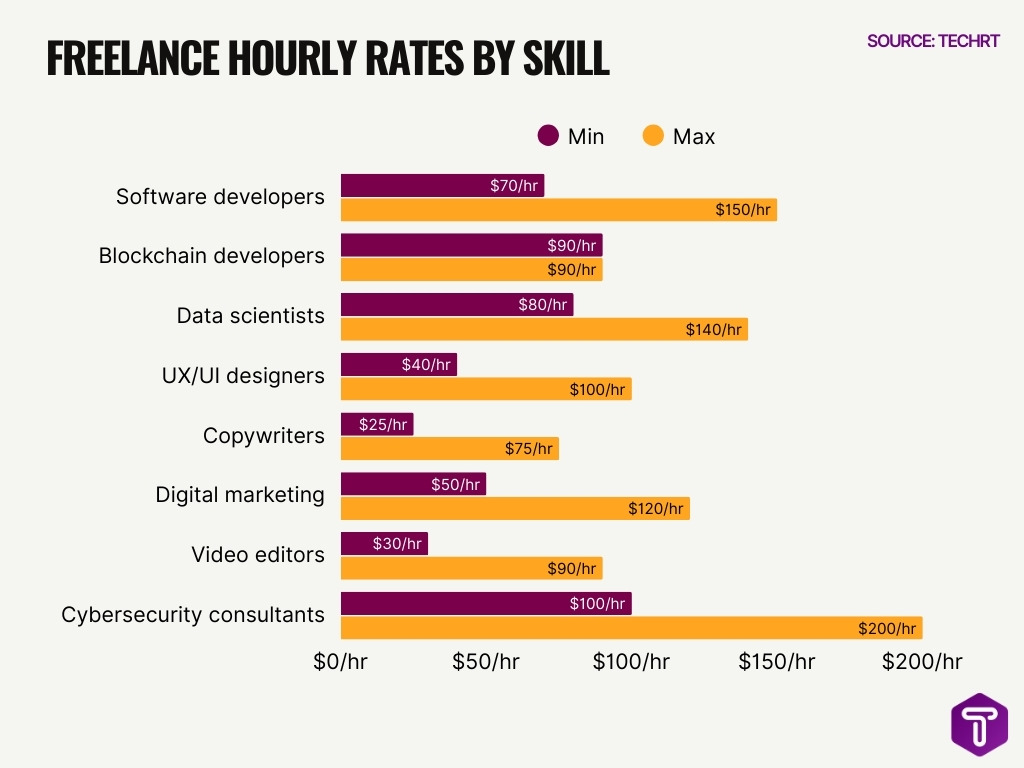
- Software developers command between $70 and $150 per hour.
- Blockchain developers average over $90 per hour.
- Data scientists earn between $80 and $140 per hour.
- UX and UI designers charge between $40 and $100 per hour.
- Copywriters typically charge between $25 and $75 per hour.
- Digital marketing consultants average between $50 and $120 per hour.
- Video editors earn between $30 and $90 per hour.
- Cybersecurity consultants can command between $100 and $200 per hour.
Popular Freelance Jobs
- Web development comprises 34% of the top freelance categories on Upwork.
- Content writing and copywriting account for 18% of freelance listings.
- Graphic design within design holds 9% market share globally.
- Digital marketing grew 25% YoY on freelance platforms.
- Video editing demand rose by 39% in 2025.
- IT programming generates over 40% of platform revenue.
- Virtual assistance roles increased 24% in US listings.
- AI jobs spiked 60% in postings from 2023-2025.
- The freelance economy is valued at $1.54 trillion in 2025.
Key Reasons Why Professionals Choose Freelancing
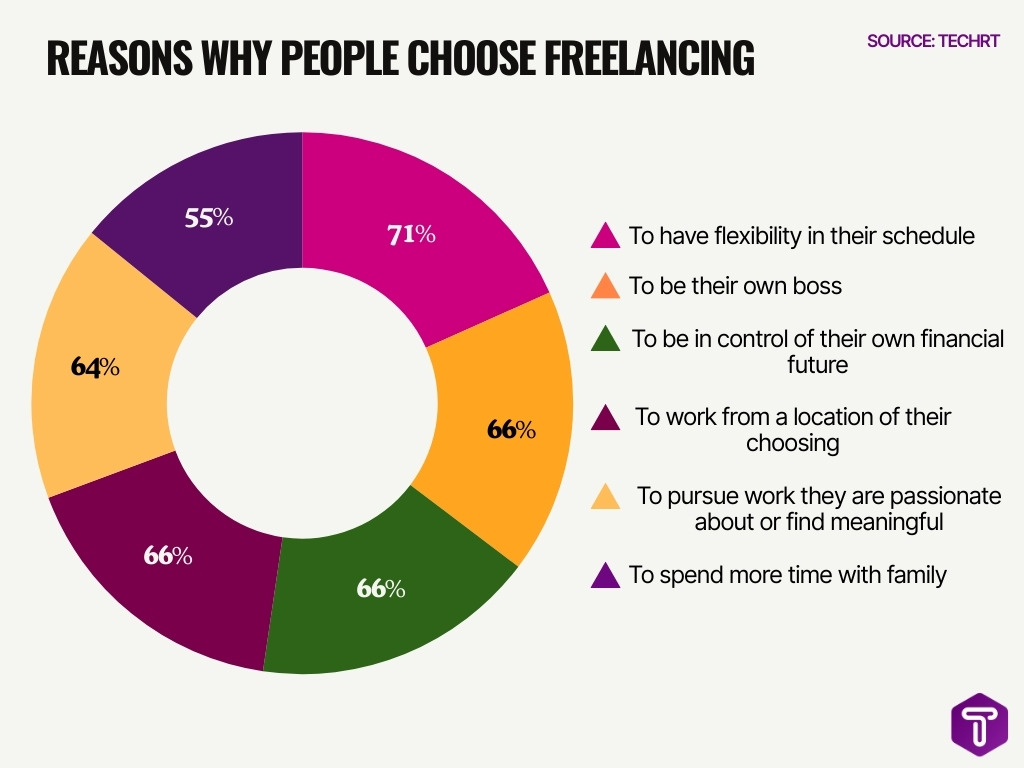
- Schedule flexibility is the top motivation, with 71% of freelancers choosing independent work to gain better control over their daily routines and working hours.
- Being their own boss is a major driver, as 66% of professionals prefer freelancing to enjoy full autonomy and decision-making power.
- Financial independence motivates 66% of freelancers, who want greater control over their long-term income and financial future.
- Location freedom attracts 66% of respondents, allowing them to work from anywhere and avoid traditional office constraints.
- Meaningful and passion-driven work is important for 64% of freelancers, highlighting the desire for purpose and personal fulfillment.
- Work–life balance remains a strong factor, with 55% of freelancers prioritizing more quality time with family through flexible work arrangements.
In-Demand Freelance Skills
- AI-related skills saw a 60% year-over-year increase in demand in 2024.
- Data analytics roles grew by 37% across major freelance platforms in 2024.
- Cybersecurity freelance job postings increased by 32% year over year.
- Cloud computing skills appear in over 25% of enterprise freelance projects.
- Short-form video production demand rose by 29% in 2024.
- SEO and performance marketing services grew by 28% year over year.
- Web3 and blockchain freelance roles increased by 22%.
- No-code and low-code development services grew by 41%.
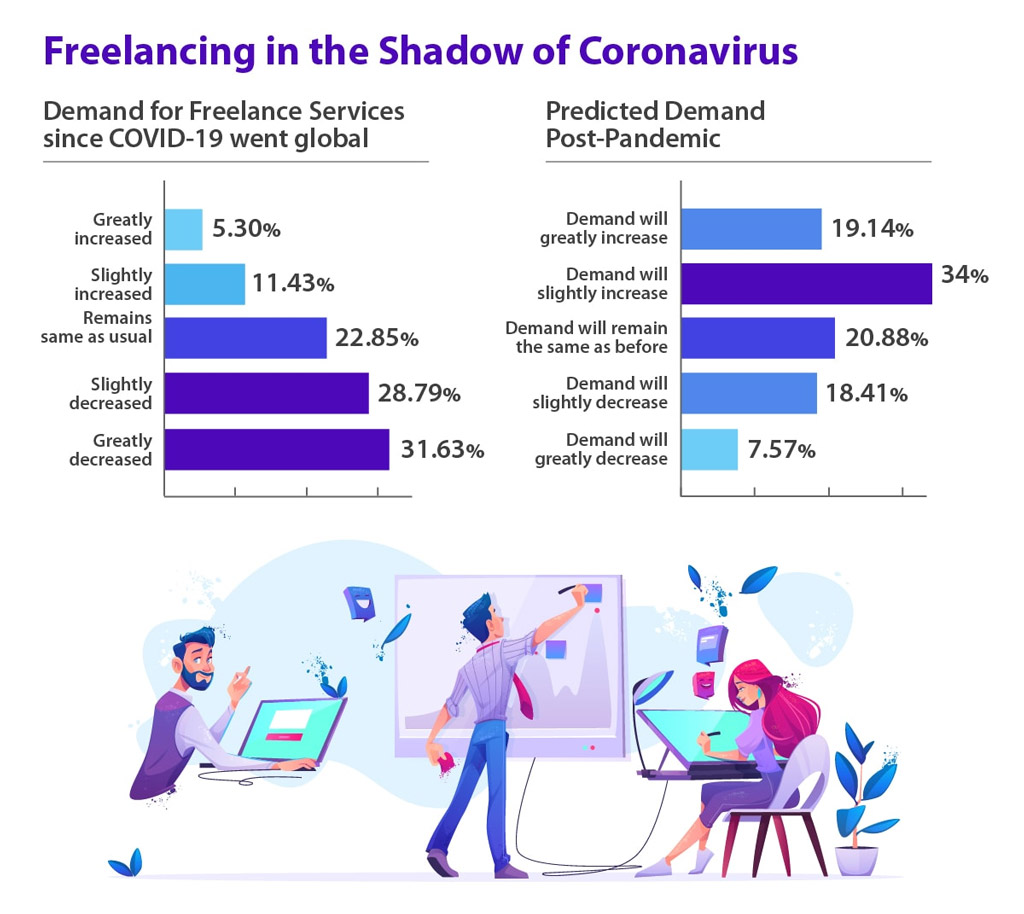
COVID-19 and Post-Pandemic Impact on Freelance Demand: Key Insights
- During the pandemic, 31.63% of respondents reported that freelance demand greatly decreased, making it the most affected segment.
- An additional 28.79% experienced a slight decline, meaning nearly 60% of freelancers faced reduced work opportunities.
- Only 5.30% saw demand greatly increase, showing that strong growth was rare during the crisis.
- About 11.43% reported a slight increase, reflecting limited gains from remote-work expansion.
- Nearly 22.85% said demand remained stable, indicating resilience in certain freelance sectors.
- Looking ahead, 34% of respondents expect demand to slightly increase, making it the most common post-pandemic outlook.
- A further 19.14% predict demand will greatly increase, highlighting rising confidence in the freelance economy.
- Around 20.88% believe demand will remain the same, suggesting continued market balance.
- However, 18.41% still anticipate a slight decrease, reflecting ongoing uncertainty in some industries.
- Only 7.57% foresee demand to greatly decrease, showing that pessimism has dropped sharply compared to the pandemic period.
Top Freelance Platforms
- Upwork reported $689 million in revenue in 2023.
- Fiverr generated $361 million in revenue in 2023.
- Toptal serves thousands of enterprise clients globally.
- Freelancer.com hosts over 60 million registered users.
- PeoplePerHour reports more than 3 million freelancers.
- Guru connects over 3 million members worldwide.
- Platform-based gig work accounts for nearly 14% of independent workers’ income in the U.S.
- Enterprise adoption of freelance platforms increased by 26% year over year in 2024.
Freelancing Trends 2026
- Over 52% of the U.S. workforce is projected to freelance in some capacity by 2026.
- Hybrid freelancing grew by 18% in 2024.
- 84% of freelancers report using AI tools to enhance productivity.
- Cross-border freelance contracts increased by 19% year over year in 2024.
- Subscription-based freelance retainers rose by 27%.
- Companies reported saving an average of 30% by hiring freelancers for project-based roles.
- Nearly 70% of Gen Z professionals prefer flexible work models.
- Demand for remote freelance collaboration tools grew by 35% globally.
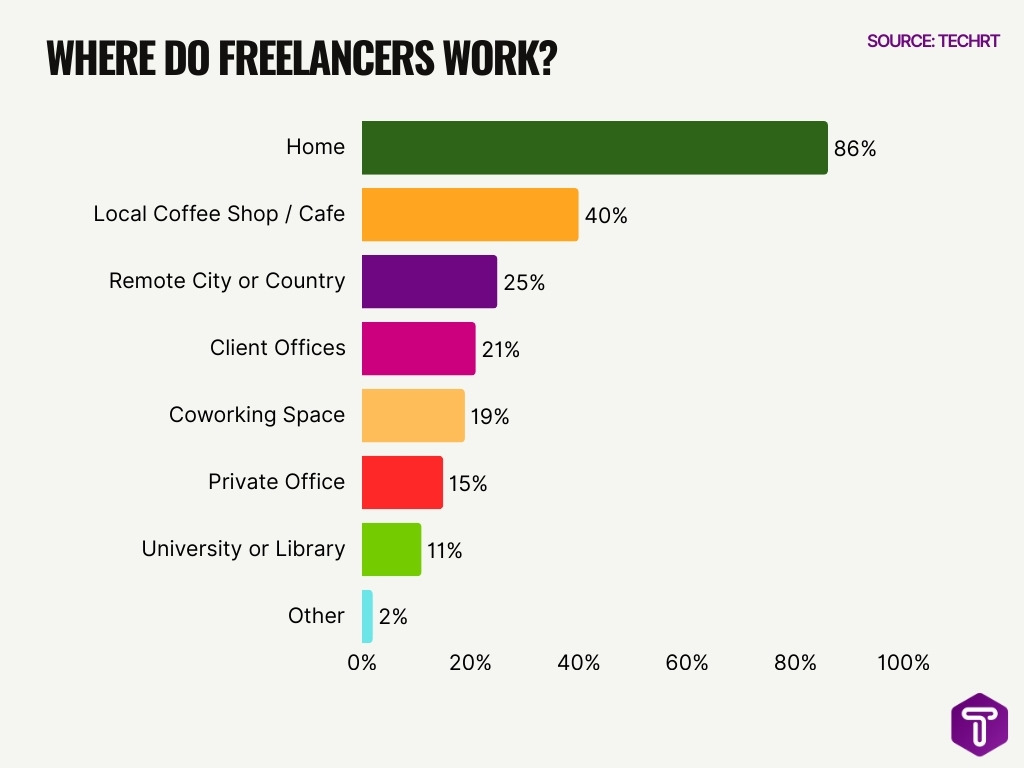
Where Do Freelancers Work?
- Home offices dominate freelance work, with 86% of freelancers primarily working from home, highlighting the strong preference for remote and flexible setups.
- Local coffee shops and cafés remain popular, as 40% of freelancers choose these spaces for networking, creativity, and a change of environment.
- Location independence is rising, with 25% of freelancers working from a remote city or country, reflecting the growth of the digital nomad lifestyle.
- Client offices still play a role, with 21% of freelancers occasionally working on-site to support collaboration and project alignment.
- Coworking spaces attract professionals, as 19% of freelancers use shared offices for community access, structure, and productivity.
- Dedicated private offices are less common, with only 15% of freelancers investing in personal office spaces for focused work.
- Educational and public spaces remain relevant, as 11% of freelancers work from universities or libraries, favoring quiet and resource-rich environments.
- Alternative work locations are minimal, with just 2% of freelancers using other unconventional spaces, indicating limited reliance on non-traditional setups.
Future of Freelancing
- The global gig economy is expected to surpass $1.8 trillion by 2026.
- By 2027, freelancers could represent 55% of the U.S. workforce.
- Automation and AI are projected to augment 40% of freelance tasks.
- Digital labor platforms are growing at a 7 to 10% compound annual growth rate.
- The number of freelancers earning over $100,000 annually continues to rise.
- Enterprise companies are projected to allocate 20 to 30% of project budgets to freelance talent by 2027.
- Remote freelance collaboration tools are expected to exceed a $50 billion global market by 2028.
- Government policy discussions regarding portable benefits expanded across 15 or more U.S. states in 2024 and 2025.
Challenges for Freelancers
- 46% of freelancers cite inconsistent income as their top concern.
- Nearly 40% report difficulty accessing affordable healthcare coverage in the U.S.
- Late payments affect approximately 29% of freelancers annually.
- 34% struggle with client acquisition and competition.
- Over 50% manage tax responsibilities without professional assistance.
- Burnout impacts 36% of full-time freelancers.
- Regulatory uncertainty continues to affect independent contractor classification.
- Roughly 25% lack access to retirement savings plans.
Frequently Asked Questions (FAQs)
How many freelancers are there worldwide as of 2025-26?
Approximately 1.57 billion freelancers are working globally, representing nearly 47% of the total global workforce.
What share of the U.S. workforce freelanced recently?
About 38% of the U.S. workforce freelanced, with projections suggesting up to 86.5 million Americans could be freelancing by 2027, roughly 50.9% of the workforce.
How much did U.S. freelancers contribute to the economy?
U.S. freelancers contributed around $1.27 trillion to $1.5 trillion in earnings, marking a significant economic impact.
What is the projected market value and growth rate for freelance platforms?
The global freelance platform market was valued at nearly $6.37 billion in 2025 and is expected to grow at a CAGR of around 16.6% to 18.6%, reaching well over $16 billion by 2030-33.
What is a typical hourly rate for freelancers?
In North America, the average freelance hourly rate is about $44 to $47.71, with specialized roles often earning more.
Conclusion
Freelancing stands at a pivotal moment. The workforce continues shifting toward flexible, project-based work, driven by digital platforms, AI adoption, and enterprise demand for specialized skills. At the same time, income volatility and regulatory complexity remain real concerns.
For businesses, freelance talent offers speed and expertise without long-term overhead. For professionals, it provides autonomy and scalable earning potential. As participation approaches a majority of the U.S. workforce, freelancing is no longer a side trend; it is a structural change in how modern economies operate.

Leave a comment
Have something to say about this article? Add your comment and start the discussion.