



Sustainable computing has moved from a technical concern to a business-critical priority as organizations confront rising energy costs, stricter environmental regulations, and growing digital demand. From hyperscale data centers running advanced AI models to enterprises shifting workloads to the cloud, companies now measure performance alongside energy efficiency and carbon output. For instance, cloud providers optimize infrastructure to reduce electricity consumption at scale, while governments introduce policies targeting emissions from digital systems.
At the same time, innovations in hardware, software, and renewable energy integration continue to reshape how computing resources are designed and used. This article breaks down the latest data, trends, and insights shaping sustainable computing, helping you understand where the industry stands today and where it is heading next.
Editor’s Choice
- Global data centers account for just over 1% of electricity demand and about 0.5% of CO₂ emissions as of 2025.
- Data center electricity demand surged 17% in 2025, far outpacing global electricity growth (3%).
- Global data center consumption is projected to reach ~945 TWh by 2030, nearly double current levels.
- The digital sector contributes 3–4% of global greenhouse gas emissions, exceeding aviation.
- AI systems alone could emit 32.6–79.7 million tons of CO₂ in 2025.
- Data centers may drive 8–12% of global electricity demand growth by 2030.
- Over $400 billion was invested in data center infrastructure in 2025, with spending set to rise further.
Recent Developments
- Data center power demand increased 17% year-over-year in 2025, signaling rapid infrastructure expansion.
- AI-focused data centers are growing faster than traditional ones, with energy demand expected to triple by 2030.
- Global AI electricity consumption could reach 800 TWh by 2026.
- Big tech capital expenditure on computing infrastructure exceeded $400 billion in 2025.
- Renewable-powered data center capacity is projected to make up 56% of new builds between 2023–2035.
- Despite renewable growth, 64% of incremental electricity supply for data centers may still come from fossil fuels.
- Cloud computing output has grown 550% while energy use rose only 6%, showing efficiency gains.
- Global data center electricity demand could reach 620–1050 TWh by 2026.
Sustainable Computing Market Overview
- The sustainable computing market aligns with global digital infrastructure spending exceeding $400B annually.
- Data center energy consumption represented ~1.5% of global electricity in 2023.
- Global electricity demand from data centers is expected to double by 2030.
- The market is driven by AI workloads, which could account for 35–50% of data center energy use by 2030.
- Data centers consumed 415 TWh globally in recent years, showing steady growth.
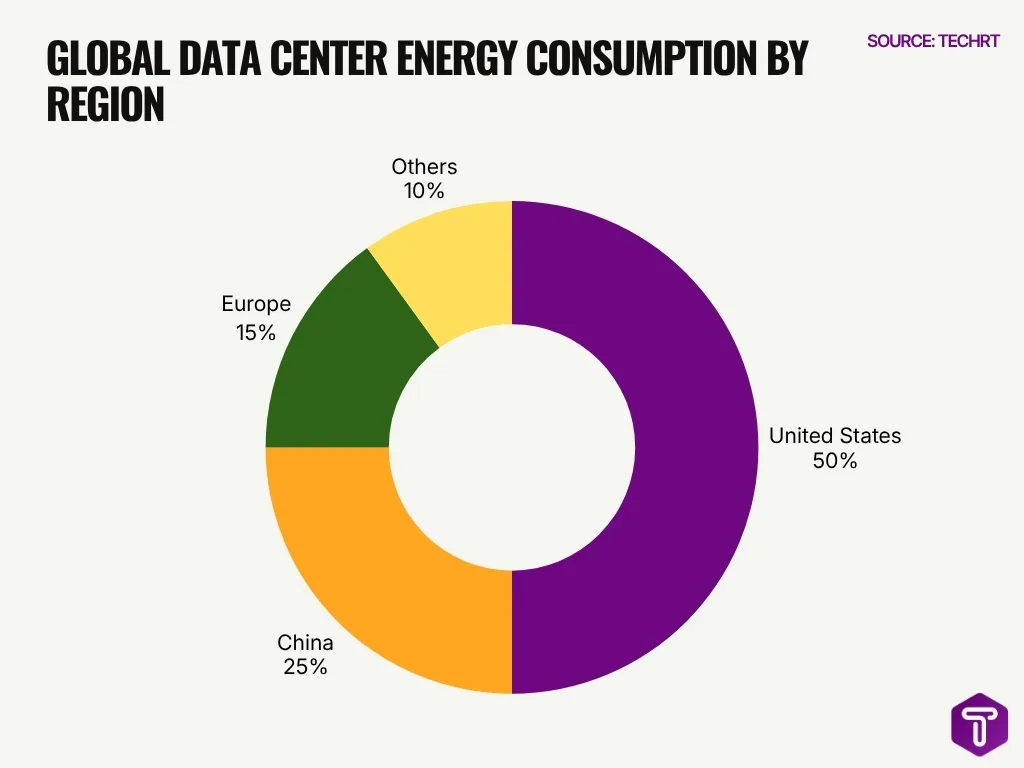
- Market demand is concentrated geographically, with ~50% of usage in the U.S.
- China accounts for ~25% of global data center electricity consumption.
- Europe contributes around 15% of global consumption, reflecting regional adoption.
- Global estimates of data center energy usage vary widely, ranging from 196 to 1200 TWh, highlighting measurement challenges.
Global Sustainable Computing Adoption
- Data centers exist in large numbers, with over 5,400 facilities in the U.S. alone by 2025.
- U.S. data centers consumed 4.4% of national electricity in 2023.
- Electricity use in U.S. data centers could reach 12% of total demand by 2030.
- Ireland’s data centers accounted for 22% of national electricity demand in 2024, showing regional concentration.
- Globally, data centers consume ~2% of electricity, comparable to some countries.
- Data center energy use has doubled between 2015 and 2022, reflecting rapid adoption.
- AI-driven infrastructure is expected to dominate new deployments, influencing sustainability priorities.
- Over 50% of new data center capacity is expected to integrate renewable energy sources.
Sustainable Computing in Data Centers
- Data centers currently account for ~1–1.5% of global electricity use.
- Electricity demand is projected to exceed 945 TWh by 2030.
- AI workloads may represent up to 50% of total data center energy consumption by 2030.
- Around 40% of data center energy is used for computing tasks, and another 40% for cooling.
- Data center electricity consumption grew 12% annually over the past five years.
- U.S. data centers consumed 176 TWh in 2023, emitting 105 million metric tons of CO₂.
- Fossil fuels still supply ~56% of data center electricity in the U.S.
- Data center energy demand could reach 1,050 TWh globally by 2030.
Green Technology and Sustainability Market Growth
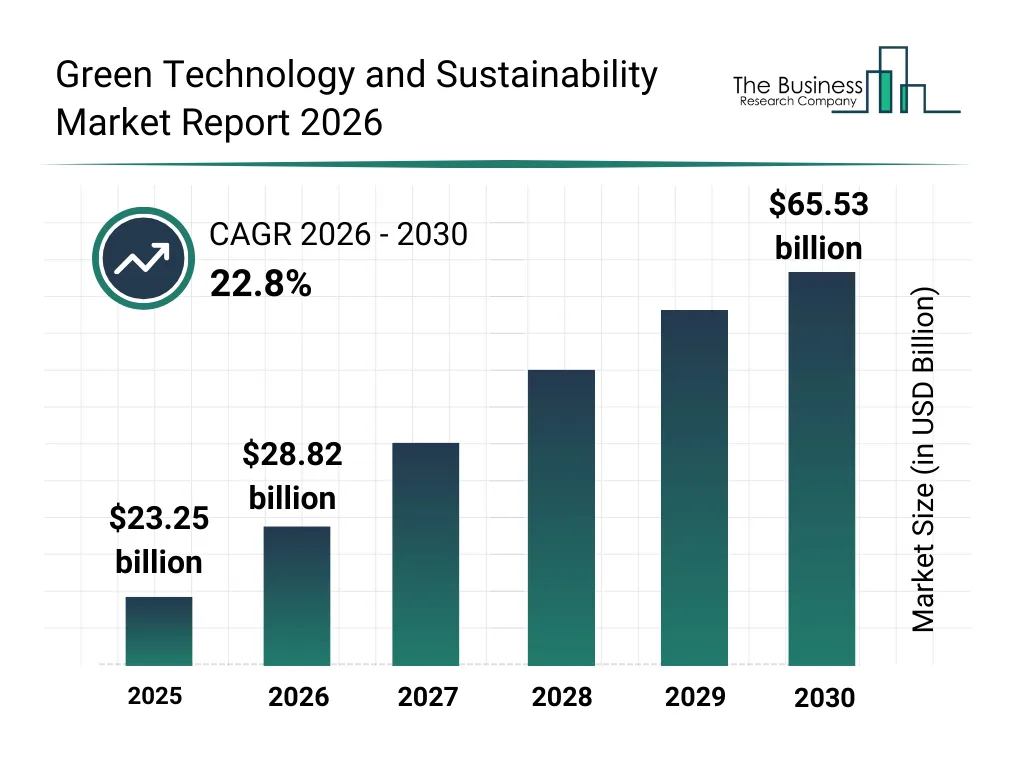
- The green technology and sustainability market is projected to grow strongly, rising from $23.25 billion in 2025 to $65.53 billion by 2030.
- In 2026, the market size is expected to reach $28.82 billion, showing notable year-over-year growth from 2025.
- The market is forecast to expand at a 22.8% CAGR between 2026 and 2030, indicating rapid adoption of sustainable technologies worldwide.
- The projected increase from $23.25 billion to $65.53 billion means the market could grow by around $42.28 billion over the period shown.
- By 2030, the market is expected to be nearly 2.8 times larger than its 2025 size.
- The data suggests rising investment in areas such as renewable energy solutions, carbon reduction technologies, green infrastructure, and sustainable business operations.
- The steady upward trend highlights how climate goals, ESG commitments, and government sustainability policies are accelerating demand for green technology solutions.
Energy Consumption in Computing
- Global data centers consumed 415 TWh in 2024, about 1.5% of total electricity.
- Data center electricity demand is projected to reach 945 TWh by 2030.
- U.S. data centers used 176 TWh in 2023, or 4.4% of the national total.
- AI servers accounted for 24% of server electricity and 15% of total data center energy in 2024.
- Hyperscale data centers doubled energy use recently, driving overall growth.
- Data centers split energy as 40% computing, 40% cooling, 20% other IT.
- Projections show data centers could hit 1,587 TWh globally by 2030.
- U.S. data centers may consume 325-580 TWh by 2028, up to 12% of total.
- AI could drive data centers to 20% of global electricity by 2030-2035.
Renewable Energy in Computing
- Major cloud providers now source over 60% of their electricity from renewable energy on average.
- Google reported 100% renewable energy matching since 2017, maintaining leadership in clean computing.
- Microsoft aims to be carbon negative by 2030, investing heavily in renewable-powered data centers.
- Amazon’s AWS reached 90% renewable energy usage in 2025, targeting full coverage by 2027.
- Renewable-powered data centers are expected to account for over 56% of new capacity additions by 2035.
- Solar and wind energy supply more than 30% of global data center power in leading markets.
- Power purchase agreements for tech companies exceeded 40 GW globally in 2024.
- Data centers in Nordic countries operate with nearly 100% renewable electricity, setting benchmarks.
- Renewable integration has reduced operational emissions by up to 70% in optimized facilities.
Carbon Emissions by the IT Sector
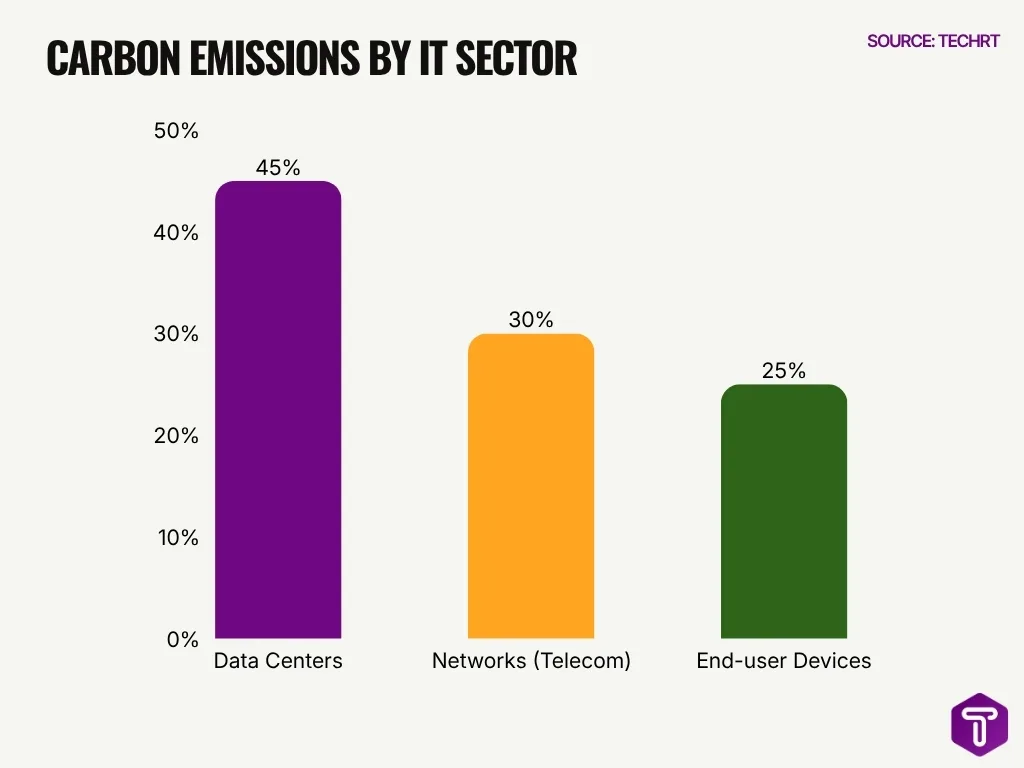
- Data Centers are the largest contributor to the IT sector’s carbon emissions, accounting for 45% of the total.
- Networks (Telecom) represent the second-largest share, contributing 30% of overall IT-related carbon emissions.
- End-user Devices, such as laptops, smartphones, desktops, and other personal electronics, contribute 25% of the sector’s emissions.
- Together, Data Centers and Networks make up 75% of total IT sector carbon emissions, showing that infrastructure is the main source of emissions.
- The data highlights the need for greener data storage, cloud computing, and telecom infrastructure to reduce the sector’s environmental impact.
- Since End-user Devices still account for one-fourth of emissions, improving device energy efficiency and extending product lifespans can also support emission reduction.
- Overall, the chart shows that carbon reduction strategies in the IT sector should prioritize Data Centers first, followed by Networks (Telecom) and End-user Devices.
Green Cloud Computing Statistics
- Cloud computing can reduce energy consumption by up to 65% compared to traditional IT systems.
- Migrating workloads to the cloud cuts carbon emissions by up to 84% for some enterprises.
- Public cloud data centers are 3 to 5 times more energy efficient than on-premise setups.
- Cloud providers operate at higher server utilization rates (65% vs. 15%), improving efficiency.
- Global cloud computing workloads increased 550% over the past decade, while energy grew only marginally.
- Multi-tenant cloud environments reduce hardware redundancy by up to 40%, lowering energy demand.
- Edge computing combined with cloud reduces latency and energy use by 20–30% in distributed systems.
- Hyperscale cloud facilities achieve a PUE as low as 1.1, compared to the 1.7 industry average.
- Cloud-based AI workloads can optimize energy consumption in real time, reducing waste by up to 15%.
Energy-Efficient Hardware Statistics
- Modern CPUs deliver up to 50% better performance per watt compared to 2020 models.
- ARM-based processors can reduce energy usage by 30–60% versus traditional x86 chips.
- GPUs used in AI workloads are now up to 20 times more efficient than a decade ago.
- Solid-state drives consume 80% less power than HDDs, improving storage efficiency.
- Energy-efficient servers can cut electricity costs by 25–40% annually.
- Advanced cooling hardware reduces thermal energy waste by up to 30%.
- Chip-level innovations like 3nm fabrication reduce power consumption by ~30%.
- Data center hardware refresh cycles now average 3–5 years, improving efficiency over legacy systems.
- Edge devices optimized for AI inference consume up to 90% less power than centralized processing.
Energy-Efficient Software Statistics
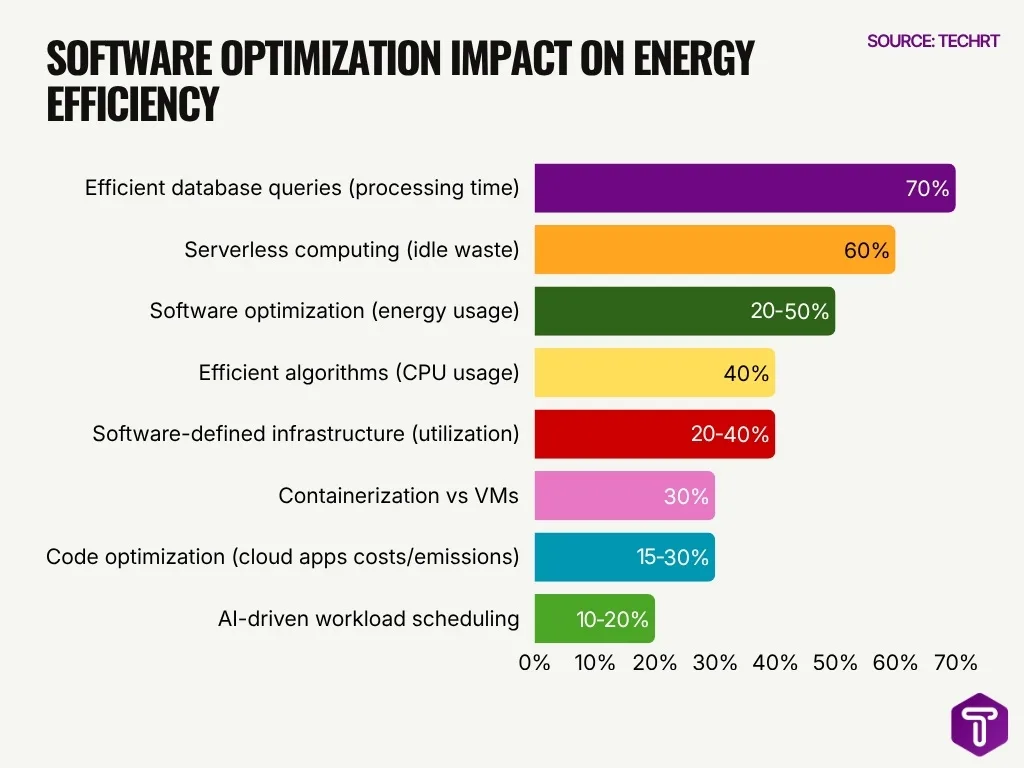
- Software optimization reduces computing energy usage by 20–50% without hardware changes.
- Efficient algorithms lower CPU usage by up to 40%, reducing energy draw.
- Code optimization in cloud applications reduces costs and emissions by 15–30%.
- Containerization improves resource efficiency by up to 30% compared to virtual machines.
- Serverless computing reduces idle resource energy waste by up to 60%.
- AI-driven workload scheduling can cut energy consumption by 10–20%.
- Efficient database queries can reduce processing time by up to 70%, lowering energy usage.
- Software-defined infrastructure improves utilization rates by 20–40%.
- Green coding practices are adopted by over 50% of developers in 2025.
Sustainable AI Computing Statistics
- Training large AI models can consume up to 1,287 MWh of electricity, equivalent to hundreds of households annually.
- AI workloads are expected to account for 35–50% of total data center energy demand by 2030.
- AI electricity demand could reach 800 TWh by 2026, rivaling national consumption levels.
- Generative AI queries require 10 times more energy than standard search queries.
- Efficient AI models can reduce energy consumption by up to 90% through pruning and quantization.
- AI-powered energy management systems reduce data center energy usage by 15–20%.
- Edge AI processing reduces cloud dependency, cutting energy use by 20–30%.
- AI hardware accelerators improve efficiency by up to 10x compared to general-purpose CPUs.
- Sustainable AI initiatives are now adopted by over 40% of enterprises globally.
Sustainable Computing in Enterprises
- Over 75% of enterprises now include sustainability in their IT strategy.
- Enterprise IT accounts for 2–3% of global emissions, driving corporate sustainability focus.
- Companies adopting green IT practices reduce energy costs by 20–30% on average.
- More than 60% of Fortune 500 firms have carbon neutrality targets tied to IT operations.
- Sustainable IT investments grew by over 25% year-over-year in 2025.
- Cloud migration remains a top strategy, with over 90% of enterprises using cloud services.
- Enterprises using AI for sustainability report 15–25% efficiency gains.
- ESG reporting now includes IT emissions tracking in over 70% of large enterprises.
- Green procurement policies influence over 50% of enterprise IT purchasing decisions.
Cloud Sustainability Initiatives
- Over 90% of large cloud providers have committed to net-zero carbon targets by 2030–2040.
- Amazon plans to power operations with 100% renewable energy by 2027, accelerating earlier targets.
- Google aims for 24/7 carbon-free energy by 2030, moving beyond annual offsets.
- Microsoft has pledged to remove all historical carbon emissions by 2050, including IT operations.
- Cloud providers collectively signed PPAs exceeding 40 GW of renewable capacity globally.
- More than 70% of hyperscale data centers now track real-time carbon metrics.
- Carbon-aware workload shifting can reduce emissions by 10–20% by aligning computing with renewable availability.
- Over 60% of enterprises prefer cloud vendors with sustainability certifications.
- Cloud providers invest billions annually in green infrastructure, with spending exceeding $50 billion per year.
E-Waste from Computing Devices
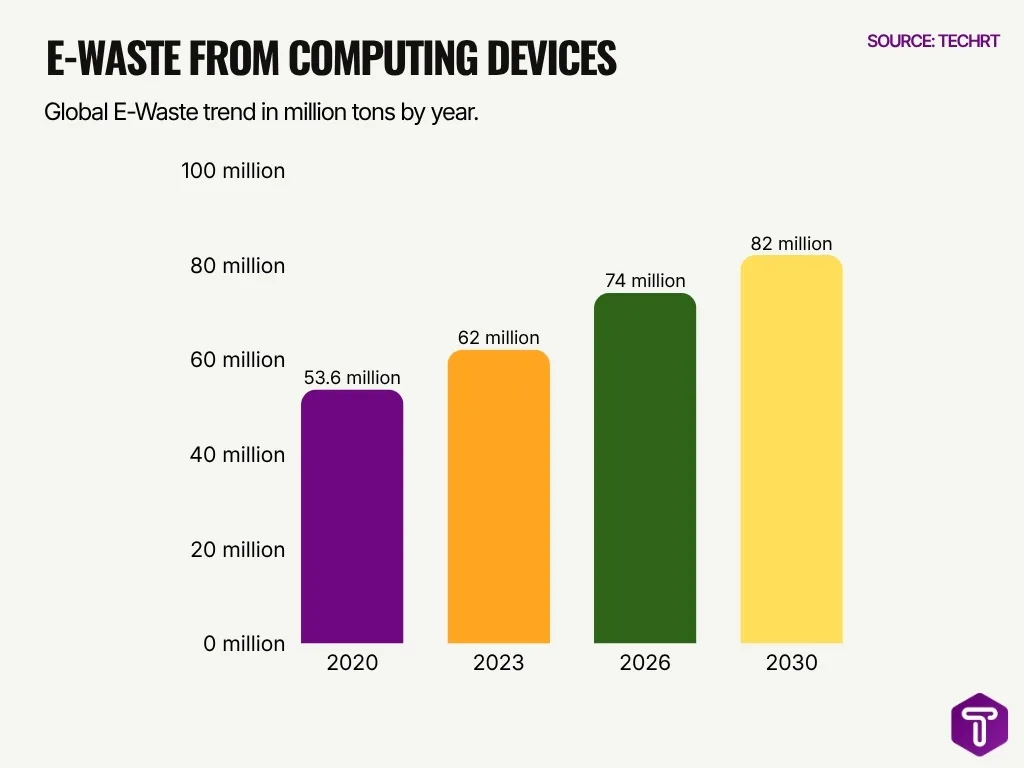
- Global e-waste from computing devices is increasing steadily, rising from 53.6 million tons in 2020 to 82 million tons by 2030.
- The data shows an overall increase of 28.4 million tons between 2020 and 2030.
- From 2020 to 2023, global e-waste grew by 8.4 million tons, reaching 62 million tons.
- By 2026, e-waste is projected to reach 74 million tons, showing a sharp increase of 12 million tons from 2023.
- The highest projected value is in 2030, with 82 million tons of global e-waste.
- The trend suggests that digital device consumption, shorter product life cycles, and frequent upgrades may be contributing to the growing e-waste problem.
- The continuous rise highlights the need for better recycling systems, responsible disposal, and sustainable computing practices.
- Managing e-waste effectively is important because discarded computing devices can contain valuable recoverable materials as well as hazardous substances that may harm the environment.
Water Usage in Computing
- Data centers consume approximately 560 billion liters of water annually worldwide.
- A single large data center can use 3–5 million gallons of water per day for cooling.
- Google reported 5.6 billion gallons of water consumption in 2022, highlighting scale.
- Microsoft’s water usage exceeded 1.7 billion gallons annually, prompting conservation initiatives.
- Water usage effectiveness has improved by over 15% in leading facilities.
- Water-efficient cooling systems can reduce consumption by up to 80% compared to traditional methods.
- Data centers in water-scarce regions increasingly adopt air cooling and recycled water systems.
- AI workloads may increase water demand by 20–30% by 2030 if unmanaged.
- Over 50% of hyperscale operators now report water usage publicly, improving transparency.
Data Center Cooling and Efficiency
- Cooling accounts for 30–40% of total data center energy use, making it a key efficiency target.
- Advanced liquid cooling can reduce cooling energy consumption by up to 50%.
- Free cooling techniques cut energy usage by 20–30% in suitable climates.
- Average PUE has improved from 2.0 in 2010 to around 1.58 in 2024.
- Hyperscale facilities achieve PUE as low as 1.1, setting industry benchmarks.
- AI-based cooling optimization reduces energy usage by up to 40%.
- Immersion cooling systems improve efficiency by up to 95% heat removal effectiveness.
- Data centers using renewable-powered cooling reduce emissions by up to 70%.
- Edge data centers often rely on compact cooling systems, reducing energy use by 10–20%.
Sustainability Challenges in Computing: Key Data Insights
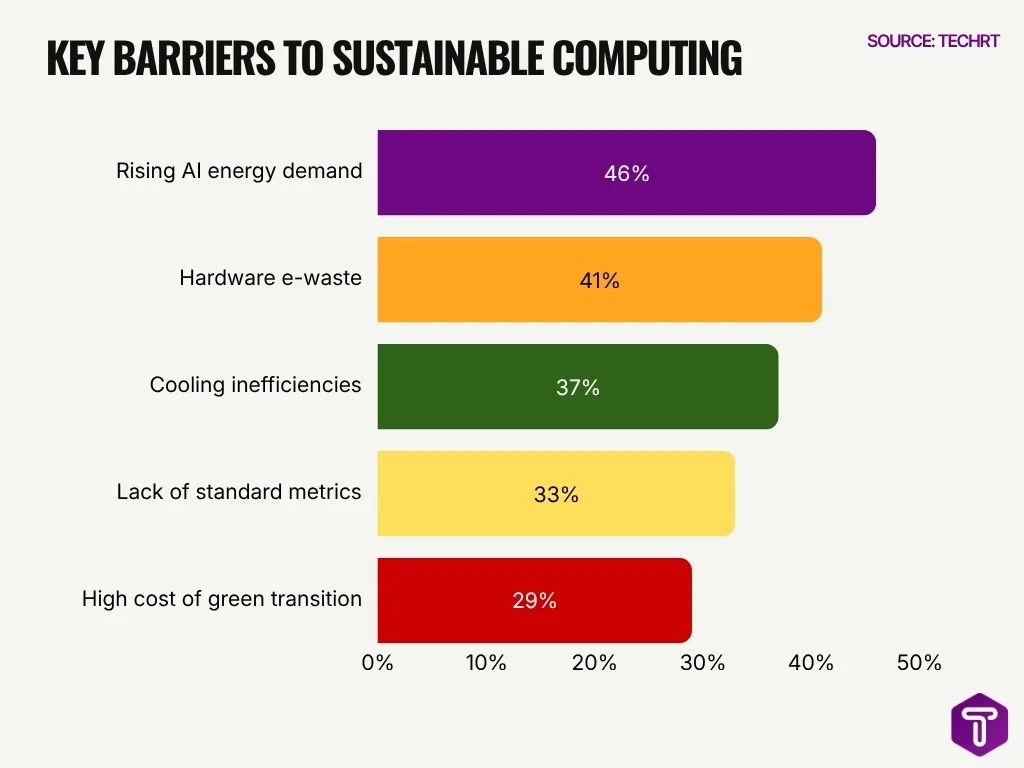
- Rising AI energy demand is the top sustainability challenge, cited by 46% of respondents. This suggests that the rapid growth of AI workloads is placing increasing pressure on energy systems.
- Hardware e-waste ranks second at 41%, highlighting concerns around the disposal, recycling, and lifecycle management of computing devices and infrastructure.
- Cooling inefficiencies affect 37% of responses, showing that data centers and high-performance computing environments still face major challenges in reducing energy waste from cooling systems.
- A lack of standard metrics is identified by 33% of respondents, suggesting that organizations may struggle to measure, compare, and report computing-related sustainability performance consistently.
- The high cost of green transition is the lowest-ranked challenge, but still significant at 29%. This reflects the financial burden of adopting cleaner technologies, energy-efficient hardware, and sustainable infrastructure.
- Overall, the data shows that the biggest concerns are linked to energy use, hardware lifecycle impacts, and infrastructure efficiency.
- The gap between the highest and lowest challenges is 17 percentage points, from 46% for rising AI energy demand to 29% for the high cost of green transition.
- The findings suggest that sustainable computing efforts should prioritize AI energy optimization, e-waste reduction, and more efficient cooling systems.
Frequently Asked Questions (FAQs)
How much electricity do data centers consume globally?
How fast is data center electricity demand growing?
What is the projected size of the green data center market?
How much electricity will data centers consume by 2030?
What share of global carbon emissions comes from data centers and networks?
Conclusion
Sustainable computing now sits at the intersection of energy demand, digital infrastructure growth, and environmental responsibility. As AI adoption accelerates and cloud computing expands, the pressure on power grids, water resources, and carbon budgets continues to increase. However, the data also highlights meaningful progress, from improved energy efficiency in hardware and software to wider adoption of renewable energy and smarter data center operations. Organizations that prioritize sustainable computing are not only reducing their environmental footprint but also gaining long-term cost advantages and operational resilience.
Looking ahead, continued innovation, stronger policy frameworks, and industry-wide collaboration will play a key role in balancing digital growth with sustainability goals.

Leave a comment
Have something to say about this article? Add your comment and start the discussion.