



Smartphone repairability has moved from a niche concern to a mainstream metric. With consumers holding devices longer and repair-friendly policies emerging in major markets, ease of repair now influences purchase decisions and sustainability outcomes. Both industry regulators and independent teardown labs are shaping how manufacturers design devices, while consumers save money by fixing rather than replacing hardware. In sectors from wireless carriers to enterprise device fleets, repairability scores are now a factor in procurement and lifecycle planning. Scroll on to explore the latest repair rankings, trends, and what they mean for users and the environment.
Editor’s Choice
- Fairphone 6 scored a perfect 10/10 repairability, topping independent teardown charts for 2025 and 2026.
- Most flagship smartphones still average between 5–7/10 on repairability by industry teardown standards.
- iFixit teardowns show repairability scores range from 0 to 10 across modern phones.
- Right-to-Repair laws now require repair scores to be displayed for electronics in France’s consumer market.
- Google Pixel 10 achieved approximately 6/10 repair score in recent teardowns.
- Consumer reports estimate Americans could save ~$49.6 billion annually by repairing products rather than replacing them.
- Survey data hints ~60% of Americans feel there are insufficient repair options for electronics.
Recent Developments
- European Union regulations rolling out in 2025, 2026 now require clear repairability labels on smartphones and tablets sold across the bloc.
- France’s repairability index system mandates the display of repair scores at the point of sale.
- Right-to-Repair activism has prompted longer post-sale spare-part availability requirements (e.g., 5+ years in some markets).
- iFixit’s annual teardown series continues to highlight poorly designed devices with low repair scores.
- Reports show major brands improving disassembly ease year-over-year as consumers demand better serviceability.
- Growing “Modular” phone designs champion user-replaceable parts to reduce e-waste and service costs.
- Tech policy circles increasingly cite repairability as a key sustainability metric for consumer electronics purchasing.
What Is a Smartphone Repairability Score?
- A repairability score quantifies how easily a smartphone can be opened, serviced, and restored.
- Scoring typically uses a 0–10 scale, with higher numbers meaning easier repair access.
- Factors include accessibility of screws over adhesive, replaceability of components, and clarity of documentation.
- Some scoring models also weigh the availability of parts and the cost of repair components.
- A perfect score (e.g., 10/10) implies a user-friendly modular design and widely available spare parts.
- Lower scores often reflect glued components, proprietary tools, or software barriers to part replacement.
- Governments (e.g., France) now require repair scores to help consumer choice transparency.
- Repairability scoring helps reduce e-waste by encouraging longer device life.
Smartphone Repairability Scores: Key Insights
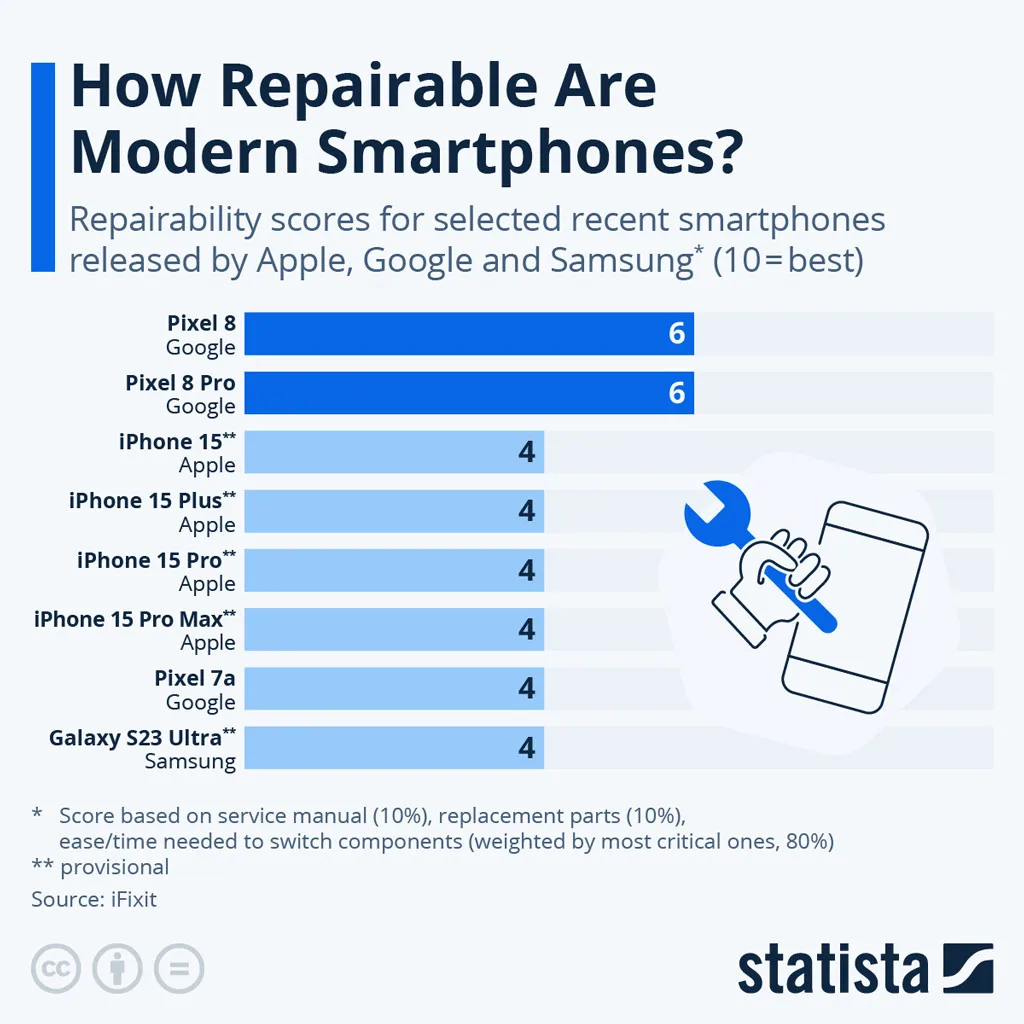
- Google Pixel 8 and Pixel 8 Pro lead the list with a repairability score of 6/10, making them the most repair-friendly models among recent flagships.
- All Apple iPhone 15 models (iPhone 15, 15 Plus, 15 Pro, and 15 Pro Max) received a low score of 4/10, indicating limited ease of repair.
- The Samsung Galaxy S23 Ultra also scored 4/10, showing that even premium Android devices face repair challenges.
- The Google Pixel 7a matched Apple and Samsung with a 4/10 score, suggesting that mid-range phones are not necessarily easier to fix.
- Google dominates repairability rankings, with its Pixel lineup achieving the highest scores (6/10) in this comparison.
- Overall, most modern smartphones fall below the midpoint, as 6/10 is the highest score recorded in this dataset.
- The scoring system heavily emphasizes repair difficulty, with 80% weight given to ease and time of component replacement.
- Service manuals and replacement parts availability contribute only 10% each, limiting their impact on final scores.
- A 4/10 score reflects restricted access to internal components, high repair costs, and complex disassembly processes.
- These results highlight how design choices and sealed components continue to reduce consumer repair options in today’s smartphones.
Repairability Scoring Criteria
- iFixit assigns 90% weight to design for repair, focusing on disassembly ease and modularity.
- French Repairability Index uses 5 equally weighted criteria, each max 2/10 points for a total of 10.
- Disassembly criterion penalizes adhesives over standard screws via step count and tool types.
- Documentation scores based on free availability commitment for 5–10 years.
- Spare parts availability requires delivery in under 5 days for max score in the French index.
- Battery replaceability is heavily weighted in software criteria, banning locks boosts scores.
- Proprietary tools lower disassembly scores; common tools like Phillips improve ease.
- iFixit scores average 6.5/10 for smartphones, 6/10 for laptops, emphasizing modularity.
- Adhesives add reassembly time penalty, reducing scores by up to 20–30% vs screws.
- A parts price ratio under 40% of the device cost earns high marks in the accessibility criterion.
Global Averages & Trends in Repairability Scores
- Average phone repairability scores hover around 6.5/10 across many models.
- Some mid-range and budget phones tend to score higher than flagship models due to a more modular design.
- Nordic and European brands (e.g., Fairphone) consistently outscore mainstream competitors.
- Average repairability for mainstream phones has increased year-over-year in the U.S. and EU markets.
- Consumer demand for repairable devices is rising, especially among sustainability-driven buyers.
- Repair scores significantly impact resale value and refurbishment potential.
- Policies requiring spare part availability and repair disclosure help push global trends upward.
- Repairability is increasingly highlighted alongside battery life and durability in tech reviews.
Smartphone Repair Market Growth Statistics
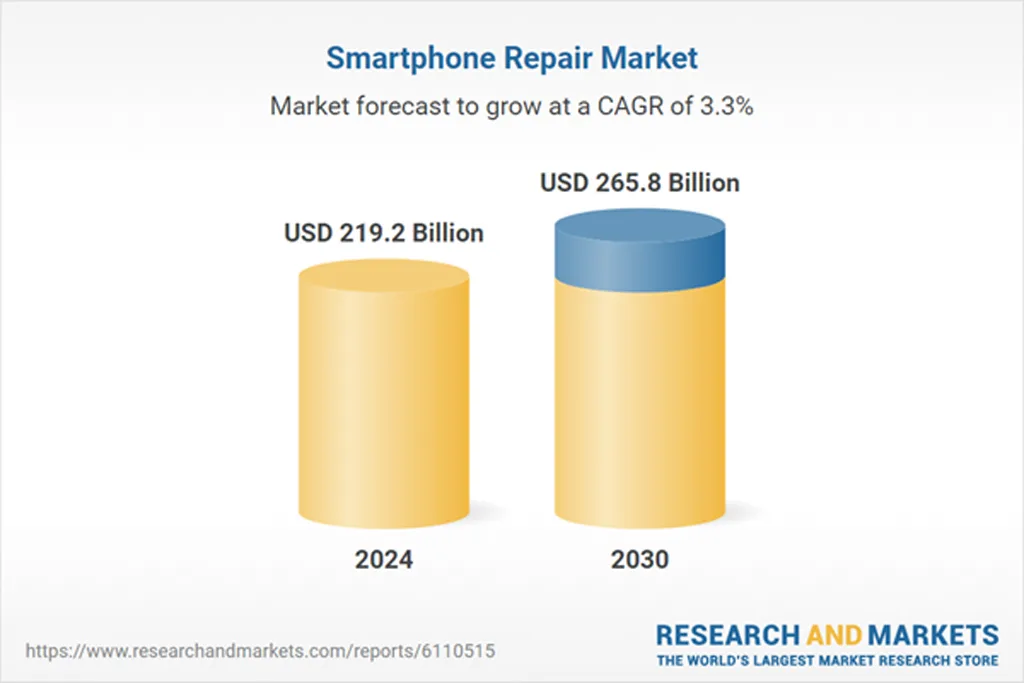
- The global smartphone repair market was valued at $219.2 billion in 2024, reflecting strong demand for device maintenance and refurbishment services.
- The market is projected to reach $265.8 billion by 2030, indicating steady long-term expansion in the repair industry.
- Between 2024 and 2030, the market is expected to grow at a compound annual growth rate (CAGR) of 3.3%, driven by rising smartphone usage worldwide.
- The industry is forecast to add nearly $46.6 billion in total market value over six years, highlighting sustained consumer reliance on repair services.
- Increasing smartphone prices and longer device lifecycles are contributing to higher demand for cost-effective repair solutions globally.
Top Repairability Scores
- Fairphone 6 continues to rank at the very top with a 10/10 repairability score in iFixit’s 2025 teardown ratings.
- Fairphone models, including Fairphone 4 and Fairphone 5, also score among the highest, with iFixit rating them both at 10/10 repairability.
- HMD smartphones, such as the HMD Crest Max 5G and HMD Skyline, score near the top at ~9.0/10 on independent repairability indexes.
- Modular phones historically outperform sealed devices, often landing in the 8.0+ range across multiyear scoring sets.
- Data from community-curated rankings show that some older midrange models still outscore flagship phones in repair ease.
- Mainstream flagship phones rarely break into the top 10 most repairable list due to design complexity and adhesive use.
- Repairability scoring continues to trend upward for brands offering official spare parts and clear repair guides.
Lowest Repairability Scores
- Foldable and complex devices tend to fare poorly; community data positions models like Samsung Galaxy S25 Ultra among the least repairable phones in 2025.
- Phones with heavy reliance on adhesive and proprietary parts score low (often ~1–3/10) in teardown rankings.
- Certain legacy foldable models, like the Motorola Razr (2020), scored as low as 1/10 on teardown assessments, driven by fragile design.
- Mainstream devices without modular design features typically cluster near the bottom of repairability lists.
- Flagship phones, which require specialized tools and manufacturer-specific procedures, often score below industry averages.
- Lack of official spare parts availability pushes some phones lower, even when the teardown design isn’t the most complex.
- Repair ecosystems that rely on proprietary software pairing further depress practical repairability metrics for several premium models.
iPhone Repairability Trends
- iPhone 15 models upgraded to a 7/10 repairability score from 4/10 by iFixit.
- iPhone 12, 13, and 14 series maintain 4/10 repairability scores unchanged.
- iPhone 16 models provisionally awarded a 7/10 repairability score by iFixit.
- Seven iPhone parts now trigger repair issues due to parts pairing, up from three in 2017.
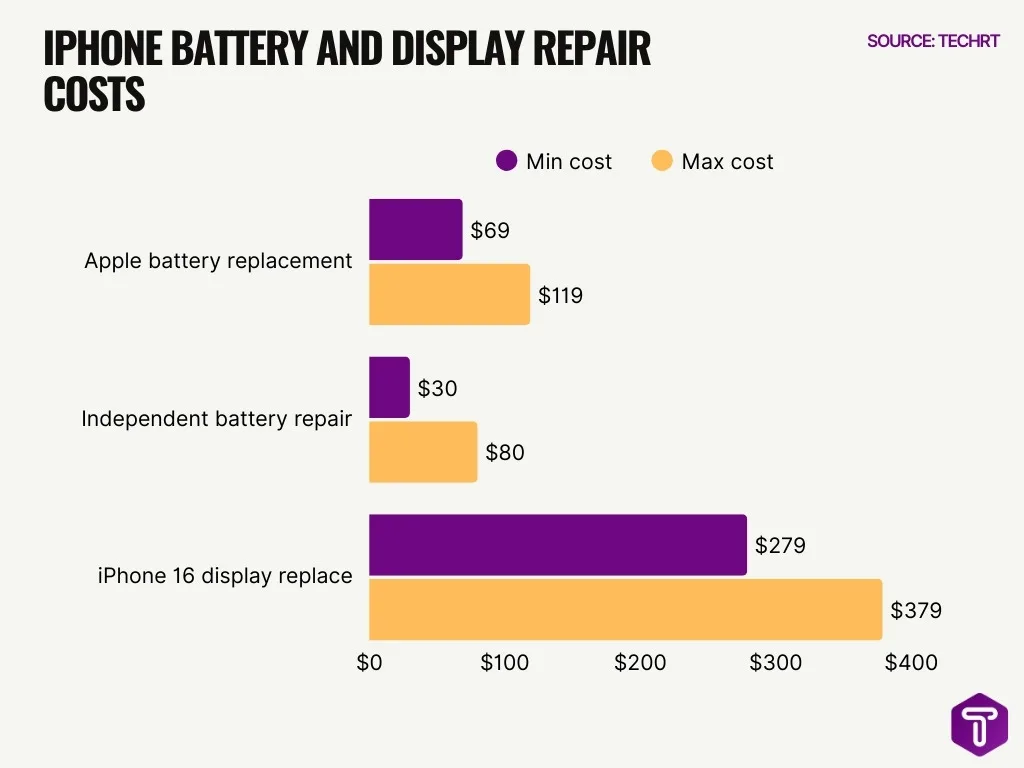
- Apple battery replacements cost $69–$119, versus $30–$80 at independent shops.
- Apple display replacements range from $279 to $379 for the iPhone 16 series.
- Apple tripled service locations to 3,000+ independent providers with genuine parts access.
- 78% of independent shops offer more iPhone repairs than Apple stores.
- 41% of independent repairs are services Apple won’t perform in-store.
- AppleCare+ generates $9 billion annually, boosted by parts pairing restrictions.
Samsung Galaxy Scores
- Flagship Galaxy models often score below average (~4–6/10) on teardown sites due to sophisticated assembly and strong adhesive use.
- Complex curved displays and sealed rear glass raise disassembly difficulty sharply.
- Adhesive battery mounts and multiple bonded components increase score penalties.
- Even when parts are available, access remains challenging without professional tools.
- Community rankings specifically place the Samsung S25 Ultra near the least repairable smartphones for 2025.
- Software-linked calibration steps for parts like cameras and biometrics can block simple swap repairs.
- Regional variations in Samsung parts support availability influence practical user repairability.
Google Pixel Scores
- Pixel phones generally score ~5–7/10 in repairability thanks to straightforward displays and battery accessibility.
- Battery replacement is easier on some Pixel models due to front glass removal rather than the rear.
- Display removal typically uses fewer adhesive zones than competitors.
- Recent Pixel models continue to improve parts availability through official stores.
- Individual community rankings (e.g., 2025) cite certain Pixel variants as most repairable in the mainstream segment.
- However, internal cable layouts and diagnostic locks can still pose challenges for owners.
- Pixel line repair scores fluctuate based on model generation and design shifts year to year.
Fairphone Repairability
- Fairphone remains the benchmark for repairability, with Fairphone 6 earning a perfect 10/10 score.
- Fairphone devices feature modular parts such as battery, screen, cameras, and USB plugs that are user-replaceable.
- The company pledges eight years of software updates and a five-year warranty for its latest models.
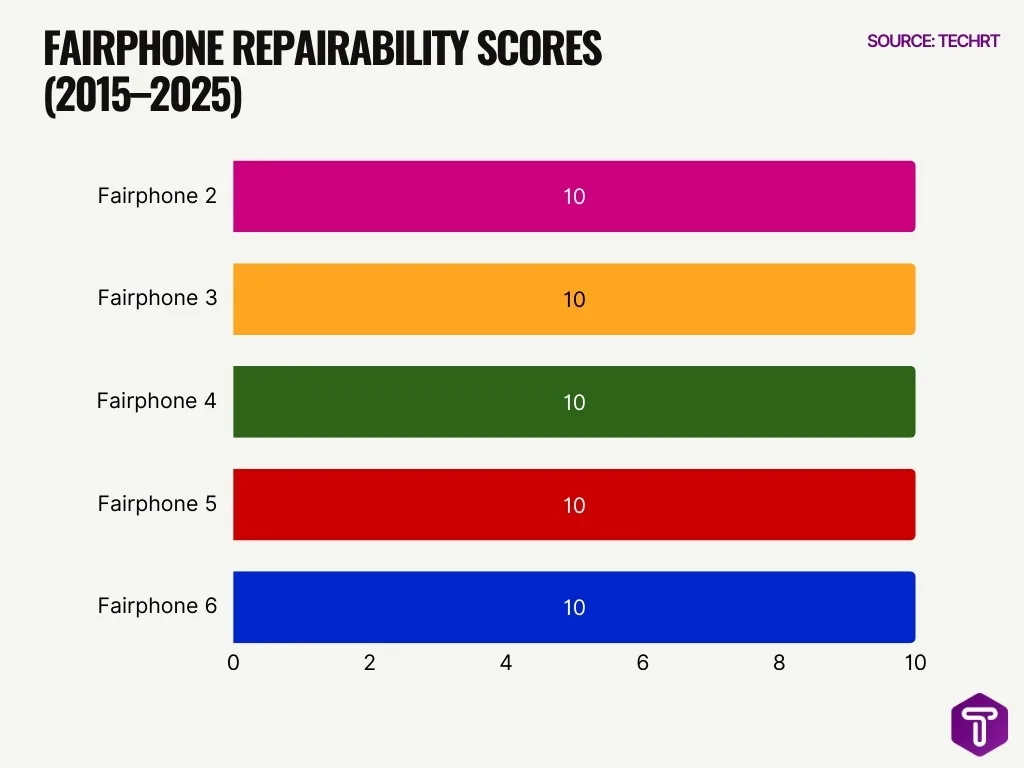
- All Fairphone series starting from the Fairphone 2 have historically scored top repair marks.
- Fairphone’s approach increases device longevity and reduces e-waste footprint significantly.
- Replacement parts such as screens and batteries are widely documented and accessible.
- Modular design also enables users to upgrade components without replacing the entire device.
HMD and Nokia Scores
- HMD’s Skyline and Crest Max 5G rank highly (~9/10) for design, allowing easy component access.
- Some Nokia-branded budget phones offer standard screw-in access and removable batteries, boosting repair metrics.
- Midrange models with modular backplates improve DIY repair ease versus sealed flagship builds.
- HMD’s collaboration with teardown guide communities enhances repair friendliness beyond hardware.
- Availability of parts and repair documentation remains better than many mainstream brands.
- Repair ratings indicate HMD phones can compete with top repair scores in non-modular lines.
- Variability exists within HMD’s lineup depending on model generation and update support.
Most Repairable Smartphones 2025
- Fairphone 6 earns a perfect 10/10 repairability score from iFixit in 2025.
- Fairphone 5 secures a flawless 10/10 score on iFixit‘s repairability scale.
- Fairphone 4 achieves a top 10/10 rating for modular design from iFixit.
- Fairphone 3 receives a perfect 10/10 repairability from iFixit teardown.
- HMD Skyline scores an impressive 9/10 overall repairability from iFixit.
- HMD Crest Max 5G rated 9/10 for repairability with no back cover adhesive.
- Shift6m earns a strong 9/10 repairability score from iFixit.
- Fairphone devices hold top spots in iFixit‘s 2025 most repairable phones list.
- Reddit threads rank Fairphone 6 as 2025‘s most repairable smartphone.
Mobile Device Repairability Matters Most to Black Consumers
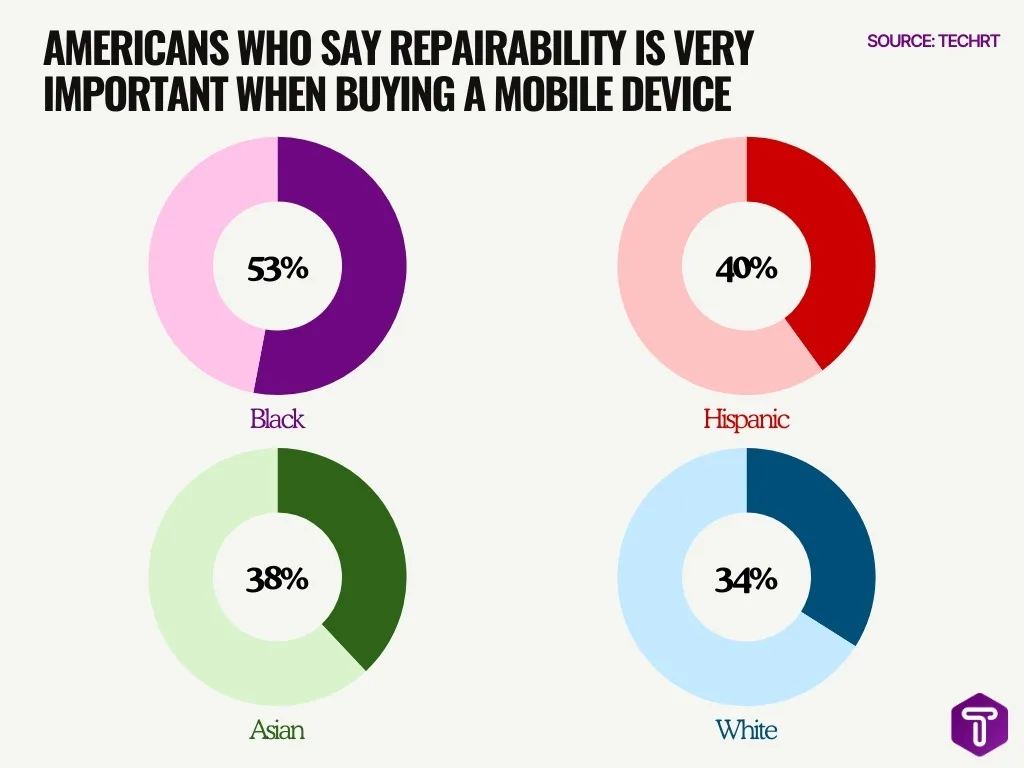
- Black consumers lead in prioritizing repairability, with 53% saying it is very important when buying a mobile device.
- Hispanic buyers follow, as 40% consider repairability a key factor in their smartphone purchase decisions.
- Asian consumers show strong concern, with 38% emphasizing the importance of repair-friendly devices.
- White buyers report the lowest priority, yet a significant 34% still rate repairability as very important.
- Across all groups, over one-third of Americans value device repairability, highlighting a growing demand for long-lasting and sustainable smartphones.
- Based on a nationally representative survey of 2,075 U.S. adults, the data reflect increasing awareness about repair costs, device lifespan, and right-to-repair issues.
Breakdown of iFixit Repairability Scores Across Major Models
- iFixit’s scoring scale (0–10) evaluates phones for ease of opening, part accessibility, and repair documentation.
- Fairphone models (2 through 6) are noted as the *only phones ever to reach perfect 10/10 repairability ratings.
- Community teardown summaries from 2025 show adhesive-free screen repairs significantly improve scores for top models.
- Most high-end flagship models (e.g., premium Samsung or Oppo variants) settle closer to the 4–6 range due to complex assembly.
- Middle-range smartphones with modular internals often score in the 7–9 range, making them easier to service than many premium devices.
- Phones with batteries secured by screws rather than adhesive typically score one to two points higher.
- iFixit’s aggregate data supports the trend that repairability improves when parts are commonly available and easy to remove.
Regional Repairability Regulations (e.g., France, India Repairability Index)
- France mandates smartphones display Repairability Index scores since January 2021.
- Fairphone 4 scored a leading 9.3/10 on France’s smartphone index.
- Samsung Galaxy A55 achieved 8.7/10 under France repairability rules.
- Average smartphone score across France’s index stands at 6.5/10.
- 76 smartphone models published scores on France’s official index by 2023.
- Only 28% of French consumers noticed the index during 2021 purchases.
- India’s panel proposed a 1–5 scale index for mobiles and tablets in 2025.
- Belgium enforced the Repairability Index for electronics starting May 2025.
- 40% of French smartphones were repaired pre-2021 index launch.
- India’s smartphone market grew 8% in value during 2025.
Impact of Repairability on Sustainability & E-Waste
- Repairing devices for 50% longer cuts annual replacements by a third, slashing e-waste and emissions.
- Extending smartphone lifespan by 33% avoids carbon emissions equal to Ireland’s annual total.
- Producing one smartphone emits 60 kg CO₂, avoided entirely by opting for repairable or refurbished models.
- Keeping phones in use for seven years via repairs reduces global warming potential by 44%.
- France’s repairability index targets a 60% repair rate for electronics by 2025, curbing e-waste.
- Refurbishing smartphones saves 58 kg CO₂e per device by doubling their usable life.
- 46% of devices at recycling centers are reusable or repairable, preventing unnecessary waste.
- Repair over replacement for laptops cuts greenhouse gas emissions by up to 92%.
- Global e-waste recycling rate stands at just 17%, highlighting the urgency for sustainability.
Key Barriers to Smartphone Repair and Sustainability
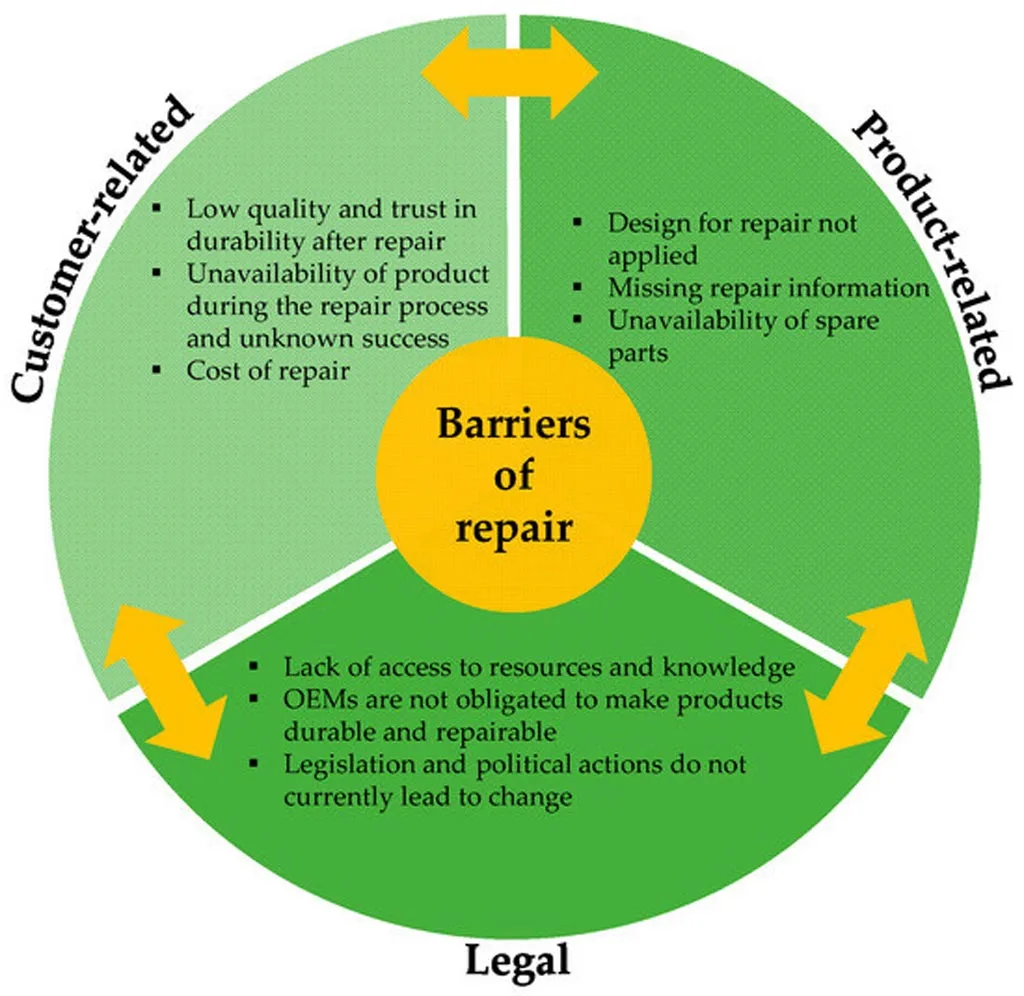
- Customer-related barriers include low trust in post-repair durability, making users hesitant to fix their devices instead of replacing them.
- Many consumers face product unavailability during repairs, along with uncertain repair success rates, which reduces confidence in repair services.
- The high cost of repair remains a major obstacle, often making repairs more expensive than buying new devices.
- Product-related barriers arise from poor repair-friendly design, where devices are not built for easy disassembly or component replacement.
- The absence of clear repair manuals and technical documentation limits access to reliable repair information.
- Limited availability of spare parts makes it difficult for independent repair shops and users to perform affordable repairs.
- Legal and regulatory barriers include a lack of access to technical resources and training, restricting repair capabilities.
- Many Original Equipment Manufacturers (OEMs) are not legally required to design products that are durable and repairable.
- Weak legislation and slow political action continue to prevent systemic improvements in repairability standards.
Repairability Improvements Over Time
- Fairphone models from Fairphone 2 (2015) to Fairphone 6 (2025) consistently earned 10/10 iFixit repairability scores.
- Google Pixel repairability improved from 5/10 in Pixel 7 (2022) to 6/10 in Pixel 10 (2025).
- iPhone series shifted to replaceable back glass in 2022, boosting scores from a 4/10 average pre-2022 to 6/10 in iPhone 16 (2024).
- Samsung Galaxy S maintained steady Phillips screws dominance, achieving 4/10 scores from S22 (2022) to S25 Ultra (2025).
- 80% of the iFixit score derives from design for repair, emphasizing screw-based over adhesive assembly.
- EU Repairability Index mandates disclosures since 2021, lifting average smartphone scores by 15% through 2025.
- Fairphone influenced the industry with modular designs, achieving a unique 10/10 across 5 generations (2015–2025).
- Average iFixit smartphone repair score rose from 3.5/10 (2018–2020) to 5.2/10 (2024–2025).
- Google provides free manuals and parts post-2022, contributing to Pixel score gains of 20%.
- 10% score boost from OEM parts availability under 25% MSRP, spurring manufacturer partnerships.
Frequently Asked Questions (FAQs)
What is the typical repairability score scale used for smartphones?
What is the repairability score of the Fairphone 6 according to recent iFixit data?
What provisional repairability score did the Google Pixel 10 receive in recent evaluations?
On what scale will India’s new Repairability Index score smartphones?
What is the average repairability score reported for products under France’s repairability index framework?
Conclusion
Smartphone repairability is no longer a fringe concern; it’s emerging as a mainstream metric that affects consumer choice, manufacturer transparency, and sustainability outcomes. Top repairable devices like the Fairphone 6 continue to set new standards in design and serviceability, while global policies from France to India push the industry toward greater accountability and consumer empowerment.
Repairability scores help buyers evaluate long-term value, reduce e-waste, and support circular economy goals. As scoring systems mature and regulators tighten requirements, repairability will increasingly shape smartphone ecosystems worldwide.

Leave a comment
Have something to say about this article? Add your comment and start the discussion.