



The beauty industry continues to expand as consumers spend more on skincare, cosmetics, and personal care products across both digital and physical channels. Beauty brands now leverage social media, AI-powered personalization, and e-commerce to influence purchasing behavior and accelerate product discovery. From dermatologist-backed skincare routines to TikTok-driven makeup trends, the sector reflects how technology and lifestyle changes shape consumer demand. The statistics below highlight the latest data on market size, revenue distribution, and industry trends to help readers understand where the global beauty market stands and where it is heading next.
Editor’s Choice
- The global beauty industry is expected to generate over $703 billion in revenue in 2026, reflecting steady expansion across skincare, cosmetics, and fragrance categories.
- The global cosmetics market reached $354.68 billion in 2025, and analysts project it will grow to $375.62 billion in 2026.
- The broader cosmetics industry was valued at $466 billion globally in 2024, highlighting strong demand for personal care products.
- The beauty market is projected to grow around 5% annually through 2030, driven by innovation, personalization, and premiumization.
- Gen Z accounts for roughly 40% of global beauty consumers, making it one of the most influential demographics shaping trends and marketing strategies.
- Online beauty sales were estimated at $53 billion globally in 2025 and could reach $70 billion by 2029.
- Skincare generated over $122 billion in global revenue in 2025, reinforcing its position as the largest beauty category.
Recent Developments
- The beauty industry recorded about 10% global growth in the last 12 months, indicating strong post-pandemic consumer demand.
- Asia-Pacific beauty sales increased 14.3% year over year, making it the fastest-growing region globally.
- North America beauty sales grew 9.6% annually, driven by strong skincare and fragrance demand.
- Europe’s beauty sector expanded 5.8% year over year, reflecting slower but stable growth compared with Asia.
- Fragrance has become one of the fastest-growing categories, fueled by premium and niche brands.
- 75% of beauty executives report prioritizing revenue growth and expansion into new product categories in the upcoming years.
- Beauty brands increasingly rely on AI personalization and data analytics to recommend products and enhance customer experience.
- Social media and influencer marketing continue to drive discovery, particularly among younger consumers.
- Luxury beauty trends now emphasize clinical efficacy and dermatologist-backed formulations, influencing purchasing decisions.
Global Beauty Industry Overview
- The global beauty market reached over €290 billion in estimated value in 2024, demonstrating strong demand worldwide.
- Global beauty market growth averaged about 4.5% in 2024, returning to steady expansion after the pandemic surge.
- Analysts expect the beauty market to reach around $590 billion by 2030 across key segments, including skincare, haircare, and cosmetics.
- The cosmetics sector alone generated $354.68 billion in 2025, showing how personal care dominates consumer spending.
- Emerging markets increasingly drive growth due to expanding middle classes and rising disposable incomes.
- E-commerce and social commerce channels continue to reshape how consumers discover and purchase beauty products.
- Premium beauty brands are expanding globally, particularly in Asia and the Middle East.
- Industry innovation increasingly focuses on sustainability, inclusivity, and personalized beauty solutions.
Personalized Beauty Market Growth Statistics
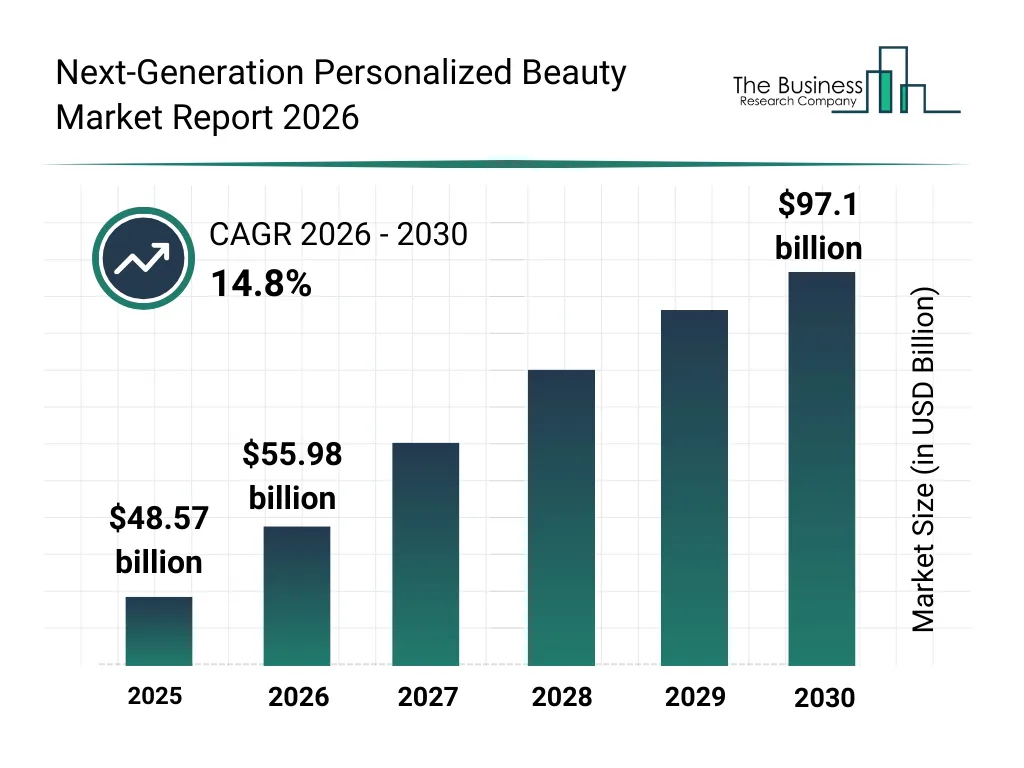
- The global personalized beauty market was valued at $48.57 billion in 2025, marking the starting point of strong growth driven by AI-powered skincare, customized cosmetics, and data-driven beauty solutions.
- In 2026, the market is expected to grow to $55.98 billion, reflecting increasing consumer demand for tailored beauty products and personalized skincare routines.
- The industry is projected to expand at a compound annual growth rate (CAGR) of 14.8% between 2026 and 2030, indicating rapid adoption of personalization technologies in the beauty sector.
- By 2027, the market size is forecast to reach approximately $64.26 billion, as brands increasingly use AI diagnostics, skin analysis tools, and personalized formulations.
- Continued innovation and rising demand for custom skincare and beauty recommendations are expected to push the market to around $73.78 billion in 2028.
- In 2029, the personalized beauty industry is projected to grow further to approximately $84.71 billion, supported by data-driven beauty platforms and subscription-based personalization models.
- By 2030, the global market is expected to reach $97.1 billion, nearly doubling its 2025 value, highlighting the strong long-term growth potential of personalized beauty solutions worldwide.
- The growth is largely driven by AI-powered beauty technology, consumer demand for customized skincare, and the increasing use of digital skin analysis tools by major beauty brands.
Online vs Offline Beauty Sales
- Global online beauty sales surpassed $53 billion in 2025, reflecting the rapid shift toward digital shopping channels.
- E-commerce accounted for around 22% of total global beauty sales in 2024, up from roughly 16% before 2020.
- Offline retail still dominates, representing approximately 78% of global beauty purchases through department stores, pharmacies, and specialty retailers.
- U.S. consumers purchased more than 70% of beauty products in physical stores in 2024, highlighting the importance of in-store testing and product sampling.
- Specialty beauty retailers drove double-digit in-store sales growth in 2024, particularly in skincare and fragrance.
- Online beauty spending is projected to reach about $70 billion globally by 2029, showing sustained digital growth.
- Roughly 60% of beauty shoppers research products online before buying in-store, blending digital discovery with offline purchasing.
- Around 40% of beauty buyers say social media influences their purchase decisions, especially for makeup and skincare.
- Hybrid retail models, including buy online, pickup in-store services, grew by over 25% in the beauty sector between 2022 and 2024.
E-commerce and DTC Beauty Sales
- Direct-to-consumer beauty brands generated over $17 billion in global online revenue in 2024, driven by digital-first startups.
- Beauty e-commerce sales in the United States reached around $21 billion in 2024, making it one of the fastest-growing personal care categories online.
- Digital beauty sales grew four times faster than offline channels between 2019 and 2024.
- Nearly 65% of Gen Z consumers prefer buying beauty products online, often through mobile apps and social platforms.
- Beauty subscriptions and membership programs increased by about 20% year over year in 2024, fueled by skincare routines and refill programs.
- Social commerce now drives approximately 15% of online beauty purchases, especially through TikTok and Instagram shops.
- More than 45% of DTC beauty brands launched between 2018 and 2024 rely primarily on online channels, reducing dependence on traditional retailers.
- AI-powered product recommendations can increase beauty e-commerce conversion rates by up to 30%.
- Online beauty retailers report that mobile devices account for over 70% of beauty e-commerce traffic.
Major Segments of the Global Beauty Industry
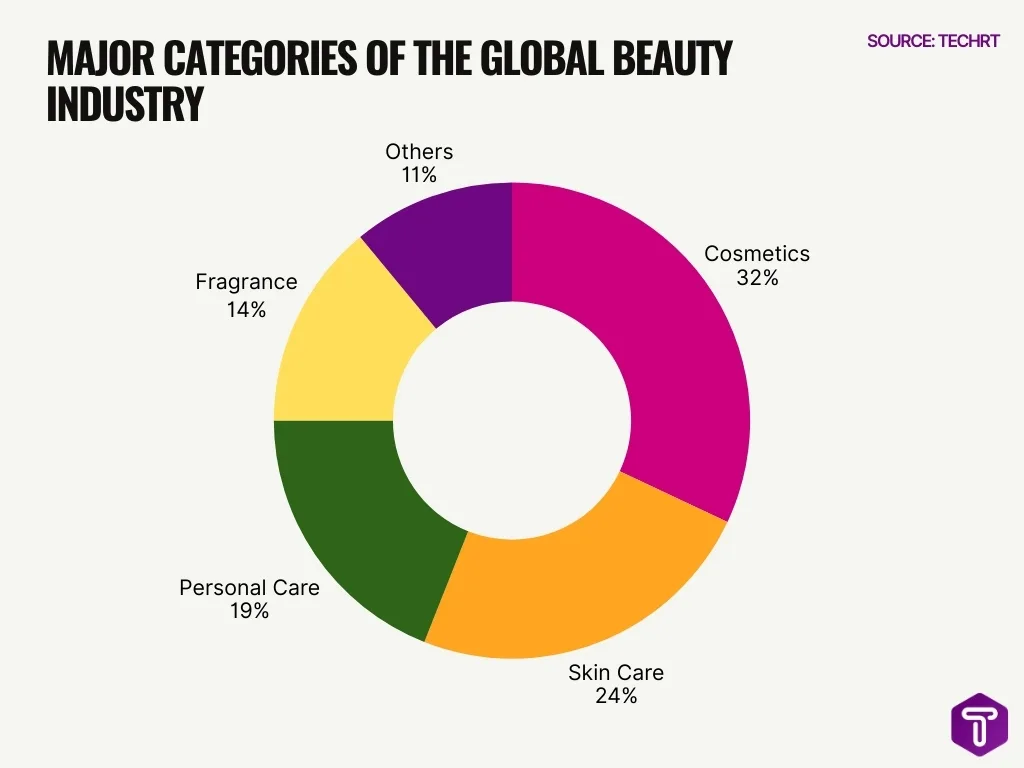
- Cosmetics dominate the beauty industry, accounting for the largest share at 32% of the total market, highlighting the strong global demand for makeup and color cosmetic products.
- Skin care ranks as the second-largest segment, representing 24% of the industry, driven by increasing consumer focus on skincare routines, anti-aging products, and dermatological treatments.
- Personal care products hold a significant share of 19%, covering everyday essentials such as shampoos, soaps, deodorants, and hygiene products.
- The fragrance segment contributes 14% of the market, reflecting steady consumer demand for perfumes, body sprays, and luxury fragrance brands.
- Other beauty categories account for 11%, which may include beauty tools, niche cosmetics, and emerging personal grooming products.
- Combined, cosmetics and skin care make up 56% of the beauty industry, meaning more than half of global beauty spending is concentrated in these two categories.
- The remaining segments. personal care, fragrance, and others collectively represent 44%, showing the industry’s diverse product ecosystem beyond traditional makeup and skincare.
Beauty Industry Revenue by Region
- Asia-Pacific leads global beauty growth with 14.3% year over year sales increases.
- North America recorded 9.6% annual beauty market growth, driven by premium skincare and fragrance demand.
- Latin America saw 10.4% growth in beauty sales, showing rising consumer spending in emerging markets.
- Europe experienced 5.8% growth, reflecting stable but slower expansion compared with Asia.
- Asia-Pacific accounted for 37.76% of global skincare revenue in 2024, making it the largest regional market.
- Emerging markets such as India are attracting global beauty brands due to rapid consumer demand growth.
- India’s luxury beauty market is expected to expand from $800 million in 2023 to $4 billion by 2035.
- The United States remains one of the largest beauty markets globally, driven by high per-capita spending and strong retail infrastructure.
Beauty Consumer Demographics and Behavior
- Women still represent around 65% of total beauty industry spending globally, though male and gender-neutral segments are growing.
- Nearly 72% of consumers say skincare is the most essential part of their beauty routine, surpassing makeup usage.
- About 45% of consumers prefer beauty brands with transparent ingredient lists, reflecting rising demand for clean beauty products.
- Roughly 50% of beauty shoppers research ingredients before buying a product, particularly for skincare and haircare.
- Around 35% of global beauty buyers are influenced by online reviews and ratings before purchasing.
- Consumers now use an average of 6 to 8 skincare products daily, according to dermatology and consumer surveys.
- About 55% of beauty shoppers prioritize product effectiveness over brand reputation when choosing skincare.
- Sustainability influences purchasing decisions for nearly 40% of global beauty consumers.
- More than 30% of consumers say influencer recommendations affect their beauty purchases.
Beauty Spending by Age Group
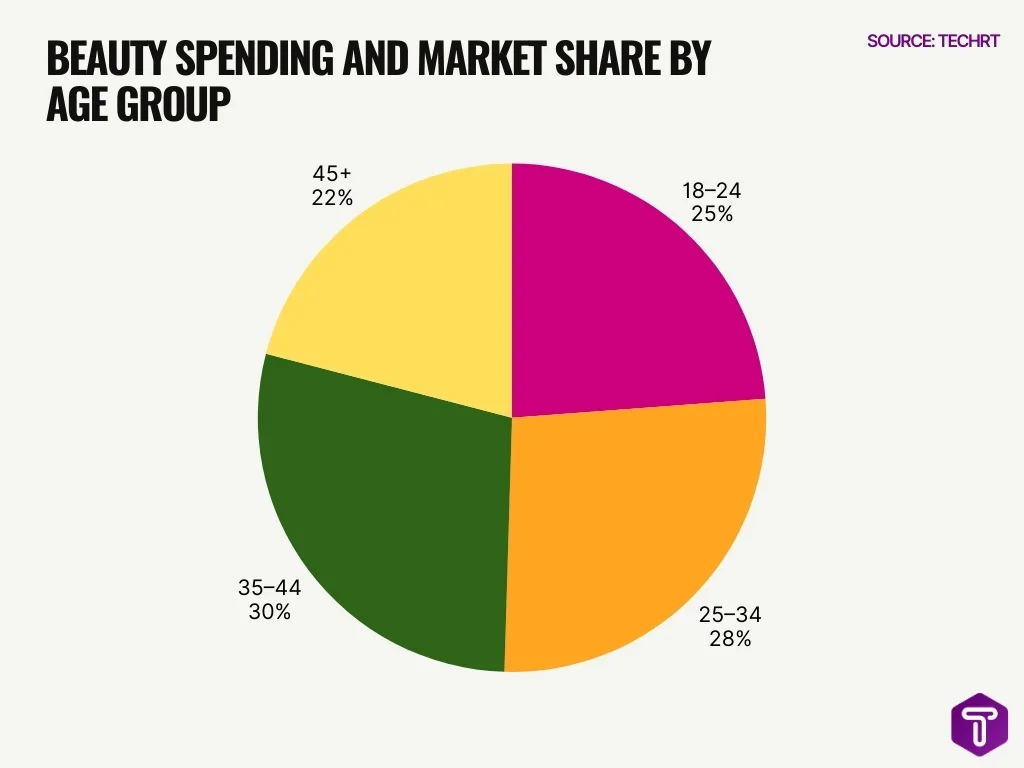
- Consumers aged 25–34 represent the largest beauty spending group globally, accounting for roughly 28% of purchases.
- Millennials spend an average of $2,670 annually on beauty products in the U.S., including skincare, cosmetics, and haircare.
- Gen Z consumers spend approximately $1,800 per year on beauty products, with skincare dominating purchases.
- Consumers aged 18–24 account for nearly 25% of global cosmetics sales, largely driven by makeup and skincare experimentation.
- Shoppers aged 35–44 focus heavily on anti-aging skincare, representing nearly 30% of premium skincare purchases.
- The 45+ age group contributes roughly 22% of beauty market revenue, particularly in haircare and dermatology products.
- Teen consumers influence over $500 billion in annual family spending globally, including beauty and personal care purchases.
- Younger consumers are twice as likely to try new beauty brands compared with older shoppers, accelerating brand discovery.
- Older consumers typically maintain higher brand loyalty rates, especially for skincare and haircare products.
Men’s Grooming and Beauty Market
- The global men’s grooming market reached about $81 billion in 2024, reflecting expanding male interest in skincare and grooming products.
- The sector is projected to exceed $115 billion by 2030, growing at a steady pace across skincare and haircare segments.
- Men’s skincare alone generated over $15 billion globally in 2024, with strong growth in facial cleansers and moisturizers.
- Around 68% of men now use at least one skincare product daily, according to consumer surveys.
- Beard care products experienced over 7% annual growth in 2024, driven by grooming trends and premium product lines.
- Approximately 40% of male consumers buy grooming products online, compared with lower levels earlier in the decade.
- Younger male consumers aged 18–34 account for nearly half of men’s grooming purchases.
- Premium men’s fragrances recorded double-digit sales growth in 2024, highlighting increasing male participation in luxury beauty markets.
- Dermatology-inspired men’s skincare products have grown over 12% annually since 2021.
Gen Z and Beauty Consumption
- Gen Z represents about 40% of global beauty consumers, making it the most influential demographic in shaping industry trends.
- Around 70% of Gen Z shoppers discover beauty brands through social media platforms, especially TikTok and Instagram.
- Nearly 60% of Gen Z consumers prioritize skincare over makeup, reflecting a shift toward skin-first beauty routines.
- Gen Z beauty spending is expected to exceed $90 billion globally by 2030.
- Approximately 55% of Gen Z shoppers prefer brands that promote sustainability and ethical sourcing.
- Gen Z consumers are three times more likely to try new beauty brands compared with older demographics.
- Roughly 48% of Gen Z buyers purchase beauty products directly through social media apps.
- TikTok beauty content generated over 90 billion hashtag views in 2024, demonstrating its role in product discovery.
- About 65% of Gen Z consumers rely on influencer reviews before buying beauty products.
Average Monthly Beauty Spending Among Americans
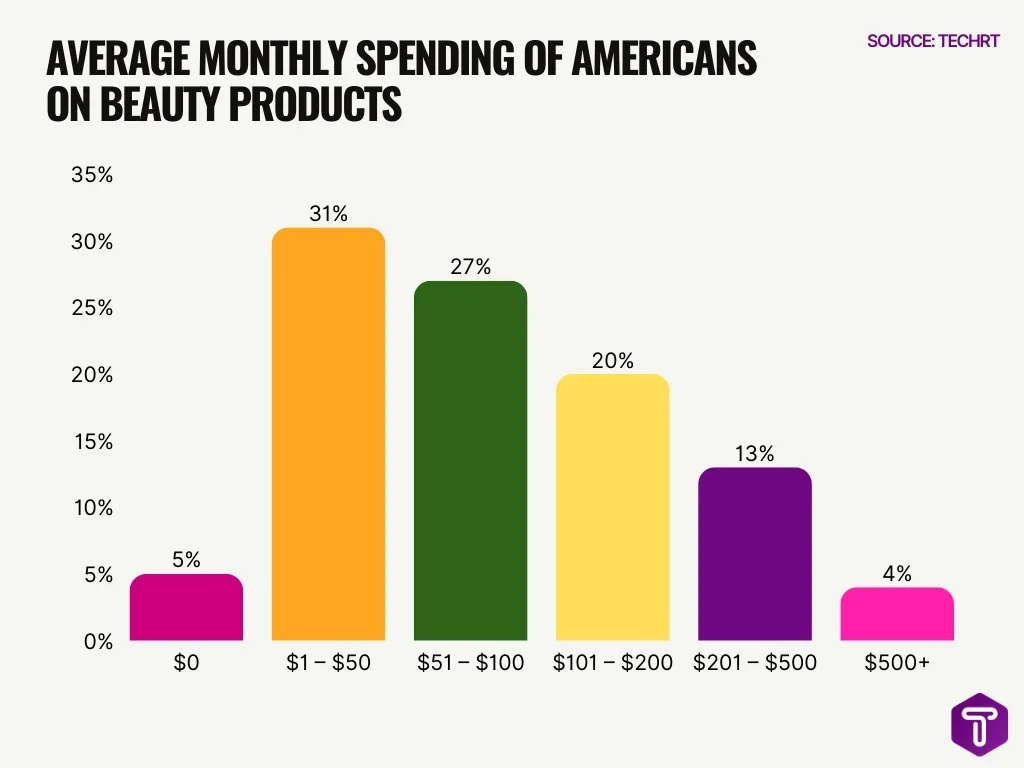
- The largest group of Americans spends $1–$50 per month on beauty products, accounting for 31% of consumers, making it the most common spending range.
- About 27% of Americans spend $51–$100 monthly, showing that a significant portion of consumers maintain moderate beauty budgets.
- Roughly 20% of consumers spend between $101–$200 per month, indicating a strong mid-range market for skincare, cosmetics, and personal care products.
- Higher spending brackets are less common, with 13% of Americans spending $201–$500 per month on beauty products.
- Only 4% of consumers spend more than $500 per month, representing a small but lucrative premium beauty market segment.
- Interestingly, 5% of Americans report spending $0 on beauty products each month, suggesting a small portion of consumers either avoid beauty purchases or buy very infrequently.
- Overall, 78% of Americans spend $100 or less per month on beauty products, highlighting that beauty consumption is largely concentrated in lower to mid-range spending levels.
Natural, Organic, and Clean Beauty Market
- The global clean beauty market was valued at approximately $7.2 billion in 2024.
- Analysts expect the clean beauty market to reach around $15 billion by 2030, reflecting rapid consumer adoption.
- Nearly 40% of global beauty consumers prefer natural or organic ingredients in personal care products.
- Organic cosmetics sales increased by roughly 12% year over year in 2024, outpacing conventional beauty growth.
- Around 70% of U.S. consumers say ingredient transparency is important when choosing beauty products.
- The natural skincare segment represents over 45% of the clean beauty market, making it the dominant category.
- Sustainable packaging initiatives have increased among over 60% of clean beauty brands globally.
- The United States remains one of the largest markets for clean beauty products, driven by regulatory awareness and ingredient-focused consumers.
- Demand for vegan and cruelty-free beauty products has increased by more than 20% since 2021.
Sustainable and Eco-Friendly Beauty Products
- The global sustainable beauty market was valued at about $52 billion in 2024 and is projected to surpass $76 billion by 2030.
- Roughly 65% of global consumers consider sustainability when choosing beauty brands, according to consumer research surveys.
- Around 70% of beauty buyers say they prefer environmentally friendly packaging, including recyclable or refillable containers.
- More than 50% of beauty brands introduced refillable packaging programs by 2024, particularly in skincare and fragrance lines.
- The demand for vegan beauty products grew by roughly 20% between 2022 and 2024, reflecting rising ethical consumption.
- Nearly 45% of Gen Z consumers actively seek sustainable beauty products, making them a key driver of eco-conscious trends.
- Beauty brands using carbon-neutral or low-emission manufacturing processes have increased by about 30% since 2021.
- Refillable fragrance bottles can reduce packaging waste by up to 60% compared with traditional packaging.
- Biodegradable packaging innovations in cosmetics are expected to grow over 15% annually through 2030.
Online Beauty Industry Revenue Growth Statistics
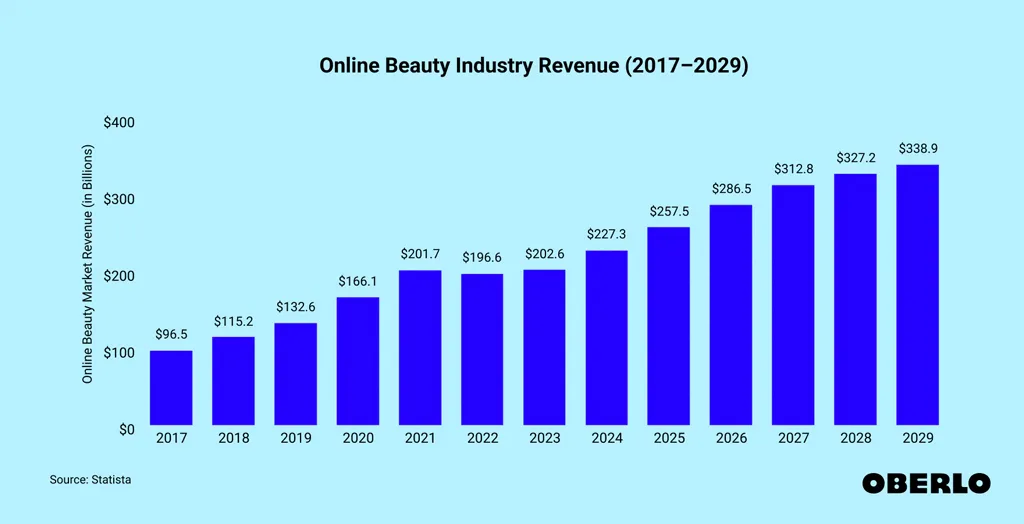
- The global online beauty industry revenue increased from $96.5 billion in 2017 to a projected $338.9 billion by 2029, reflecting the rapid expansion of e-commerce in beauty and personal care.
- Revenue surpassed the $100 billion mark in 2018, reaching $115.2 billion, highlighting the early surge of online beauty retail adoption.
- The market continued strong growth through 2019, climbing to $132.6 billion, driven by rising digital shopping trends and beauty e-commerce platforms.
- During the pandemic-driven e-commerce boom in 2020, online beauty sales jumped to $166.1 billion, as more consumers shifted toward online shopping channels.
- By 2021, the market crossed the $200 billion milestone, reaching $201.7 billion, marking a significant turning point for digital beauty sales worldwide.
- In 2022, revenue saw a slight dip to $196.6 billion, reflecting post-pandemic normalization in online shopping behavior.
- The industry quickly rebounded in 2023, rising to $202.6 billion, indicating renewed growth in online cosmetics and skincare sales.
- Projections show continued expansion, with revenue expected to reach $227.3 billion in 2024 and $257.5 billion in 2025.
- The market is forecast to exceed $300 billion by 2027, reaching $312.8 billion, driven by mobile commerce, social commerce, and direct-to-consumer beauty brands.
- By 2029, the global online beauty industry revenue is projected to hit $338.9 billion, underscoring the long-term growth potential of beauty e-commerce.
Skincare Market Overview
- The global skincare market reached around $122 billion in 2025, making it the largest segment within the beauty industry.
- Analysts expect the skincare market to reach $129 billion in 2026, driven by anti-aging products and dermatology-based formulations.
- Skincare products account for about 40% of global beauty market revenue, highlighting their dominant position.
- The anti-aging skincare segment alone generated more than $62 billion globally in 2024.
- Sunscreen and UV protection products experienced over 9% annual growth in 2024, reflecting rising awareness about skin health.
- Asian markets, especially South Korea and Japan, strongly influence global skincare trends and innovation.
- Dermatology-backed skincare products saw double-digit growth in 2024, fueled by science-based formulations.
- The demand for personalized skincare solutions powered by AI and skin diagnostics increased over 20% between 2022 and 2024.
- Facial serums and treatment-based skincare products represent one of the fastest-growing product categories, expanding at roughly 8% annually.
Makeup and Color Cosmetics Market Overview
- The global color cosmetics market generated about $108.5 billion in revenue in 2024.
- Analysts project the color cosmetics market will exceed $136 billion by 2032, supported by new product launches and influencer-driven marketing.
- Lip products remain one of the most popular categories, representing around 20% of global cosmetics sales.
- Foundation and complexion products generated roughly $25 billion in global revenue in 2024.
- TikTok and Instagram continue to accelerate makeup trends, with beauty-related content receiving over 90 billion views in 2024.
- Consumers increasingly prefer multifunctional makeup products, such as tinted moisturizers and hybrid skincare cosmetics.
- The premium cosmetics segment grew about 7% annually in 2024, reflecting rising demand for luxury beauty products.
- Clean and vegan makeup products now represent nearly 15% of the cosmetics market, showing rapid growth in ethical beauty segments.
- Online makeup sales increased over 18% year over year in 2024, driven by influencer marketing and digital product discovery.
Haircare Market Overview
- The global haircare market reached approximately $96 billion in 2024, with steady growth expected over the next decade.
- The market is projected to exceed $120 billion by 2030, driven by innovation in hair treatments and styling products.
- Shampoo products account for about 35% of total haircare revenue, making them the largest category.
- Hair color products generated over $23 billion globally in 2024, reflecting ongoing demand for home coloring solutions.
- Natural and sulfate-free haircare products grew over 10% annually between 2022 and 2024.
- Hair loss treatment products saw strong demand, particularly among consumers aged 35 and older.
- Professional salon haircare brands experienced about 8% growth in 2024, recovering after pandemic-related declines.
- The demand for scalp care products increased significantly, with double-digit growth reported in 2024.
- Subscription-based haircare services and personalized formulas have grown around 15% annually since 2021.
Leading Beauty Companies by Global Sales
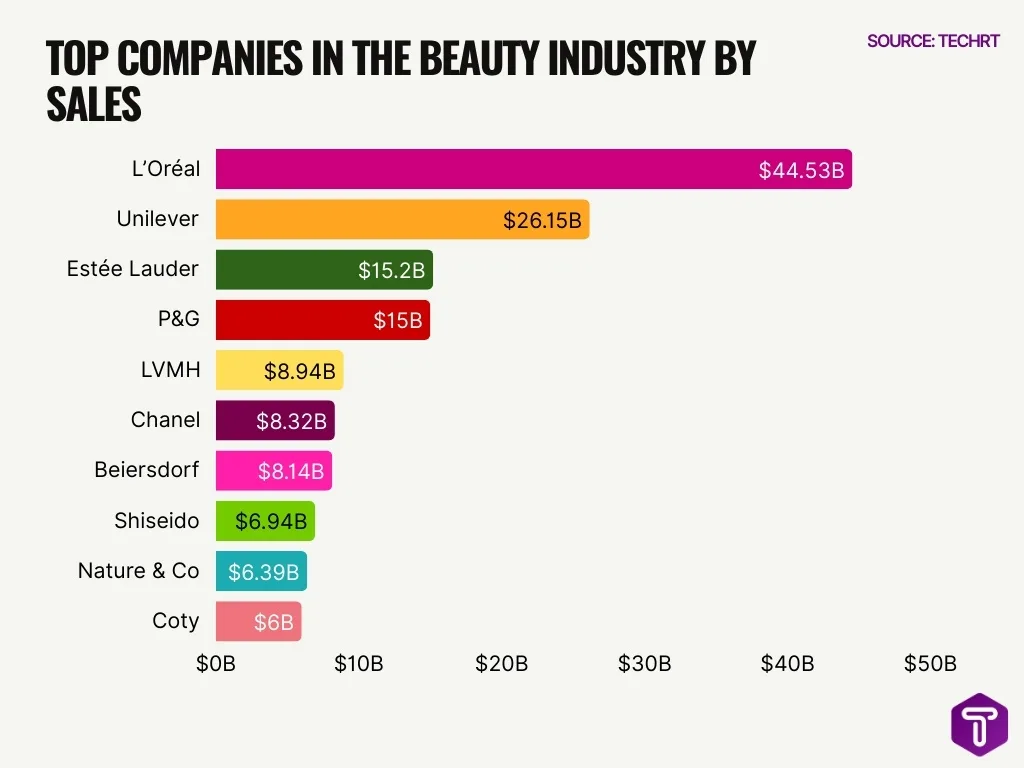
- L’Oréal leads the beauty industry with approximately $44.53 billion in sales, making it the largest beauty company worldwide by revenue.
- Unilever ranks second, generating around $26.15 billion in beauty-related sales, highlighting its strong portfolio of personal care and grooming brands.
- Estée Lauder holds the third position with $15.2 billion in revenue, reflecting its dominance in the premium skincare, cosmetics, and fragrance segments.
- Procter & Gamble (P&G) follows closely with about $15 billion in sales, driven by major brands across skincare, haircare, and grooming products.
- LVMH’s beauty division recorded around $8.94 billion in revenue, supported by luxury brands in perfume and cosmetics.
- Chanel generated approximately $8.32 billion, maintaining a strong presence in the high-end fragrance and luxury beauty market.
- Beiersdorf, known for brands like Nivea, reported about $8.14 billion in sales, reflecting strong global demand for skincare products.
- Shiseido posted roughly $6.94 billion in revenue, positioning it among the top Asian beauty companies globally.
- Nature & Co (Natura &Co) generated about $6.39 billion in sales, driven by brands such as Natura, Avon, and The Body Shop.
- Coty rounds out the top 10, with approximately $6 billion in sales, supported by its portfolio of fragrance and cosmetics brands.
Frequently Asked Questions (FAQs)
How big is the global cosmetics market in 2025?
What CAGR is expected for the global cosmetics market through 2034?
What share of the beauty market does skincare represent?
How large is the global skincare market in 2025?
What is the projected value of the global cosmetics market by 2034?
Conclusion
The beauty industry continues to evolve as consumer expectations, technology, and sustainability reshape the market. Global demand for skincare, cosmetics, and haircare products remains strong, while digital commerce, influencer marketing, and personalization technologies redefine how consumers discover and purchase beauty products. At the same time, trends such as clean beauty, eco-friendly packaging, and science-backed skincare are pushing brands to innovate and adapt. As the industry approaches $700+ billion in global value, companies that embrace transparency, sustainability, and data-driven personalization will likely capture the next phase of growth in the beauty market.

Leave a comment
Have something to say about this article? Add your comment and start the discussion.