



Digital sovereignty has rapidly evolved from a niche policy concept into a defining factor in how nations and businesses manage their digital ecosystems. Governments now enforce stricter controls on data storage and processing, especially in sensitive sectors such as healthcare, finance, and defense, where noncompliance and security risks carry significant consequences. At the same time, enterprises are shifting toward sovereign cloud models to reduce exposure to foreign jurisdiction laws, strengthen operational resilience, and meet rising regulatory expectations. For instance, U.S. federal cloud mandates and Europe’s sovereign infrastructure initiatives directly influence how organizations architect their IT systems and choose vendors.
This shift is not just regulatory; it is strategic. Companies now view data control as a competitive advantage, enabling faster compliance, improved customer trust, and stronger cybersecurity postures. As geopolitical tensions and digital transformation accelerate in parallel, digital sovereignty is becoming central to long-term technology planning. Understanding the data behind this movement helps clarify where the market is heading and how organizations can respond effectively. Let’s explore the latest digital sovereignty statistics.
Editor’s Choice
- The global sovereign cloud market reached $154.69 billion in 2025 and is projected to hit $195.35 billion in 2026.
- The market is expected to surpass $1.13 trillion by 2034, growing at a 24.6% CAGR.
- Data sovereignty and localization market size stood at $27.35 billion in 2025.
- This market is projected to reach $147.43 billion by 2035, reflecting strong regulatory demand.
- The sovereign cloud segment alone generated $56.1 billion in 2025 globally.
- North America led the data sovereignty segment in 2024, with the largest revenue share.
- Governments are investing heavily, with the digital sovereignty public sector market valued at $19.75 billion in 2026.
Recent Developments
- The European Commission launched a sovereign cloud procurement initiative worth €180 million in 2026.
- Over 40 countries expanded data localization laws between 2024 and 2025, increasing compliance complexity.
- The sovereign cloud market is projected to grow from $156.2 billion in 2026 to $572.3 billion by 2032.
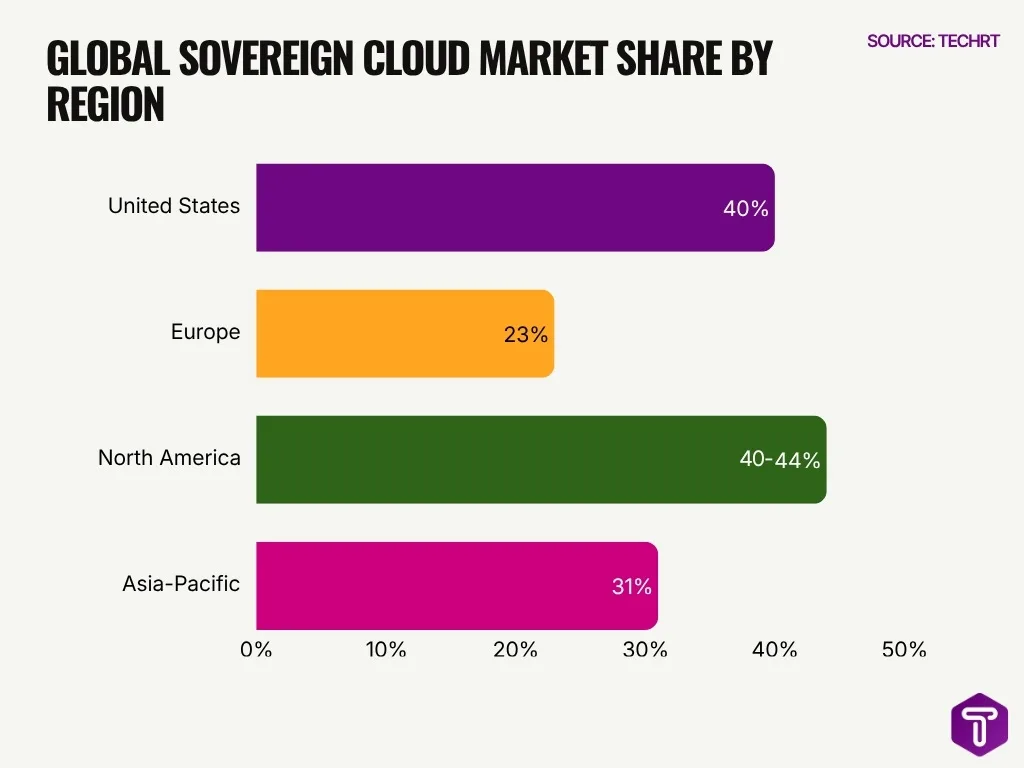
- Europe accounted for 23% of the global sovereign cloud market in 2025, highlighting regional leadership.
- Asia-Pacific reached $41.73 billion in sovereign cloud value in 2025, showing rapid expansion.
- The U.S. data sovereignty market reached $7.12 billion in 2025, driven by compliance with global regulations.
- Sovereign cloud adoption is accelerating due to geopolitical tensions and stricter data control laws.
- Governments increasingly require SEAL-level compliance frameworks for sovereign cloud providers.
What Is Digital Sovereignty
- Digital sovereignty refers to a nation’s ability to control data, infrastructure, and digital services within its jurisdiction.
- It extends beyond data location to include governance, operational control, and legal authority.
- Over 70% of enterprises now consider data jurisdiction risks when choosing cloud providers.
- Digital sovereignty often includes data localization, encryption control, and access governance.
- Sovereignty strategies increasingly integrate AI governance and blockchain-based auditability.
- Governments view digital sovereignty as a national security and economic competitiveness factor.
- Organizations adopting sovereign models often prioritize vendor independence and interoperability.
- Digital sovereignty is increasingly tied to cloud infrastructure and cross-border data governance frameworks.
Digital Sovereignty by Country
- The United States accounts for over 40% of global hyperscale data‑center capacity, underpinning its leadership in sovereign cloud infrastructure.
- Europe holds about 23% of the global sovereign cloud market, driven by GDPR and regional data sovereignty policies.
- China’s sovereign cloud market is projected to reach around $12.5 billion in 2026, reflecting aggressive state‑backed digital infrastructure builds.
- India’s sovereign cloud market is expected to grow at a 28% CAGR from 2026 to 2033, among the highest globally.
- North America captured roughly 40–44% of sovereign cloud revenue in 2024–2025, remaining the largest regional share.
- The Asia‑Pacific region contributes over 31% of global sovereign cloud revenue, fueled by rapid digitalization and localization shifts.
- Indonesia, Saudi Arabia, and Vietnam introduced or tightened data localization laws between 2024–2025, directly boosting sovereign infrastructure demand.
- Over 98% of global enterprises now recognize digital sovereignty as a strategic priority, though only about 52% have implemented full strategies.
- Europe leads in regulatory frameworks, with GDPR and the Data Act influencing over 70% of global data‑sovereignty‑aligned corporate policies.
- Middle East countries have more than doubled sovereign infrastructure projects since 2020, following stricter data localization mandates.
Global Digital Sovereignty Market Size Statistics
- The sovereign cloud market grew from $154.69 billion in 2025 to $195.35 billion in 2026.
- It is forecast to reach $1.13 trillion by 2034, driven by regulatory and enterprise demand.
- Data sovereignty market CAGR is estimated at 18.39% from 2026 to 2035.
- The U.S. market alone is expected to grow from $7.12 billion in 2025 to $34.08 billion by 2035.
- The global data sovereignty segment is projected to reach $304 billion by 2033.
- Sovereign cloud market CAGR is expected to exceed 24% between 2026 and 2034.
- Asia-Pacific is projected to grow to $54.92 billion in 2026, highlighting regional acceleration.
- The global cloud computing market reached $1.29 trillion in 2025, supporting sovereignty demand.
- Sovereign cloud solutions account for over 55% of market share in data sovereignty segments.
Digital Sovereignty Adoption Rates
- Over 60% of enterprises globally are adopting or planning sovereign cloud strategies.
- Sovereign cloud adoption is growing at more than 24% annually across global markets.
- Data localization laws now impact over 100 countries worldwide.
- BFSI and healthcare sectors show adoption rates above 55% due to compliance needs.
- Government‑led projects account for nearly 40% of sovereign cloud deployments globally.
- Smart city initiatives are driving sovereign cloud adoption in Asia and the Middle East at over 20% yearly growth.
- Enterprises are moving toward multi‑cloud and sovereign cloud hybrid models, with over 50% already using both.
- Adoption is driven by concerns over cross‑border access laws such as the U.S. CLOUD Act, affecting nearly 70% of multinational firms.
- Over 65% of organizations report improved compliance and reduced risk after adopting sovereignty frameworks.
- Global sovereign cloud spend is projected to reach $80 billion by 2026, up 35.6% year‑on‑year.
Digital Sovereignty Spending Trends
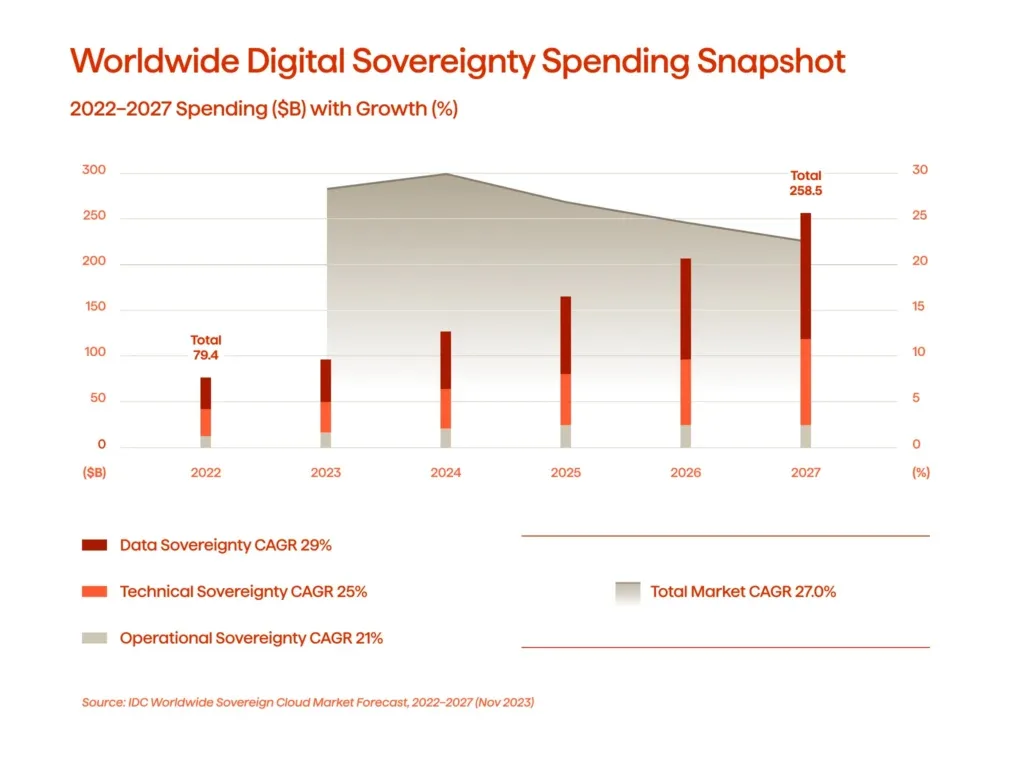
- The global digital sovereignty market is projected to grow from $79.4 billion in 2022 to $258.5 billion by 2027, reflecting massive expansion.
- The market is expected to register a strong CAGR of 27%, highlighting rapid enterprise and government adoption worldwide.
- Data sovereignty is the fastest-growing segment with a 29% CAGR, reaching approximately $140 billion by 2027, driven by data localization and privacy regulations.
- Technical sovereignty is expanding steadily at a 25% CAGR, climbing to nearly $85 billion in 2027, fueled by demand for sovereign cloud and infrastructure control.
- Operational sovereignty shows consistent growth with a 21% CAGR, expected to hit around $35 billion by 2027, supporting governance, compliance, and operational independence.
- Total spending is expected to cross $200 billion by 2026, indicating a key inflection point in enterprise investment.
- Between 2023 and 2025, the market sees accelerated growth from roughly $95 billion to $160 billion, showcasing strong mid-term momentum.
- Data sovereignty consistently dominates the market share, contributing the largest portion of total spending across all years.
- The widening gap between data sovereignty and operational sovereignty highlights the prioritization of data control over operational frameworks.
- The steady rise across all segments signals a global shift toward digital independence, especially amid increasing geopolitical and regulatory pressures.
Digital Sovereignty Regulations
- As of 2025, more than 130 countries have implemented some form of data sovereignty or localization law.
- The EU’s GDPR continues to influence over 70% of global data protection frameworks.
- The U.S. CLOUD Act affects cross-border data access for over 90% of global cloud providers operating in the U.S.
- China’s Personal Information Protection Law (PIPL) impacts all foreign firms processing Chinese user data.
- India’s Digital Personal Data Protection Act (2023) is expected to regulate over 800 million internet users.
- Brazil’s LGPD applies to over 75% of Latin American digital businesses handling personal data.
- Data transfer restrictions increased compliance costs by 20–30% for multinational enterprises in 2025.
- Over 60% of enterprises cite regulatory complexity as a key barrier to digital transformation.
- New sovereignty-focused regulations now require real-time auditability and encryption control in cloud systems.
Digital Sovereignty and Data Localization
- Data localization laws now affect over 75% of global internet users, shaping how data is stored.
- Countries with strict localization policies saw up to 15% increase in domestic data center investments.
- The global data center market reached $347 billion in 2025, driven partly by localization demand.
- Enterprises report 25% higher infrastructure costs when complying with strict localization requirements.
- Localization policies reduced cross-border data transfers by nearly 20% in regulated industries.
- Financial services firms lead adoption, with over 68% storing sensitive data locally.
- Healthcare organizations increased localized data storage by over 30% between 2024 and 2025.
- Emerging markets saw 40% growth in domestic cloud providers due to localization mandates.
- Hybrid data storage models combining local and global infrastructure grew by 28% in 2025.
Digital Sovereignty and Cloud Adoption
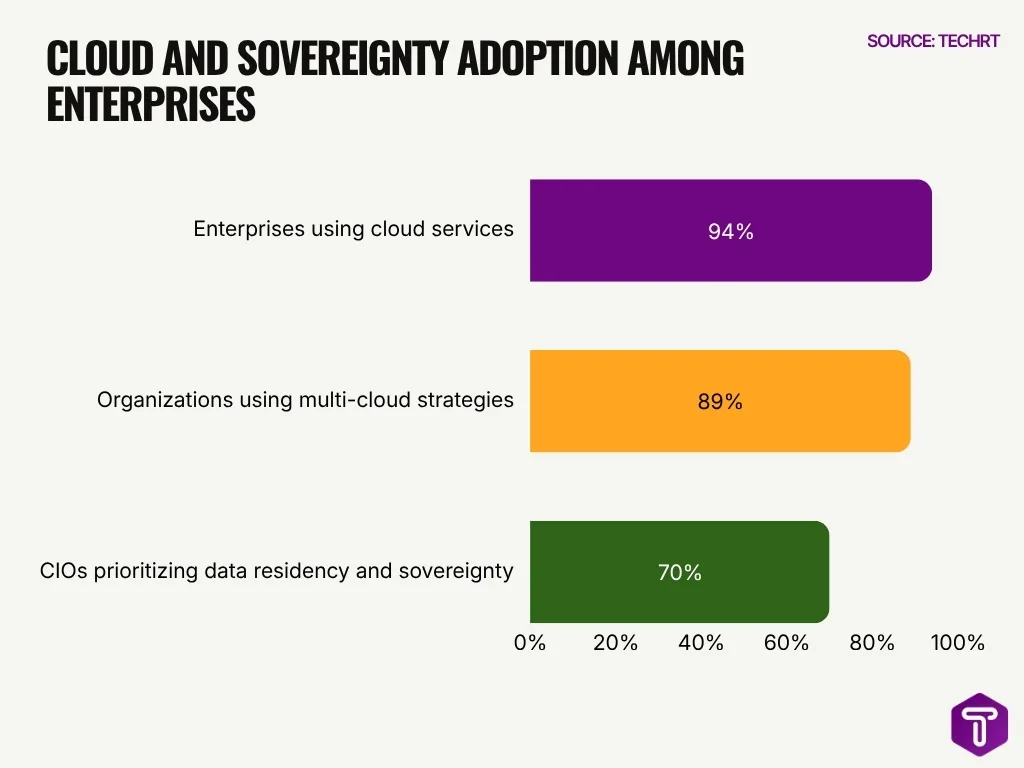
- Over 94% of enterprises use cloud services, with many shifting toward sovereign cloud models.
- Sovereign cloud adoption grew by over 30% in regulated industries in 2025.
- Multi-cloud strategies are used by 89% of organizations, often to meet sovereignty requirements.
- Public sector cloud adoption increased by 26% globally in 2025, driven by sovereignty mandates.
- Sovereign cloud solutions account for over 55% of new government cloud contracts.
- Enterprises report 20% lower compliance risk when using sovereign cloud environments.
- The hybrid cloud market is expected to reach $262 billion by 2027, supporting sovereignty strategies.
- Cloud providers offering sovereign solutions saw revenue growth of 35% in 2025.
- Over 70% of CIOs prioritize data residency and sovereignty in cloud vendor selection.
Digital Sovereignty and Cybersecurity
- Cybersecurity spending reached $215 billion globally in 2025, with sovereignty as a key driver.
- Organizations using sovereign cloud reported 30% fewer cross-border data breach risks.
- Data breaches cost companies an average of $4.45 million in 2025, reinforcing the adoption.
- Over 68% of CISOs cite data sovereignty as critical to security strategy.
- Governments increased cybersecurity budgets by over 18% in 2025.
- Sovereign infrastructure reduces dependency on foreign vendors, lowering supply chain risks by 22%.
- Zero-trust security models are implemented by over 60% of sovereign cloud deployments.
- Critical infrastructure sectors saw 40% growth in sovereign cybersecurity investments.
- AI-driven cybersecurity tools are integrated into over 50% of sovereign cloud systems.
Digital Sovereignty and AI Governance
- Over 70% of countries are developing AI governance frameworks tied to data sovereignty.
- The global AI governance market is projected to reach $6.9 billion by 2026.
- Sovereign AI initiatives received $12 billion in public funding globally in 2025.
- AI systems handling sensitive data must comply with sovereignty laws in over 80 jurisdictions.
- Enterprises report 35% higher trust levels when AI systems operate within sovereign frameworks.
- The EU AI Act will impact over 30,000 companies globally, reinforcing sovereignty controls.
- Sovereign AI infrastructure adoption grew by 29% in 2025.
- Governments prioritize transparent AI models and local data control in sovereignty strategies.
- AI compliance costs increased by 18% in 2025, driven by sovereignty regulations.
Digital Sovereignty and Open Source
- Open-source software powers over 90% of cloud infrastructure globally, supporting sovereignty goals.
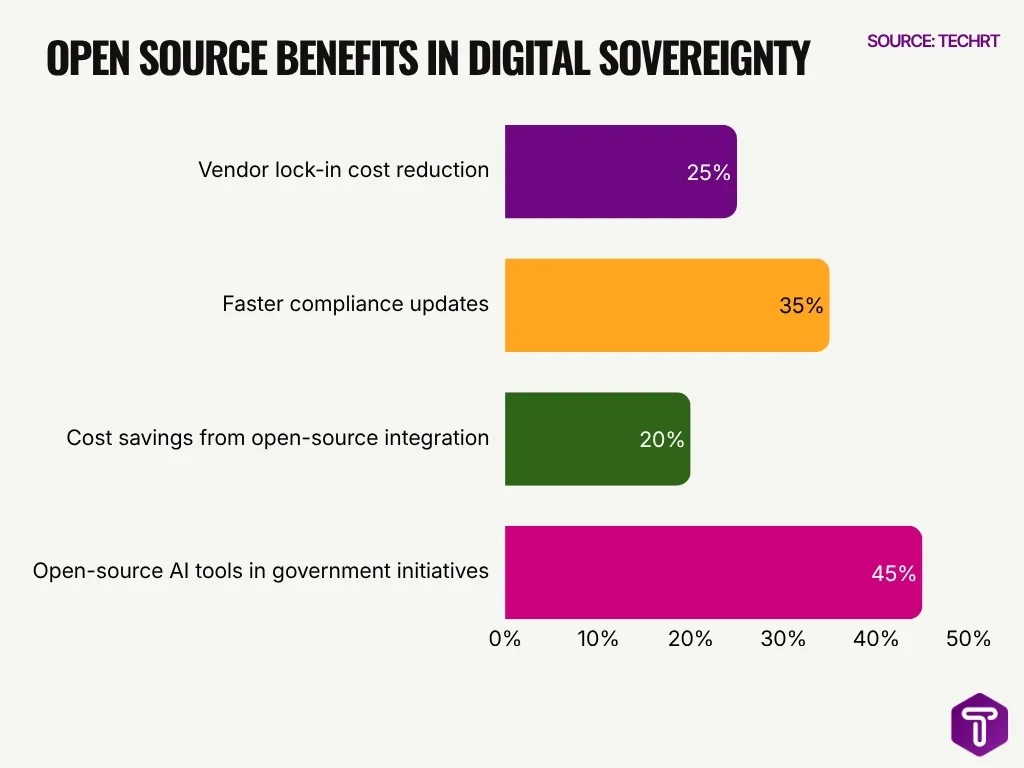
- Governments adopting open-source solutions reduced vendor lock-in costs by up to 25%.
- The global open-source services market reached $32 billion in 2025.
- Over 65% of sovereign cloud projects rely on open-source frameworks.
- Public sector adoption of open-source platforms increased by 28% in 2025.
- Open-source contributes to faster compliance updates by 35%, improving regulatory alignment.
- Sovereign cloud providers increasingly use Kubernetes and Linux-based architectures.
- Open-source AI tools are used in over 45% of government AI initiatives globally.
- Organizations report 20% cost savings when integrating open-source into sovereign systems.
Digital Sovereignty in the Public Sector
- Government spending on sovereign digital infrastructure reached $19.75 billion in 2026, driven by national security priorities.
- Over 72% of federal agencies in the U.S. adopted cloud-first strategies aligned with sovereignty requirements in 2025.
- The European public sector allocated more than €10 billion toward sovereign cloud and data initiatives.
- More than 65% of governments globally mandate data residency for citizen data.
- Smart government platforms increased sovereign cloud adoption by over 30% between 2024 and 2025.
- Defense and intelligence sectors account for over 40% of sovereign IT spending in developed nations.
- Public healthcare systems increased localized data infrastructure investment by 28% in 2025.
- Digital identity programs using sovereign frameworks expanded to over 1 billion users worldwide.
- Governments report 20–25% improvement in data governance efficiency after adopting sovereignty models.
Digital Sovereignty in the Private Sector
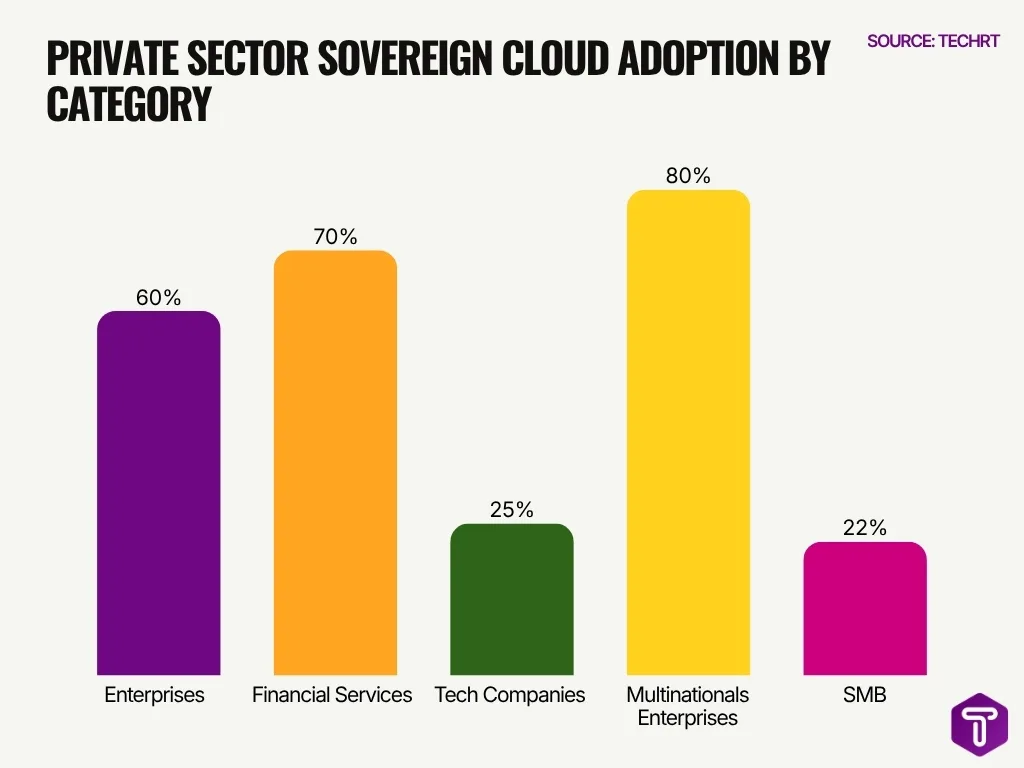
- Over 60% of enterprises globally implemented or planned sovereign cloud strategies in 2025.
- Financial services firms lead adoption, with over 70% using localized data storage systems.
- The healthcare sector increased sovereign data investments by 32% year-over-year in 2025.
- Tech companies report 25% lower regulatory risk exposure when using sovereign cloud environments.
- Retail and e-commerce firms saw 18% growth in sovereign data infrastructure spending.
- Over 80% of multinational enterprises adjusted their cloud strategies due to cross-border data laws.
- Small and mid-sized businesses increased sovereign cloud adoption by 22% in 2025.
- Companies adopting sovereignty frameworks report 15% faster compliance audits.
- Manufacturing firms investing in Industry 4.0 technologies saw 20% higher adoption of sovereign data systems.
Future of Digital Sovereignty
- The sovereign cloud market is projected to exceed $1.13 trillion by 2034.
- Over 75% of enterprises will prioritize digital sovereignty in their IT strategy by 2028.
- AI-driven sovereignty solutions are expected to grow at a CAGR of 28% through 2030.
- More than 150 countries are expected to implement updated data sovereignty laws by 2030.
- Sovereign edge computing adoption is projected to increase by over 30% annually.
- Hybrid sovereign cloud models will dominate, with over 80% of enterprises adopting them by 2027.
- Investment in sovereign AI infrastructure is expected to surpass $25 billion annually by 2028.
- Governments will continue leading, accounting for over 40% of sovereignty-related spending globally.
- Open-source and decentralized technologies will play a key role in future sovereignty frameworks.
Digital Sovereignty Benefits
- Organizations adopting sovereign cloud solutions report 20% reduction in compliance risks.
- Sovereign frameworks improve data governance efficiency by up to 25%.
- Companies experience 15–20% faster regulatory approvals when using localized data systems.
- Sovereign cloud adoption reduces cross-border legal exposure by over 30%.
- Governments report enhanced national security resilience with sovereign digital infrastructure investments.
- Enterprises achieve 10–15% cost savings in long-term compliance management.
- Data sovereignty boosts customer trust, with over 65% of users preferring locally governed data services.
- Sovereign cloud environments improve incident response times by up to 35%.
- Businesses report greater control over AI and data governance frameworks, improving transparency.
Digital Sovereignty Challenges
- Compliance with multiple data sovereignty laws increases operational costs by up to 30%.
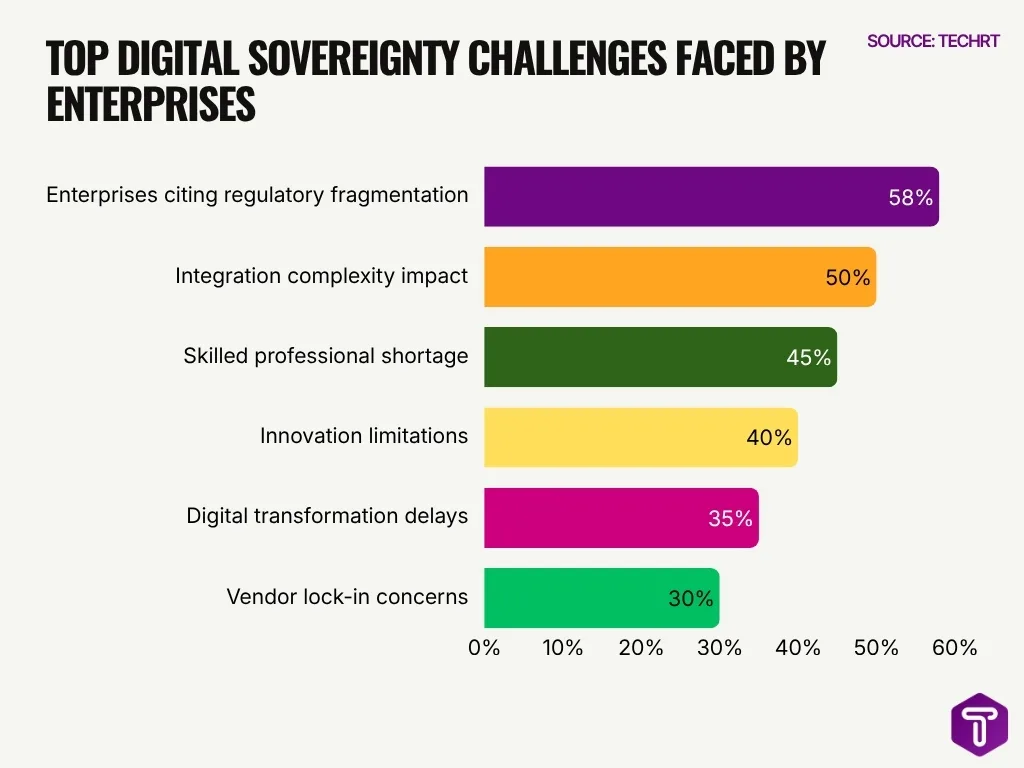
- Over 58% of enterprises cite regulatory fragmentation as a major challenge.
- Data localization requirements can reduce operational efficiency by 15–20%.
- Shortage of skilled professionals in sovereign cloud and compliance roles affects over 45% of organizations.
- Integration complexity across multi-cloud environments impacts more than 50% of enterprises.
- Infrastructure costs for localized data centers are 20–40% higher than global cloud alternatives.
- Over 35% of companies report delays in digital transformation projects due to sovereignty regulations.
- Cross-border data restrictions limit innovation for over 40% of global tech firms.
- Vendor lock-in concerns remain for over 30% of organizations adopting sovereign cloud.
Frequently Asked Questions (FAQs)
What is the size of the digital sovereignty government market in 2026?
How fast is the sovereign cloud market growing globally?
What was the global data sovereignty market size in 2025?
How large is the sovereign cloud market expected to become by 2033?
What is the CAGR of the data sovereignty sovereign cloud segment?
Conclusion
Digital sovereignty has firmly established itself as a core pillar of modern digital strategy rather than a secondary compliance requirement. Across both public and private sectors, organizations are investing heavily in sovereign cloud infrastructure, localized data systems, and governance frameworks to gain greater control over their digital assets. These efforts are not only driven by regulation but also by the need to reduce operational risk, enhance cybersecurity resilience, and maintain trust in an increasingly data-driven economy.
At the same time, the path forward presents clear challenges. Rising infrastructure costs, fragmented regulations, and integration complexities continue to test organizations as they scale sovereign solutions. However, the long-term benefits, including improved compliance efficiency, stronger data governance, and reduced exposure to cross-border legal risks, continue to outweigh these hurdles. As global data flows expand and digital policies tighten, digital sovereignty will play a decisive role in shaping how organizations build, secure, and future-proof their technology ecosystems.

Leave a comment
Have something to say about this article? Add your comment and start the discussion.