




Blogging remains a cornerstone of digital marketing, powering everything from SaaS lead generation and ecommerce conversions to personal brand building. Businesses rely on blogs to improve visibility on google.com, educate audiences, and nurture long-term customer relationships, while individual creators use them to build authority and generate income through ads, affiliates, and digital products.
In recent years, the blogging landscape has evolved rapidly with the rise of AI tools, changing search algorithms, and shifting user behavior. Despite these changes, blogs continue to deliver measurable results across industries, offering a scalable and cost-effective way to attract, engage, and convert audiences. The data clearly shows that blogging is not fading; it is becoming more strategic and performance-driven. Let’s explore the latest blogging statistics to understand where the industry stands and where it is heading next.
Editor’s Choice
- There are over 600 million blogs worldwide, representing roughly one-third of all websites.
- Bloggers publish more than 7.5 million posts daily, or over 2.7 billion annually.
- Around 83% of internet users read blogs, showing a massive global reach.
- Businesses that blog generate 55% more website visitors than those that don’t.
- Marketers who prioritize blogging are 13x more likely to see positive ROI.
- The average blog post length is about 1,300–1,400 words, reflecting a balance between depth and readability.
- It takes roughly 3.5 to 4 hours to write a typical blog post.
Recent Developments
- About 95% of bloggers now use AI tools in some capacity, marking a major shift in content creation workflows.
- Nearly 49% of bloggers published original research in 2025, up from 44% in 2024.
- Bloggers who update older posts are 2.5x more likely to report strong results.
- AI search tools may impact up to 50% of traditional web traffic, forcing bloggers to rethink strategies.
- Content length trends are shifting downward, with average posts now around 1,333 words in 2025.
- Only 9% of bloggers publish posts longer than 2,000 words, despite strong performance for long-form content.
- Around 88% of bloggers use images, reinforcing the importance of visual content.
- Bloggers adding 7+ visuals per post report up to 50% stronger results.
Number of Blogs and Bloggers
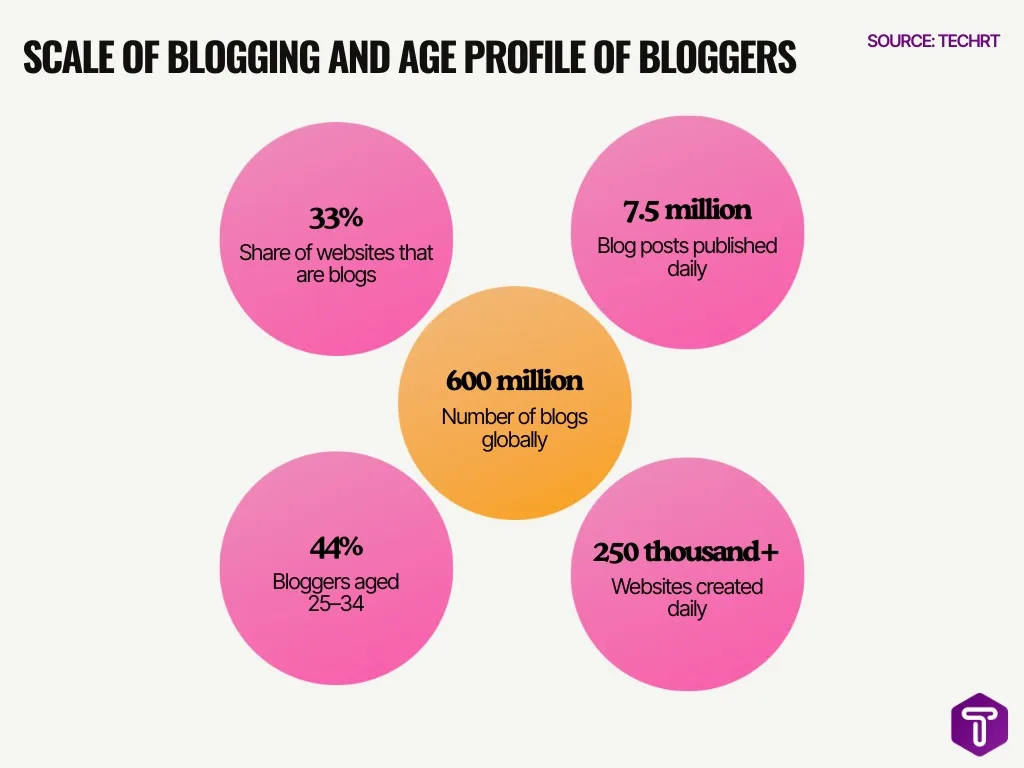
- There are more than 600 million blogs globally, making blogging one of the largest content ecosystems.
- Blogs make up roughly one-third of all 1.9 billion websites.
- Over 7.5 million blog posts are published daily, reflecting intense competition.
- WordPress alone hosts tens of millions of bloggers globally through its ecosystem.
- Around 44% of bloggers are aged 25–34, making it a young professional-driven space.
- Millions of new blogs launch annually as 250,000+ websites are created daily.
- A significant share of bloggers operate part-time rather than full-time, reflecting side-income trends.
- Collaborative blogs and multi-author platforms are increasing, helping scale content production.
General Blogging Statistics
- Blogging accounts for 31.6% of all websites, highlighting its dominance online.
- WordPress powers over 42% of all websites, making it the leading blogging platform.
- WordPress users alone publish 70 million posts per month.
- Over 409 million people view 20 billion pages monthly on WordPress.com.
- The average reader spends just 52 seconds per blog post, indicating shrinking attention spans.
- About 80% of internet users read blogs regularly, reinforcing consistent demand.
- Nearly 90% of content gets no traffic from Google, showing the importance of SEO.
- Around 82% of bloggers report at least some results from blogging.
Blogging Growth and Trends
- The blogging industry grew by $417.85 billion between 2021 and 2025, reflecting strong market expansion.
- Content marketing is projected to reach $584 billion by 2027, driven largely by blogs.
- Around 66% of bloggers publish posts between 500–1,500 words, showing a preference for mid-length content.
- 39% of marketers say long-form posts (2,000+ words) deliver the best results.
- Nearly 24% of high-performing blogs publish daily, indicating consistency drives growth.
- Bloggers who prioritize quality over quantity are seeing better engagement despite fewer posts.
- AI adoption in blogging rose from 65% in 2023 to ~80%+ in 2024–2025.
- Updating existing content can drive 60–80% of organic traffic from older posts.
Blogger Demographics
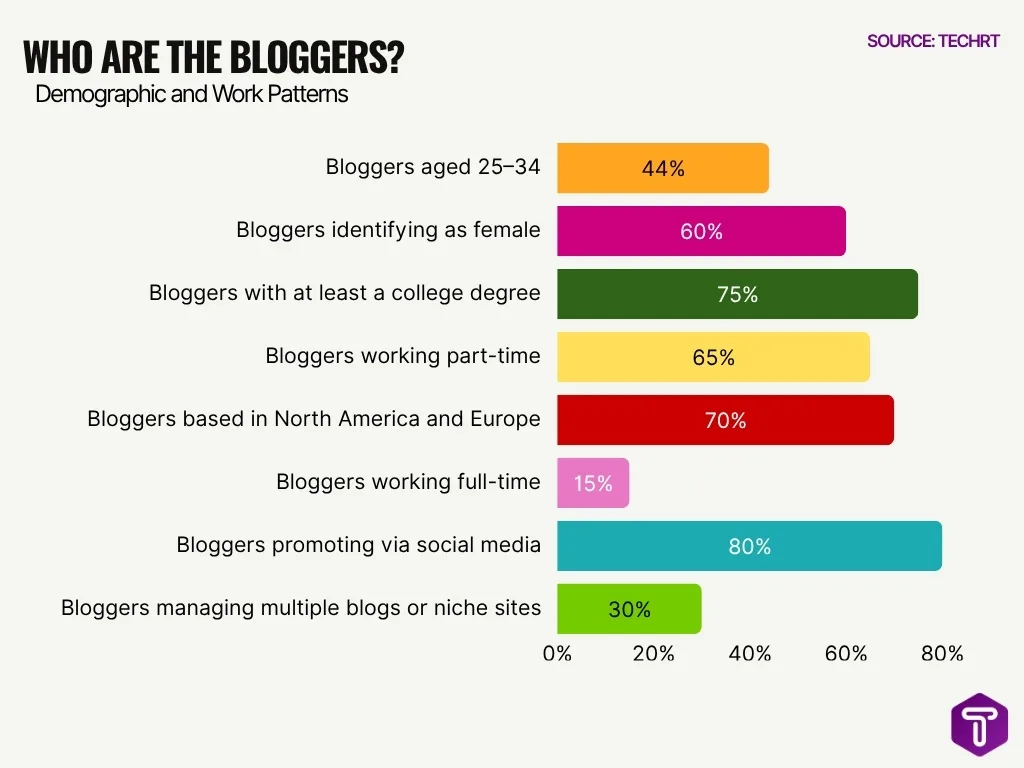
- About 44% of bloggers are aged 25–34, making millennials the largest group.
- Roughly 60% of bloggers identify as female, showing a gender skew in content creation.
- Around 75% of bloggers have at least a college degree, indicating a highly educated creator base.
- Nearly 65% of bloggers work part-time, often combining blogging with other jobs.
- About 70% of bloggers are based in North America and Europe, though Asia is rapidly growing.
- Around 15% of bloggers operate as full-time professionals, earning primary income from blogging.
- Nearly 80% of bloggers promote content via social media, showing cross-platform dependency.
- Bloggers with 5+ years of experience report significantly higher traffic and income levels.
- Approximately 30% of bloggers manage multiple blogs or niche sites, diversifying income streams.
Blog Traffic Statistics
- Blogs help businesses generate 55% more website traffic compared to non-blogging sites.
- Around 20 billion blog pages are viewed monthly on WordPress.com alone.
- Blogger.com received 39 million visits in March 2026, showing continued platform relevance.
- Direct traffic accounts for over 70% of visits on Blogger.com, indicating strong brand recall.
- Organic search contributes significantly, with Google driving measurable referral traffic to blogs.
- About 90% of blog content receives little to no Google traffic, highlighting competition.
- Older blog posts generate up to 80% of total organic traffic for many sites.
- Average session duration on blogging platforms can exceed 15 minutes, showing deep engagement.
Blogger Income Statistics
- 45% of bloggers earn less than $500/month, showing how sharply income is concentrated at the low end.
- Only about 10% of bloggers earn over $10,000/month, putting a small share in the top tier.
- Bloggers who diversify into 5+ revenue streams earn more than 2x those with just one stream.
- Digital products can generate RPMs nearly 10x higher than ads, making them one of the strongest monetization methods.
- Bloggers using affiliate marketing report about 35%–70% adoption, depending on the survey source.
- Display ads remain the most common primary income source at 42% among earning bloggers.
- Bloggers with SEO-focused traffic growth can earn materially more because income rises strongly with pageviews and search visibility.
- It takes bloggers an average of 22 months to earn their first dollar, while the median is 12 months.
- It takes an average of 49 months to reach full-time blogging income, with a median of 36 months.
Bloggers Income Sources Statistics
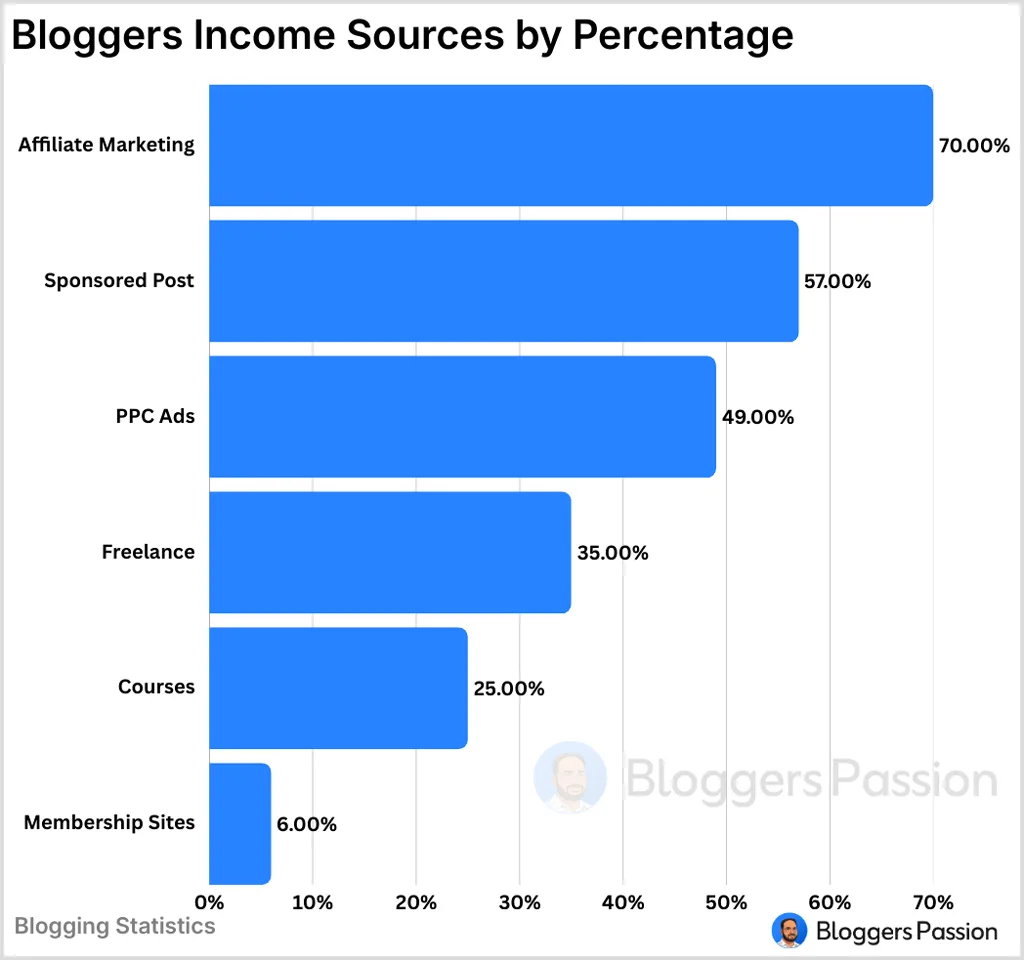
- Affiliate Marketing dominates as the top revenue stream, with a significant 70% of bloggers earning from it, making it the most profitable monetization method.
- Sponsored Posts rank second at 57%, showing strong demand from brands for influencer collaborations and content partnerships.
- PPC Ads contribute to 49% of blogger income, indicating that nearly half of bloggers rely on ad networks like display ads for steady revenue.
- Freelancing accounts for 35%, highlighting that many bloggers leverage their skills (writing, SEO, consulting) as an additional income stream.
- Selling Courses generates 25%, reflecting the growing trend of bloggers monetizing their expertise through digital products and online learning.
- Membership Sites are the least utilized, with only 6%, suggesting that subscription-based models are still niche or harder to scale.
- The data clearly shows that performance-based income sources (like affiliate marketing and sponsored content) outperform recurring or product-based models.
- A diversified income strategy is evident, but the top 3 sources (Affiliate, Sponsored, PPC) account for the majority of blogger earnings, indicating where focus should be for maximum ROI.
Blog Readership Statistics
- Around 77% of internet users regularly read blogs, making blogs a core content channel.
- Approximately 43% of readers skim blog posts, highlighting the need for scannable formatting.
- Users spend an average of 52 seconds per blog post, reflecting short attention windows.
- About 60% of consumers feel more positive about a brand after reading its blog.
- Nearly 70% of people prefer learning about a company through articles rather than ads.
- Mobile devices account for over 60% of blog traffic globally, emphasizing mobile-first optimization.
- Blog posts with headlines between 6–13 words attract the highest click-through rates.
- Around 80% of readers never scroll past the headline, reinforcing the importance of strong intros.
- Readers are 2x more likely to share blog posts with visuals, boosting reach.
Blogging Platform Market Share
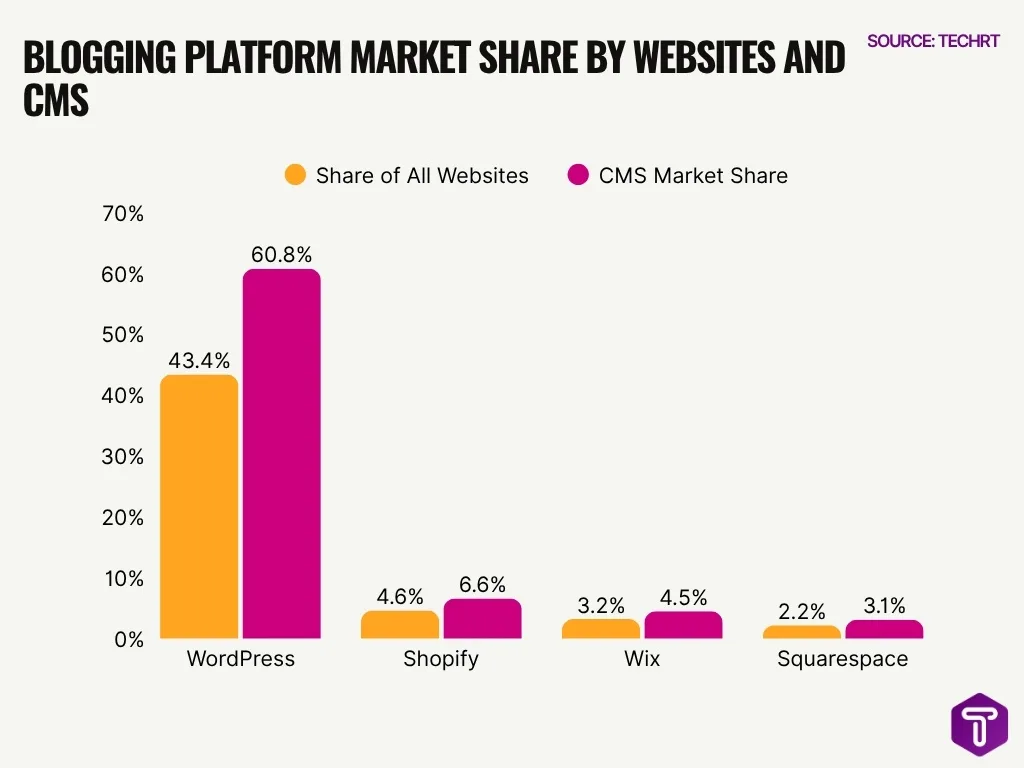
- WordPress powers 43.4% of all websites globally and holds about 60.8% of the CMS market, making it the clear blogging leader.
- Shopify runs 4.6% of all websites and about 6.6% of the CMS market, showing how content and commerce are converging.
- Wix accounts for 3.2% of all websites and roughly 4.5% of CMS usage, with steady gains among beginners and small brands.
- Squarespace holds about 2.2% of all websites and 3.1% of the CMS market, staying strong with design-focused creators.
- Google Blogger still appears in market-share data at 5.25% of the blogging-industry customer base in one 2025–2026 report.
- Medium captures 22.41% of the blogging industry market in the same report, and other analyses estimate around 100–105 million monthly visits.
- WordPress.com reaches more than 409 million people each month, underscoring the platform’s massive publishing scale.
- Headless CMS is growing quickly, with some 2026 research putting its growth at 19–22% CAGR, well above traditional CMS growth.
- Enterprise adoption is a major driver for headless CMS, with 68% citing cloud migration, 62% omnichannel delivery, and 59% API-first architecture.
- Squarespace has roughly 4.7 million websites built on it, reinforcing its solid niche in the blogging-platform market.
Blog Monetization Statistics
- Affiliate marketing is used by over 70% of bloggers as a primary monetization method.
- Display advertising contributes to roughly 30% of total blog income.
- Sponsored posts can generate $100 to $5,000+ per article, depending on niche and traffic.
- Selling digital products (courses, ebooks) delivers higher margins than ads or affiliates.
- Bloggers using subscription models report recurring revenue growth of 20–30% annually.
- Around 60% of bloggers monetize through multiple channels, including ads, affiliates, and services.
- Email-driven monetization yields higher conversion rates than social media traffic.
- Blogs with high domain authority attract premium brand partnerships, increasing monetization potential.
- E-commerce integration (selling products directly) is growing among bloggers, especially in lifestyle niches.
Blog Content Format Statistics
- About 77% of bloggers use how-to guides, making them the most common format.
- Listicles are used by 54% of bloggers due to their high engagement rates.
- Video integration in blog posts boosts engagement by up to 83%.
- Around 88% of blog posts include images, improving readability.
- Infographics are shared 3x more than other content types, increasing reach.
- Case studies are used by 37% of bloggers, especially in B2B industries.
- Interactive content (quizzes, polls) increases engagement by up to 2x.
- Blogs with 7+ images generate significantly more traffic than those with fewer visuals.
- Audio content (podcasts embedded in blogs) is growing, with adoption rising year-over-year.
Most Popular Blog Topics
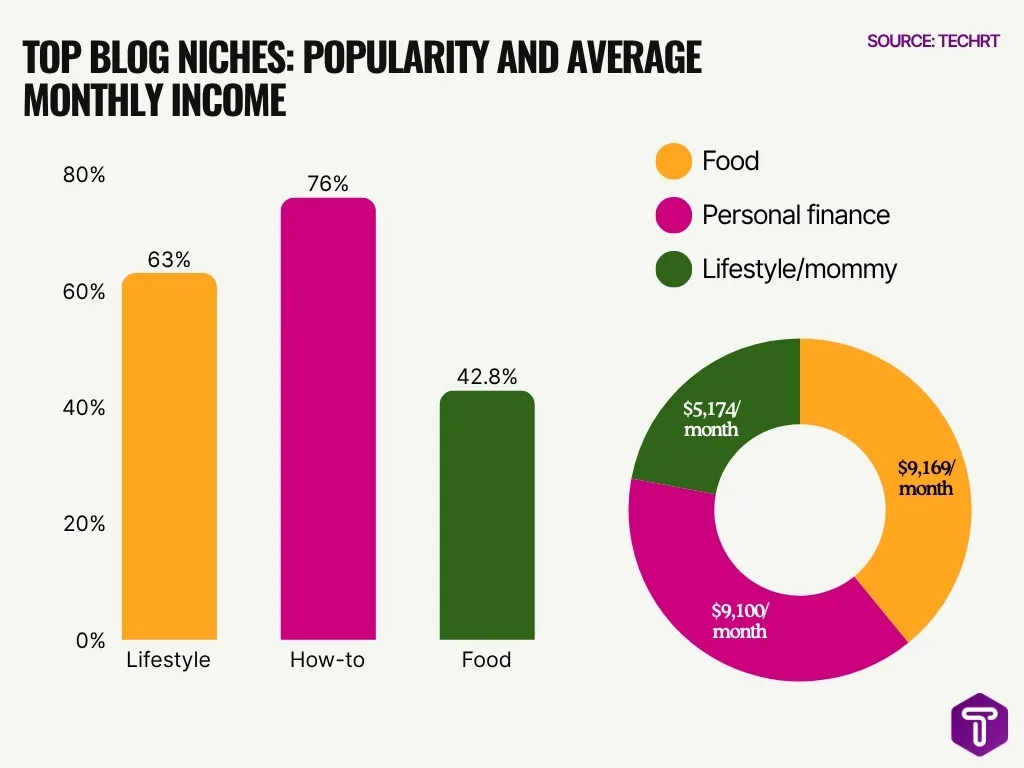
- Lifestyle blogs lead in volume, with 63% of bloggers focusing on lifestyle-related topics in 2025.
- How-to content dominates search-friendly blogging, with 76% of bloggers publishing how-to articles.
- Food is the most profitable niche, averaging $9,169 in monthly income and making up 42.8% of high-traffic blogs.
- Personal finance blogs earn about $9,100 per month on average, making them one of the strongest monetization niches.
- Lifestyle/mommy blogs average $5,174 in monthly income, showing strong demand beyond finance and food.
- Marketing blogs drive real business results, with 55% of bloggers saying their blog produces marketing outcomes and 26% calling them strong.
- Business blogs are effective for lead generation, with B2B blogs producing 67% more leads than non-blogging B2B companies.
- Technology blogs attract high-value audiences, and search engines drive about 70%–80% of traffic for most niches, making SEO crucial.
- Education and how-to blogs rank well on Google because 76% of bloggers use how-to articles, a format closely tied to search demand.
Blogging Engagement Statistics
- Blog posts with images receive up to 94% more views than text-only posts.
- Including videos can increase engagement by up to 83%, especially on educational content.
- Posts with compelling headlines can drive 5x more traffic, highlighting their importance.
- Articles with 7+ images generate significantly higher engagement rates.
- Interactive content (quizzes, polls) can boost engagement by 2x compared to static posts.
- Comments and social shares remain low, with only a small percentage of readers actively engaging, despite high readership.
- Blog posts that include data and research are more likely to earn backlinks and shares.
- Email-driven traffic tends to have higher engagement rates than social media traffic.
- Content that answers specific search intent sees longer dwell time and lower bounce rates.
Blogging SEO Statistics
- 96.55% of pages get zero traffic from Google, showing how tough SEO can be.
- Businesses that blog generate 67% more leads per month than those that do not.
- Posts with 2,000+ words earn 56% more social shares and 77% more backlinks than shorter posts.
- Updating old content can lift traffic by up to 106%.
- The average top-ranking page is about 1,890 words, and many sources still place it near 1,447 words, showing that depth matters.
- 53% of website traffic comes from organic search, making blogs a major acquisition channel.
- The #1 organic result gets 27.6% of clicks, so strong rankings matter a lot.
- 94–95% of pages have no backlinks, which makes internal linking and authority building especially important.
- Google processes about 8.5 billion searches a day, creating huge visibility potential for blog content.
Blogging Frequency Statistics
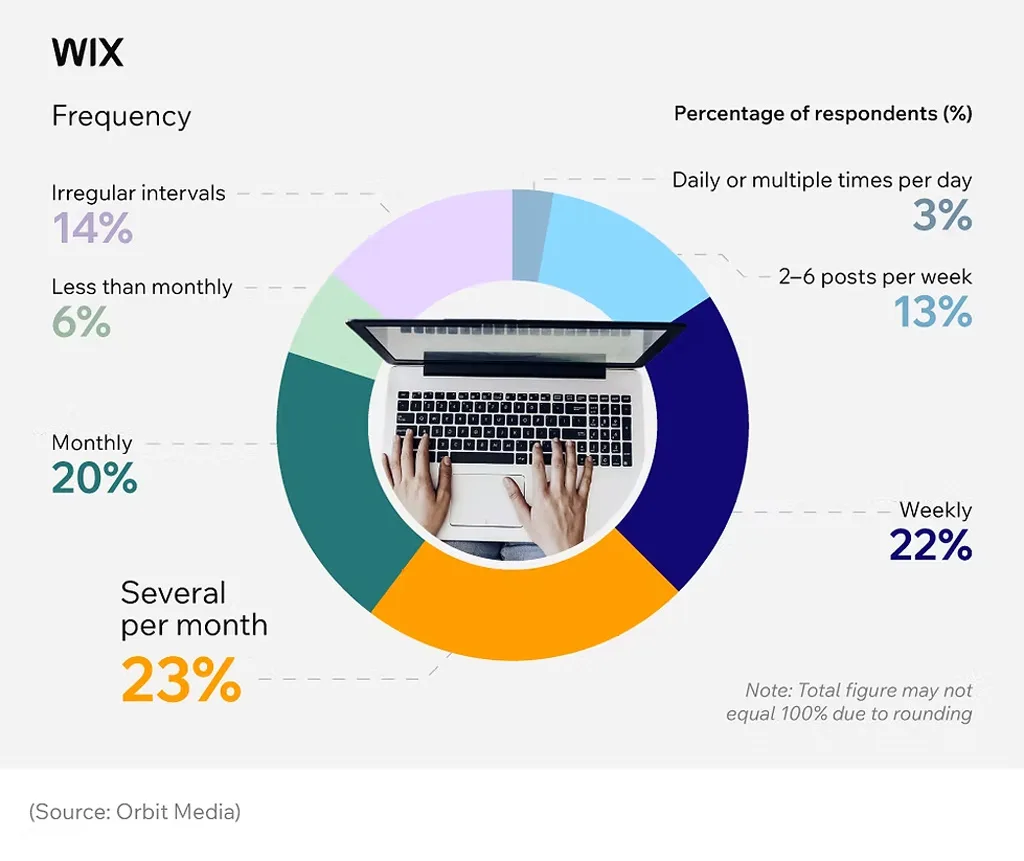
- 23% of bloggers publish several times per month, making it the most common posting frequency, indicating a preference for consistent but flexible content schedules.
- 22% of respondents post weekly, showing that regular weekly publishing remains a strong standard for maintaining audience engagement.
- Only 3% of bloggers publish daily or multiple times per day, highlighting that high-frequency publishing is rare and likely limited to large teams or media-driven blogs.
- Around 13% publish 2–6 posts per week, suggesting a moderately aggressive content strategy adopted by growth-focused bloggers.
- 20% of bloggers publish monthly, indicating that a significant portion prioritizes quality over quantity.
- A combined 20% (14% irregular + 6% less than monthly) publish inconsistently or rarely, which may negatively impact traffic, SEO rankings, and audience retention.
- The data clearly shows that mid-frequency publishing (weekly to several times per month) dominates, accounting for over 45% of bloggers, making it the optimal balance between consistency and workload.
- Overall, the trend suggests that consistency matters more than frequency, with most successful bloggers choosing predictable posting schedules over high-volume output.
Blog Backlink Statistics
- Content with original research earns up to 3x more backlinks than standard posts.
- The top-ranking page on Google has 3.8x more backlinks than pages ranking below it.
- Approximately 95% of pages have zero backlinks, limiting their ranking potential.
- Guest blogging remains a key strategy, used by over 60% of marketers for link building.
- Long-form blog posts attract significantly more backlinks than short-form content.
- Infographics and visual content generate higher link acquisition rates.
- Outreach campaigns are responsible for a large share of backlinks in competitive niches.
- High-authority domains attract more natural backlinks over time, creating a compounding effect.
- Internal linking also improves crawlability and helps distribute link equity across blog pages.
Business Blogging Statistics
- Companies that blog generate 67% more leads per month than those that don’t.
- B2B marketers using blogs get 67% more leads compared to non-blogging competitors.
- Around 82% of marketers actively use blogging as a content strategy.
- Blogs rank among the top three content formats used in marketing, alongside video and email.
- Businesses that blog see 55% more website visitors, improving brand visibility.
- Blog content drives long-term organic traffic, reducing reliance on paid advertising.
- Small businesses using blogs report higher customer acquisition rates than those without content strategies.
- Blog-driven SEO strategies help brands build authority and trust over time.
- Companies that prioritize blogging are 13x more likely to achieve positive ROI.
Frequently Asked Questions (FAQs)
How many blogs exist worldwide in 2026?
How many blog posts are published each day?
What percentage of internet users read blogs?
How much traffic increase do businesses get from blogging?
What percentage of bloggers use AI tools?
Conclusion
Blogging continues to deliver strong, measurable value across industries, from SaaS companies driving inbound leads to ecommerce brands scaling organic traffic and customer acquisition. While competition has intensified and AI tools have reshaped how content is created and distributed, the core principles of successful blogging remain consistent: publish high-quality content, optimize for search, and focus on audience intent.
The statistics throughout this report highlight a clear trend: businesses and creators who treat blogging as a long-term strategy consistently outperform those who approach it casually. From generating 67% more leads to achieving 13x higher ROI, blogging proves its effectiveness when executed with consistency and purpose.
As search behavior evolves and content saturation increases, the opportunity lies in creating valuable, well-optimized, and user-focused content that stands out. Blogging is no longer just a marketing tactic; it is a foundational growth channel that supports brand authority, organic visibility, and sustainable revenue.

Leave a comment
Have something to say about this article? Add your comment and start the discussion.